What Is the Nicene Creed: Meaning, Origin & Usage?
The Nicene Creed serves as a foundational summary of the Christian faith, articulating core beliefs about the nature of God, Jesus Christ, and the Holy Spirit. Formulated during a time of intense theological debate, it remains a unifying statement for many denominations across the globe.
By examining the history and the specific language within this confession, you can better grasp why it has been recited in worship for over 1,600 years. Whether you are curious about its development at the Council of Nicaea or its ongoing role in modern liturgy, this overview clarifies how the church has historically defined its most essential convictions.
The Historical Origin at Nicaea
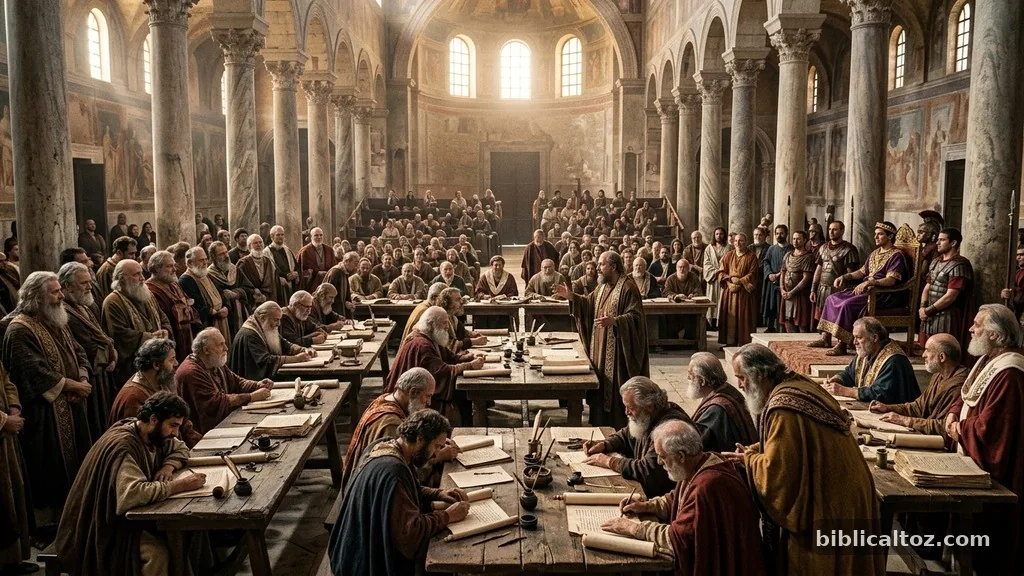
The Nicene Creed emerged from the Council of Nicaea in 325 AD. Emperor Constantine convened this gathering to address a significant question regarding the nature of Christ.
A priest named Arius taught that Jesus was a created being, subordinate to God the Father. This sparked widespread controversy, as many bishops believed this contradicted the scriptural witness of Christ’s divinity.
The council sought to establish a standard of truth. They drafted a statement affirming that the Son was of the same substance as the Father.
This distinction was crucial, as it moved the discussion beyond mere opinion and established a formal boundary for orthodoxy. The resulting document became a standard for what the church proclaimed as true, ensuring that believers across different regions shared a consistent confession.
Core Theological Assertions
At its heart, the creed emphasizes the relationship between the Father and the Son. It describes Jesus as true God from true God, begotten and not made.
This language specifically addresses the Arian claim that Jesus had a beginning point in time. By stating that he is begotten, the creed highlights that the Son shares the eternal nature of the Father.
The text also expands on the work of the Holy Spirit. It asserts that the Spirit is to be worshiped and glorified alongside the Father and the Son.
This trinitarian structure provides a framework for understanding how God relates to humanity. The following table illustrates the primary distinctions addressed by the original text:
| Concept | Arian View | Nicene Creed Stance |
|---|---|---|
| Status of the Son | Created being | True God, eternally begotten |
| Relationship | Subordinate to Father | Of the same substance |
| Origin | Had a beginning | Not made |
Comparison with Other Creeds
Many people often confuse the Nicene Creed with the Apostles’ Creed. While both serve as essential statements of faith, they differ in their scope and primary purpose.
The Apostles’ Creed is generally shorter and focuses on the narrative of Christ’s life, death, and resurrection. It is often used in baptismal settings.
In contrast, the Nicene Creed functions as a more detailed theological defense. It was specifically designed to counter heresies that threatened the unity of the church.
Because of this, it includes more technical language regarding the divinity of the Father, Son, and Holy Spirit. Many traditions utilize both, recognizing that they serve different roles in the life of a believer.
- Apostles’ Creed: Primarily used for baptismal confessions and personal faith.
- Nicene Creed: Serves as a formal, corporate declaration of orthodox doctrine.
- Both: Assert the resurrection and the hope of life in heaven.
The Role of the Holy Spirit

The section of the creed regarding the Holy Spirit was further refined at the Council of Constantinople in 381 AD. The original 325 AD version ended abruptly after mentioning the Spirit, but the later expansion clarified the Spirit’s role as the giver of life. This ensured that the church recognized the full divinity of the Spirit, which was necessary for a complete understanding of God.
This inclusion bridged the gap between the internal life of the Trinity and the outward work of the church. By confessing the Spirit, believers acknowledge that the same power that raised Jesus from the dead is active in the world today. It reminds the faithful that their worship is not merely a human endeavor but is empowered by the divine presence.
What Is the Nicene Creed in Simple Terms?
It is a formal statement of belief that summarizes the core doctrines of the Christian faith. It affirms that there is one God and that Jesus Christ is fully divine and fully human.
Which Christians Reject the Nicene Creed?
Some groups, particularly those who do not adhere to the traditional doctrine of the Trinity, reject the creed. Various non-trinitarian movements find the terminology regarding the substance of the Father and Son to be inconsistent with their interpretation of scripture.
Is the Nicene Creed in the Bible?
The text itself is not found in the Bible. However, its contents are derived from biblical themes and verses. It was written by church leaders to summarize what they believed the scriptures taught about the nature of God.
What Is the Difference Between the Apostles’ Creed and the Nicene Creed?
The Apostles’ Creed is a shorter, narrative-based summary often used in baptism. The Nicene Creed is a more precise, theological document created to clarify the divinity of Christ against specific historical challenges.
Why Do Churches Recite It Today?
Reciting the creed in worship serves as a way for the congregation to join their voices in a shared confession. It connects modern believers to the historic church and keeps foundational truths at the center of their collective life.
Conclusion
Engaging with the history and content of the Nicene Creed provides a deeper appreciation for how the church has guarded its message over the centuries. By clarifying the nature of the Father, Son, and Holy Spirit, this ancient document continues to offer a stable foundation for those seeking to understand the core of their faith. It reminds us that we are part of a long tradition of believers who have grappled with the mystery of God and found unity in the proclamation of the truth.
As you reflect on these words, consider how they shape your own understanding of worship and your identity within the family of God. Whether you recite it weekly or explore it as a study, the creed remains a bridge between the ancient church and your personal walk of faith today.