Do We Become Angels When We Die? A Biblical Perspective
Many people find comfort in the thought that a departed loved one has gained wings and is watching over them from above. When someone asks if we become angels when we die, they are often seeking a way to make sense of loss and to imagine their family members in a state of peace.
While the sentiment is born from deep affection and a desire to connect with those who have passed, it is helpful to look at what the scriptures actually teach about our nature. Understanding that we remain uniquely human even in eternity offers a different, perhaps even more profound, kind of hope.
What Are Angels According to the Bible?
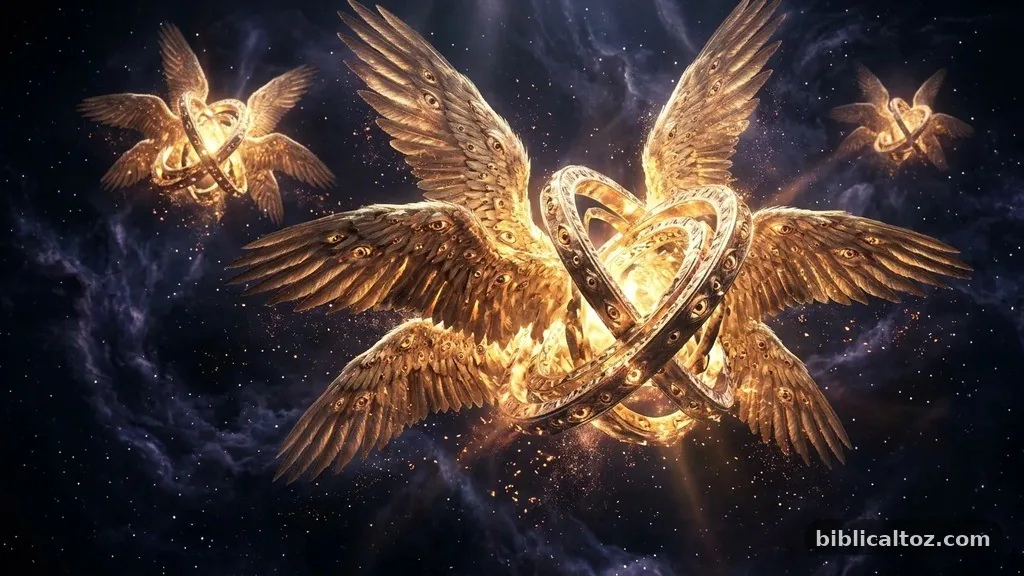
Angels are distinct spiritual beings created by God to serve His purposes. The scriptures describe them as messengers and servants who exist in a different realm, often interacting with the human world at God’s command. They are not former humans, nor are they the spirits of the departed.
In the book of Hebrews, the writer explains that angels are ministering spirits sent forth to serve those who will inherit salvation. They possess a nature that is separate from humanity, having their own form and function. They are frequently depicted as beings of light or power, yet they lack the specific relational bond that humans share with the Creator.
What Does the Bible Say About Human Beings?
Humans hold a unique place in the order of creation. According to Genesis 1:26-27, humanity was made in the image and likeness of God. This status is not shared by angels; it is a distinction that defines the human experience from the very beginning.
Psalm 8 highlights this special standing, noting that humans were made a little lower than the angels, yet crowned with glory and honor. This passage suggests that while angels may have greater immediate power or speed, humans possess a dignity and a future role that is entirely their own. We are not just temporary visitors in physical bodies; we are beings designed for eternal fellowship with God as His children.
Are Humans and Angels the Same Kind of Created Beings?
It is a common misconception that humans and angels are simply different stages of the same existence. However, the Bible treats them as two separate categories of creation. Angels remain angels, and humans remain humans.
| Characteristic | Human Beings | Angels |
|---|---|---|
| Origin | Created in God’s image | Created as ministering spirits |
| Nature | Physical and spiritual | Purely spiritual beings |
| Redemption | Offered salvation through Christ | Not described as needing salvation |
| Future | Will be resurrected in new bodies | Continue as spiritual messengers |
The distinction is clear throughout the text. There is no account of a human being transforming into an angel after death. Instead, the Bible consistently points toward a future where humans are restored, perfected, and brought into a new form of existence that is still distinctly human.
What Does Jesus Teach About Marriage and Resurrection?
In Matthew 22:23-33, Jesus addresses a question from the Sadducees regarding the nature of the afterlife. They present a scenario about marriage and death, and Jesus responds by clarifying that in the resurrection, people will neither marry nor be given in marriage. He states that they will be like the angels in heaven.
This specific phrase is often the source of the idea that we turn into angels. However, Jesus is making a comparison about the state of our relationships and our mode of existence, not our fundamental identity.
He is explaining that our earthly social structures, such as marriage, will not define our relationships in eternity. Being like the angels in that one specific regard—living in a state where marriage is no longer the organizing principle of human life—does not mean we shed our humanity.
What Does Hebrews 12:22–23 Mean?
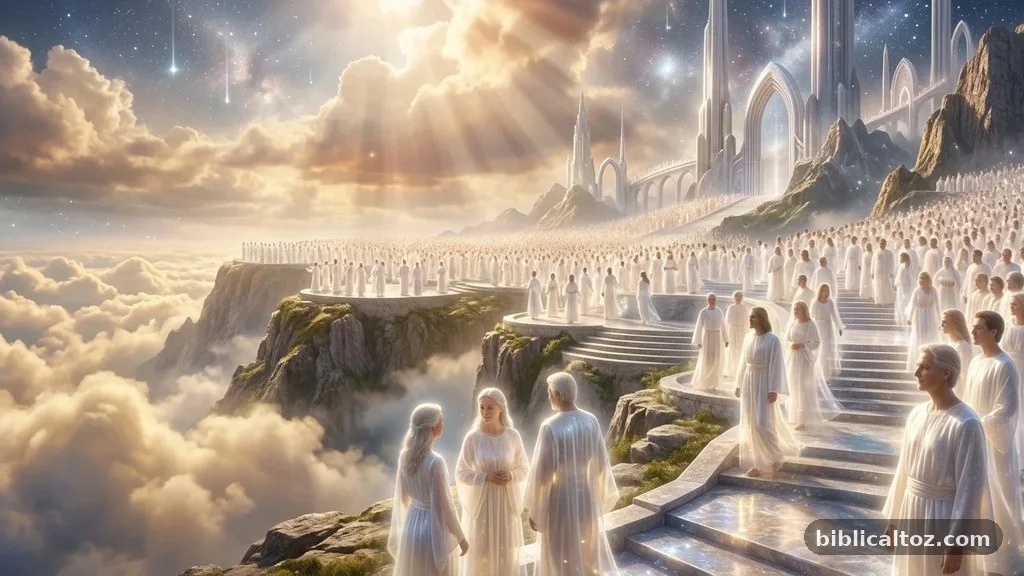
Some readers point to Hebrews 12:22-23 as evidence that humans become angels. The text mentions coming to an innumerable company of angels and to the spirits of just men made perfect. Here, the author of Hebrews lists these groups as separate entities present in the heavenly city.
The passage distinguishes between the angels and the spirits of righteous people who have passed on. By placing them side-by-side, the writer confirms that they are different groups.
The spirits of the just men are not described as angels; they are described as perfected humans. This reinforces the truth that we retain our identity and our human nature even when we are in the presence of God.
What Happens to Believers After Death?
When a believer passes away, the Bible indicates that their spirit returns to God. This transition is often described as being absent from the body and present with the Lord. It is a state of rest and peace, but it is not the end of the story.
The hope of the Christian faith is not that we become ethereal beings floating on clouds. Rather, the hope is for the redemption of the whole person. The following list highlights what the scriptures promise for those who trust in Christ:
- The promise of a spiritual home in the presence of God.
- The reunion of the spirit with a glorified, resurrected body.
- The restoration of all things in a new heaven and a new earth.
- The experience of eternal life as image-bearers of the Creator.
What Does the Bible Promise About Resurrection?
The Apostle Paul provides the most detailed explanation of the resurrection in 1 Corinthians 15. He explains that just as there are different kinds of flesh, there is a difference between our current earthly bodies and our future resurrected bodies. He describes the resurrection as a transformation from a perishable body to an imperishable one.
We are sown in weakness but raised in power. This new body will be a spiritual body, yet it will be a body nonetheless.
It will be recognizable and complete, reflecting the perfection that God intended for humanity from the start. This is the ultimate destiny for humans: to live forever as perfected people, not as angelic beings.
Why Do People Say a Loved One Became an Angel?
The phrase is almost always an expression of grief and love. When we lose someone, we look for ways to keep them close. Saying someone has become an angel is a way of saying they are now in a place of peace, free from pain, and perhaps still looking out for us.
While this is not a theological claim, it is a deeply human one. It is important to treat this sentiment with compassion.
Even when we gently clarify the biblical truth that we do not become angels, we should honor the love behind the words. The desire to believe that our loved ones are in a better place is a natural response to the sting of death.
FAQs
Is it wrong to say a loved one is an angel?
It is not necessarily wrong to use the phrase as a term of endearment or a way to express comfort, but it is helpful to understand that it is not a biblical description of what happens to the human soul.
If we do not become angels, what do we become?
According to the Bible, we remain human. We are promised a resurrection where we will be given a glorified, imperishable body that is suited for eternal life in the presence of God.
Will I recognize my loved ones in heaven?
The scriptures suggest that we will be known and will know others in the life to come. The resurrection is a restoration of our personhood, which includes our relationships and our identity.
Do angels have a higher status than humans?
While Psalm 8 notes that humans were made lower than angels in terms of current power, the Bible also speaks of humans having a unique role in the future, even suggesting that believers will participate in the judgment of angels.
Why does the Bible say we will be like the angels?
Jesus used this comparison to explain that in the resurrection, we will no longer be bound by earthly institutions like marriage. He was describing our status in heaven, not a change in our species.
Can humans communicate with angels?
The Bible records instances of angels appearing to humans to deliver messages from God. However, there is no instruction for humans to attempt to summon or communicate with angels.
Conclusion
The question of whether we become angels when we die touches on our deepest fears and our highest hopes regarding the afterlife. While the idea of becoming an angel can provide a temporary sense of peace, the biblical truth offers something even more substantial. We are created in the image of God, and that identity is not something we outgrow or trade for another form of existence.
Instead of becoming angels, we are promised a future where our humanity is fully redeemed. We are invited to look forward to a resurrection where we will be with Christ in a perfected, eternal state.
This hope does not diminish the value of our loved ones; rather, it affirms that they remain who they are—precious, individual, and known by God. We can find comfort in the promise that we are not destined to become something else, but to be restored to the fullness of the life God always intended for us.