Book of Revelation Explained: A Beginner’s Guide
Many readers find the final book of the New Testament daunting due to its vivid imagery and complex structure. Finding the Book of Revelation explained in a way that prioritizes clarity and theological grounding helps turn confusion into a message of hope.
By focusing on the sovereignty of God and the ultimate victory of Jesus Christ, you can move past the sensationalism often associated with the text. This overview offers a foundational path for anyone seeking to grasp the core message, ensuring you have the tools to engage with these powerful scriptures confidently and calmly.
What Is the Book of Revelation?
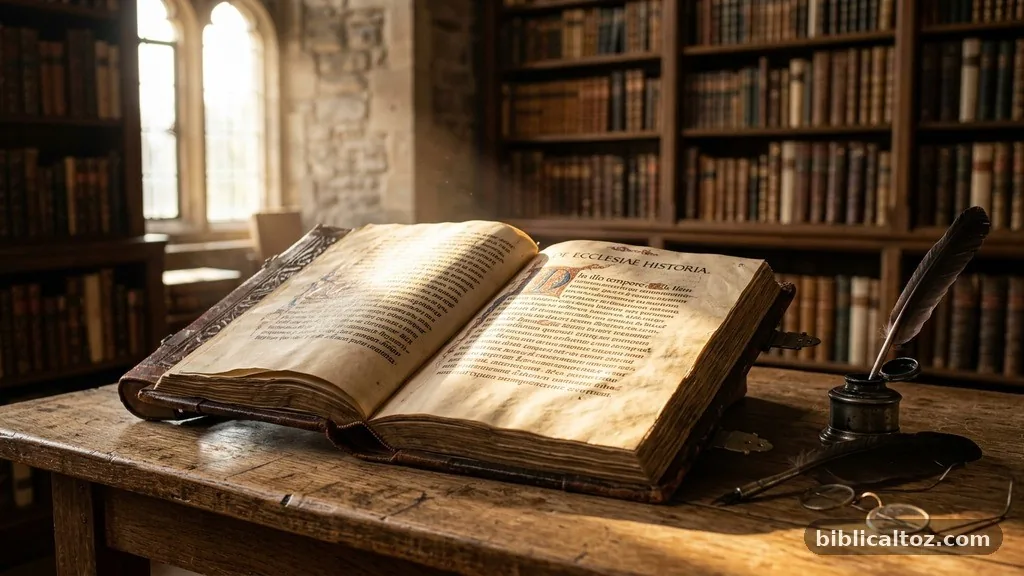
At its core, the text is the Revelation of Jesus Christ, intended to reveal truths about God’s kingdom and the future of the world. Rather than serving as a cryptic puzzle designed to incite fear, the book functions as a message of encouragement to believers facing hardship. It is a work of apocalyptic literature, a genre common in the ancient world that uses highly symbolic language to describe spiritual realities and divine interventions.
When you look at the Book of Revelation meaning, you see a narrative that balances the harsh realities of human suffering with the assurance of divine justice. It does not exist in a vacuum; it draws heavily from Old Testament imagery, such as the prophecies of Daniel and Ezekiel.
Understanding this context is essential for anyone starting their study. The primary focus remains on the faithfulness of God and the promise that suffering is not the final word.
Who Wrote Revelation?
The author identifies himself simply as John. Tradition identifies him as the Apostle John, the same figure who authored the Gospel of John and the three epistles bearing his name.
He wrote this text while in exile on the island of Patmos, a rocky Roman penal colony in the Aegean Sea. He describes himself as a brother and companion in the suffering and kingdom of Jesus Christ.
Because the writing style and vocabulary differ slightly from the Gospel of John, some scholars debate the specific identity of the author. However, the early church consistently attributed the work to the Apostle John.
Regardless of the specific human identity, the author presents his message as a direct vision received from the Lord. His authority comes not from his own status, but from the divine commission he received to document what he saw for the benefit of the churches.
When and Why Was Revelation Written?
Most scholars date the composition of the text to the late first century, likely during the reign of the Roman Emperor Domitian, around 95 AD. This was a period when the Roman state began demanding emperor worship, creating significant tension for those whose primary allegiance was to Jesus Christ. The letter served to strengthen the resolve of early Christians who faced increasing social and political pressure.
The purpose of the document was to provide perspective. By showing the ultimate triumph of the kingdom of God over earthly empires, the text offered a way for believers to endure temporary trials.
It reminded them that although the world might appear to be controlled by human rulers, the true authority belongs to the Creator. It is a call to perseverance, faithfulness, and worship in the face of uncertainty.
The Seven Churches of Revelation
The book begins with seven specific messages addressed to seven literal churches in Asia Minor. These letters are diagnostic, praising the strengths of each congregation while correcting their spiritual drift. Each message follows a consistent pattern: an address, a description of Jesus, a commendation, a rebuke, a call to repent, and a promise to those who overcome.
- Ephesus: Praised for hard work, but warned for losing their initial love.
- Smyrna: Encouraged to remain faithful despite poverty and persecution.
- Pergamum: Challenged to resist compromising with local pagan influences.
- Thyatira: Commended for growth but rebuked for tolerating false teaching.
- Sardis: Warned that their reputation for being alive was actually a state of spiritual death.
- Philadelphia: Praised for their endurance and faithfulness to the message of Christ.
- Laodicea: Called out for their lukewarm, self-satisfied spiritual condition.
These letters serve as a mirror for all believers, regardless of the era. They highlight that the health of a community of faith is measured by its devotion to the truth and its love for God, rather than its size or worldly influence.
The Throne Room of God
The vision shifts in the fourth chapter to a breathtaking scene of the throne room of God. This section establishes the central theme of the entire book: the absolute sovereignty of the Almighty. John describes a scene of intense majesty, where twenty-four elders and four living creatures surround the throne, offering ceaseless praise.
This imagery serves to ground the reader. No matter how chaotic things may seem on earth, the throne room remains the control center of the universe.
The focus here is not on the terrifying nature of the judgment to come, but on the holiness and worthiness of the One who sits on the throne. It is a reminder that God is the author of history and the ultimate judge of all creation.
The Lamb and the Scroll
In the fifth chapter, a scroll sealed with seven seals appears. The scroll represents the unfolding of God’s redemptive plan for history.
John weeps because no one is found worthy to open it, until an elder points him to the Lion of the tribe of Judah. However, when John looks, he sees not a lion, but a Lamb that had been slain.
This is a critical moment in the narrative. It establishes that the victory of God is achieved through the sacrificial death and resurrection of Jesus Christ.
The Lamb is the only one worthy because He gave His life to redeem people from every tribe and tongue. This symbol shifts the focus from military conquest to the power of self-sacrificial love.
The Seven Seals
The opening of the seven seals initiates a series of events that describe the consequences of human rebellion and the unfolding of divine judgment. The first four seals are often referred to as the four horsemen, representing war, famine, economic struggle, and death. These are not necessarily future predictions but the recurring realities of a fallen world.
The fifth seal shifts the scene to the martyrs, those who gave their lives for their testimony. The sixth seal depicts cosmic disturbances, signaling the end of the current order.
The seventh seal introduces the silence before the trumpets, emphasizing the gravity of the events that follow. These cycles suggest that history is moving toward a conclusion under the watchful eye of God.
The Seven Trumpets
As the seventh seal is opened, seven angels prepare to blow seven trumpets. These represent warnings to the inhabitants of the earth, calling them to repentance. The imagery here is reminiscent of the plagues of Egypt, showing that God’s judgments are designed to turn hearts back to Him.
| Trumpet | Description |
|---|---|
| First | Hail and fire destroy a third of the earth’s vegetation. |
| Second | A burning mountain cast into the sea turns a third of it to blood. |
| Third | A star falls from heaven, poisoning a third of the fresh water. |
| Fourth | A third of the sun, moon, and stars are darkened. |
Each trumpet increases in intensity, yet the text notes that many still refuse to turn from their ways. The trumpets demonstrate that while God is patient, He is also just, and He will eventually address the presence of evil in the world.
The Dragon, Beast, and False Prophet
Chapter 12 introduces the dragon, identified as the ancient serpent, the devil. He is depicted as a powerful enemy who seeks to destroy the people of God.
He is joined by two beasts: one from the sea and one from the earth. These figures represent the political and religious systems that demand allegiance to anything other than the Creator.
The number 666 is mentioned in connection with the beast. In the context of the first century, many scholars suggest this points to the Roman Empire and its leaders who demanded to be worshipped as gods.
It is a symbol of human systems that fall short of the perfection of seven—the number of divine completion. It is not an invitation to speculate about modern individuals but a warning against giving our primary loyalty to worldly powers.
Babylon in Revelation
Babylon is portrayed as the great city that opposes God. It represents the seductive and corrupting influence of worldly systems that entice people away from the truth.
In the ancient mind, Babylon was the epitome of human pride and opposition to God’s people. Its fall is a major event in the narrative, symbolizing that all systems built on greed and pride will eventually collapse.
The destruction of Babylon is not a cause for despair but for celebration among the faithful. It marks the end of the influence of systems that exploit and deceive. When Babylon falls, the way is cleared for the establishment of the kingdom of God in its full, unhindered glory.
The Millennium
The millennium is a period of one thousand years mentioned in the twentieth chapter. This passage is one of the most debated parts of the text. Some read it as a literal future kingdom on earth, while others see it as a symbolic representation of the current reign of Christ through His people.
Regardless of the specific timing, the message remains consistent: Christ is the ultimate king. He will reign over all things, and His influence will ultimately overcome the forces of evil. The focus for the reader should be on the certainty of His victory rather than the mechanics of the timeline.
The Final Judgment
The final judgment is the moment when all things are made right. The books are opened, and every person is judged according to their deeds.
Those whose names are written in the Book of Life are welcomed into the presence of God. This scene is one of ultimate accountability.
It is a sobering reality, but for the believer, it is a moment of vindication. The wrongs of the world are finally corrected. The presence of God is no longer veiled, and His justice is finally established across all of creation.
The New Heaven and New Earth
The book concludes with the vision of the New Jerusalem coming down from heaven. This is the culmination of the divine plan.
God dwells with His people, and the former things—death, sorrow, and pain—are passed away. It is a vision of reconciliation and restoration.
This is the hope that sustains the entire narrative. The story does not end in destruction, but in a new beginning. The creation is restored to its intended state, and the relationship between God and humanity is fully healed.
Major Symbols in Revelation Explained
Understanding the symbols is key to unlocking the meaning of the book. Here are some of the most prominent:
- The Lamb: Jesus Christ in His sacrificial role as the Savior.
- The Dragon: The devil, the source of deception and evil.
- The Beast: Human systems of power that demand idolatrous loyalty.
- The Seven Seals/Trumpets/Bowls: Sequences of divine judgment and warning.
- The Book of Life: The record of those who belong to God.
- White Robes: The righteousness of the saints, provided by Christ.
These symbols are not meant to be decoded like a secret code. Instead, they function as vivid pictures that communicate deep spiritual truths that words alone cannot capture.
Main Themes of Revelation
The primary theme is the sovereignty of God. No matter how powerful the forces of evil appear, they are always under the authority of the Almighty.
Another key theme is the importance of faithfulness. The text consistently calls the people of God to remain true to their testimony, even when it is costly.
Finally, the theme of victory is central. The book is not about the defeat of the church, but about its ultimate triumph through the work of Christ. It is a message of hope, designed to keep the eyes of the believer fixed on the eternal future.
How Beginners Should Read Revelation
When you begin your study, take your time. Do not try to rush through the chapters.
Read with an eye toward the character of God rather than just the events. Use a standard study Bible that provides historical background, and keep in mind that there are different ways to interpret the timeline.
Most importantly, read with a spirit of prayer. The goal of reading this book is not just to gain information, but to be transformed in your devotion to the Lord. It is a book meant to be lived, not just analyzed.
Common Misunderstandings About Revelation
Many people treat this book as a secret map of current events. This approach often leads to fear and speculation that misses the actual point. The text was written for first-century believers, and while it carries timeless truths, it is not a newspaper written in advance.
Another common misunderstanding is the focus on the horror of the judgments. While the judgments are real, they are always framed by the overarching mercy and justice of God. The goal is not to frighten the reader, but to call them to repentance and trust.
FAQs
What are the four main ways of interpreting the book?
The four main approaches are: Preterist (seeing the events as fulfilled in the first century), Historicist (viewing the book as a map of church history), Futurist (interpreting the majority of the book as future events), and Idealist (viewing the book as a symbolic struggle between good and evil).
Is the book of Revelation a chronological timeline?
Most scholars agree that the structure is not strictly linear. It often repeats the same themes from different perspectives, moving back and forth to emphasize various aspects of the divine plan.
Why is the number seven so important?
Seven is the number of perfection and completion in the Bible. It appears throughout the text to emphasize that God is in complete control and that His work will be perfectly finished.
What does the mark of the beast mean for believers?
The mark represents a choice of allegiance. It is a warning against compromising one’s faith or giving ultimate loyalty to any worldly system or power that opposes the kingdom of God.
Should I be afraid of the events described?
No, the text is designed to provide hope. It reminds the reader that Jesus Christ has already won the victory, and those who trust in Him are secure in His hands.
Why does John use such strange, graphic imagery?
Apocalyptic language is designed to provoke a reaction. By using vivid, shocking imagery, the author forces the reader to look past the surface and consider the spiritual reality of the conflict between light and darkness.
What is the main point of the book of Revelation?
The main point is that God is sovereign, Jesus Christ is the victorious King, and the faithful will ultimately be vindicated. It is a book of hope, not fear.
How can I avoid getting lost in the details?
Focus on the repetitive themes of worship, the sovereignty of God, and the faithfulness of the Lamb. When you find yourself getting stuck on a confusing image, step back and look at the larger message of the passage.
Conclusion
The Book of Revelation explained is ultimately a message about the absolute authority and love of Jesus Christ. It invites every reader to find their place in His story, resting in the assurance that He is the Alpha and the Omega, the beginning and the end. Through all the struggles of this life, you can hold fast to the promise that He is making all things new.
As you engage with these scriptures, focus on the hope that they provide rather than the confusion they might initially present. Let the truth of His victory inform your daily walk, giving you the courage to remain faithful in any circumstance. We invite you to continue your journey into the scriptures with a heart open to the transformative power of God’s word.