The Story of Noah’s Ark: Faith and Promise
The story of Noah’s Ark remains one of the most profound accounts in human history, serving as a reminder of divine justice and mercy. Found within the pages of Genesis 6–9, the narrative follows a man who stood against the tide of his culture to follow divine instructions.
By examining the Noah Bible story, you can gain a deeper appreciation for the themes of unwavering commitment and the hope found in a new beginning. Whether you are curious about the technical scope of the construction or the underlying spiritual meaning, this account offers timeless insight into the relationship between the Creator and humanity.
The State of the World and the Call to Build
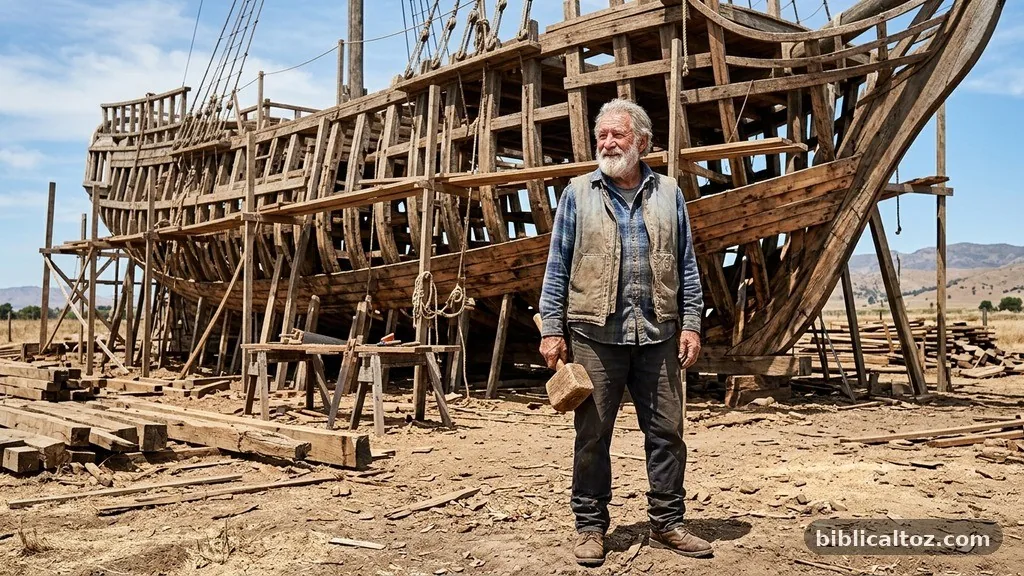
In the early chapters of Genesis, the narrative describes a world that had drifted far from its original purpose. The text notes that the wickedness of man had become great, and every intention of the thoughts of his heart was only evil continually. Amidst this moral decay, one person stood out: Noah.
He is described as a righteous man, blameless in his generation, who walked with God. Because of his character, he found favor in the eyes of the Creator when the rest of the world had turned toward violence and corruption.
God chose to intervene, intending to cleanse the earth through a global flood. However, He provided a way of preservation. Noah received specific, detailed instructions for building an ark, a massive vessel designed to withstand the coming deluge.
This was not a small task; it required immense dedication and resources. The structure was to be made of gopher wood, sealed with pitch inside and out, and built to precise dimensions. This act of building served as a long-term testament to Noah’s faith, as he invested years of his life into a project that defied the skepticism of his contemporaries.
The Journey of Preservation and the Flood
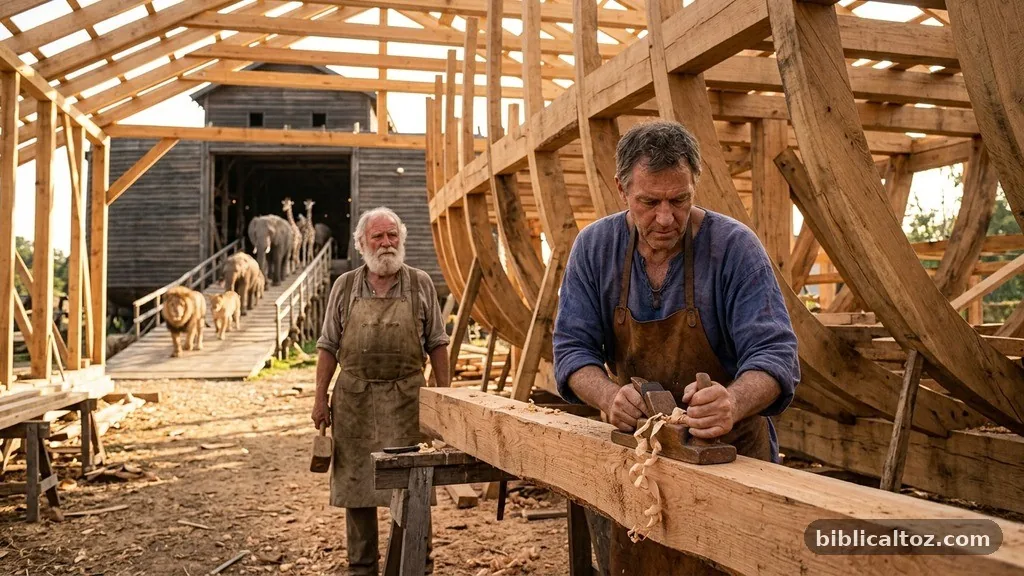
Once the Ark was completed, the time for the gathering arrived. Noah and his family—his wife, his three sons, and their wives—entered the vessel. They were joined by a vast array of animals, representing the diversity of life that would be preserved for the future.
The Bible specifies that pairs of every kind of animal, along with seven pairs of clean animals, entered the Ark to ensure their survival. This moment highlighted the responsibility placed upon Noah to act as a steward for the natural world during a time of total destruction.
The experience of the flood was long and harrowing. Genesis 6–9 describes the rain falling for forty days and forty nights, but the waters remained high upon the earth for one hundred and fifty days. During this time, the Ark drifted, keeping its inhabitants safe while the world outside underwent a radical transformation.
This period tested the endurance and trust of the Noah family. They were confined, waiting on the timing of God, relying entirely on the structure built according to the divine blueprint. It was a season of transition, where the old world passed away and the preparation for a new beginning took place beneath the deck.
The Receding Waters and the Act of Worship
After the floodwaters began to subside, the Ark eventually came to rest upon the mountains of Ararat. Noah did not rush to exit; he waited for the ground to dry sufficiently, using birds—a raven and a dove—to gauge the state of the earth. When the dove finally returned with an olive leaf, it signaled that life was beginning to sprout again.
Upon receiving the command from the Creator, Noah, his family, and all the animals departed the vessel. The first thing Noah did upon setting foot on dry land was to build an altar.
This act of worship was a response to the grace shown to his family. By offering sacrifices, Noah acknowledged the sovereignty of the Creator and expressed gratitude for their deliverance.
It was a pivotal moment in the narrative, marking the transition from survival to restoration. The following table summarizes the key stages of this journey as described in the text:
| Event Phase | Primary Action | Spiritual Focus |
|---|---|---|
| Preparation | Constructing the Ark | Obedience and Faith |
| The Deluge | Waiting inside the vessel | Trust and Patience |
| Restoration | Offering sacrifice | Gratitude and Worship |
The Rainbow Covenant and God’s Promise
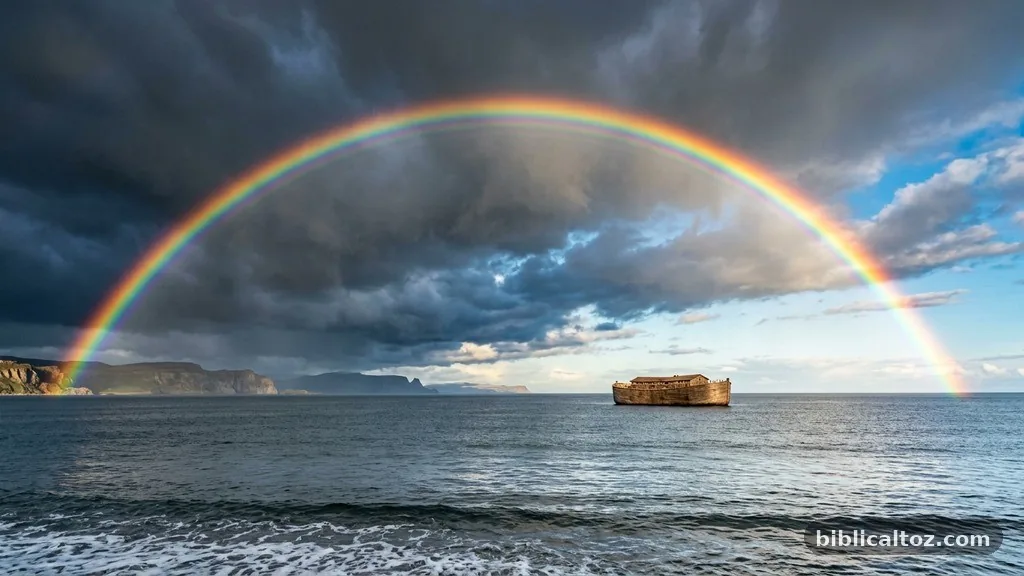
Following the sacrifice, God established a solemn covenant with Noah and his descendants. This promise was a reassurance that the earth would never again be destroyed by a flood. To signify this commitment, the Creator placed a rainbow in the clouds.
This was not just a natural phenomenon but a visual sign of God’s promise to Noah, serving as a reminder of mercy that persists even after judgment. It transformed the sky into a canvas of hope, ensuring that the cycle of seasons would continue.
The covenant included a mandate to be fruitful and multiply, effectively resetting the human experience. Noah and his family were tasked with stewarding the earth, a responsibility that echoed the original intent for humanity. By looking at the rainbow, people were meant to remember that their existence was sustained by divine grace.
This part of the story emphasizes that even after significant hardship, there is a path forward defined by peace and stability. The following list highlights some of the enduring lessons from Noah:
- Faith is demonstrated through long-term, consistent action.
- Obedience to divine instruction provides protection in uncertain times.
- Gratitude serves as a natural response to deliverance.
- The Creator values the preservation of life and biodiversity.
- Covenants remind us of the stability and mercy inherent in the divine plan.
Frequently Asked Questions
Where was the Ark located after the flood?
According to the text, the Ark came to rest upon the mountains of Ararat. While many have searched for physical remnants, the account focuses on the spiritual significance of the landing site as the place where humanity began anew.
How do we understand the scale of the vessel?
The Bible provides specific dimensions for the construction, describing a massive structure that was essentially a floating box. Its design was focused on stability and capacity rather than navigation, emphasizing that it was meant to be kept safe by divine providence.
Was the story of Noah’s Ark a local or global event?
The text describes the flood as a global event that covered the highest mountains under heaven. It is presented as a total transformation of the earth, affecting every living creature and resetting the conditions for life.
Why did God choose to save Noah?
The narrative specifies that Noah found favor because he was a righteous man who walked with God. His character and his willingness to act in obedience set him apart from the corruption that had permeated the rest of the world.
Meaningful Reflections
The account of the Ark is more than a historical record; it is a profound exploration of human integrity and divine faithfulness. By observing the life of Noah, we see how one individual’s conviction can have far-reaching consequences for the entire world. His journey from the construction of the vessel to the establishment of the rainbow covenant illustrates that even in the face of overwhelming adversity, there is a purpose for those who remain steadfast.
Reflecting on the story of Noah’s Ark encourages us to consider our own paths. Whether you are facing personal challenges or seeking a deeper understanding of spiritual history, the lessons of faith and obedience remain highly relevant.
Take a moment today to consider what it means to walk with integrity in your own life. If this account has sparked your interest, continue exploring the rich narratives found in the Bible to uncover more about the foundations of human experience and the enduring nature of divine promises.