Biblical Meaning of the Rapture and End Times Events
Exploring the biblical meaning of the Rapture and end times events offers a window into the hope held by many believers throughout history. While the specific term does not appear in standard English translations of the Bible, the concept arises from foundational passages describing a sudden gathering of faithful followers. Understanding these scriptures requires careful attention to historical context and diverse theological perspectives.
By examining the nuances of these prophetic teachings, we can gain clarity on how different traditions interpret the return of Christ and the unfolding of future events. This overview helps clarify complex ideas, grounding them in the text while maintaining a respectful, balanced approach to these significant spiritual themes.
What Is the Rapture?

The term itself is derived from the Latin word “rapturo,” which translates to “caught up” or “snatched away.” In theological circles, it describes an event where believers are suddenly removed from the earth to meet Jesus in the air.
While the word is absent from the pages of most English Bibles, the doctrine finds its root in specific apostolic writings. Proponents of this view argue that the scriptures describe a distinct moment where the living faithful are transformed and gathered to the Lord.
This event is often discussed in conjunction with the resurrection of those who have already died in faith. It represents a transition point, marking a sudden shift in the status of the church relative to the world. Because the concept is not explicitly named as a single event in every tradition, its definition can vary significantly.
Some view it as a separate incident preceding a period of global hardship, while others see it as a component of the broader return of the Messiah. Regardless of the specific timing, the core focus remains on the anticipation of Christ’s presence.
Where Does the Bible Teach Believers Will Be “Caught Up”?
The primary text often cited to support the idea of being caught up is found in the first letter to the Thessalonians. Paul writes to a community concerned about the fate of those who have already passed away before the return of the Lord.
He provides comfort by explaining that the dead in Christ will rise first, followed by those who are still alive. This meeting occurs in the air, serving as a powerful image of unity between the living and the resurrected.
Another crucial passage is found in the first letter to the Corinthians, where the apostle describes a mystery involving a sudden change at the last trumpet. He notes that this transformation occurs in the twinkling of an eye, emphasizing the instantaneous nature of the event.
These passages are frequently linked with the words of Jesus in the Gospel of John, where he promises to return to take his followers to a place he has prepared. These instances collectively form the basis for the expectation that the church will one day be gathered into the immediate presence of their Savior.
1 Thessalonians 4:13–18 Explained
This passage is arguably the most essential text for understanding the biblical meaning of the Rapture. Paul addresses the grief of believers who fear their departed loved ones might miss out on the glory of Christ’s return.
He begins by stating that he does not want them to be ignorant, providing a clear sequence of events to soothe their anxieties. The passage describes the Lord descending from heaven with a shout, the voice of an archangel, and the sound of a trumpet.
The focus here is not on predicting the end of the world, but on providing comfort to the bereaved. Paul emphasizes that the resurrection of the dead is the first priority in this sequence. Once the dead are raised, the living are then caught up together with them to meet the Lord in the clouds.
This gathering is intended to be a source of encouragement, reminding the church that they will always be with the Lord. It highlights the relational aspect of faith, suggesting that the ultimate goal of these events is the eternal presence of the believer with Christ.
The Resurrection and Transformation of Believers
The transformation of the human body is a central theme in the teaching of the end times. In 1 Corinthians 15, the apostle Paul explains that flesh and blood cannot inherit the kingdom of God in their current, perishable state.
He describes a necessary change, where the mortal puts on immortality and the corruptible puts on incorruption. This process is not merely a spiritual departure but a physical renewal, mirroring the resurrected body of Jesus.
This change is presented as a gift of God, a victory over the sting of death. It implies that the end times are not just about judgment or global upheaval, but about the restoration of humanity to a state of wholeness.
The resurrection serves as the guarantee that the body is valued and redeemed. Whether one is among the living at the time of this event or among the dead who are raised, the end result is the same: a glorified state prepared for the presence of God.
The Second Coming of Jesus
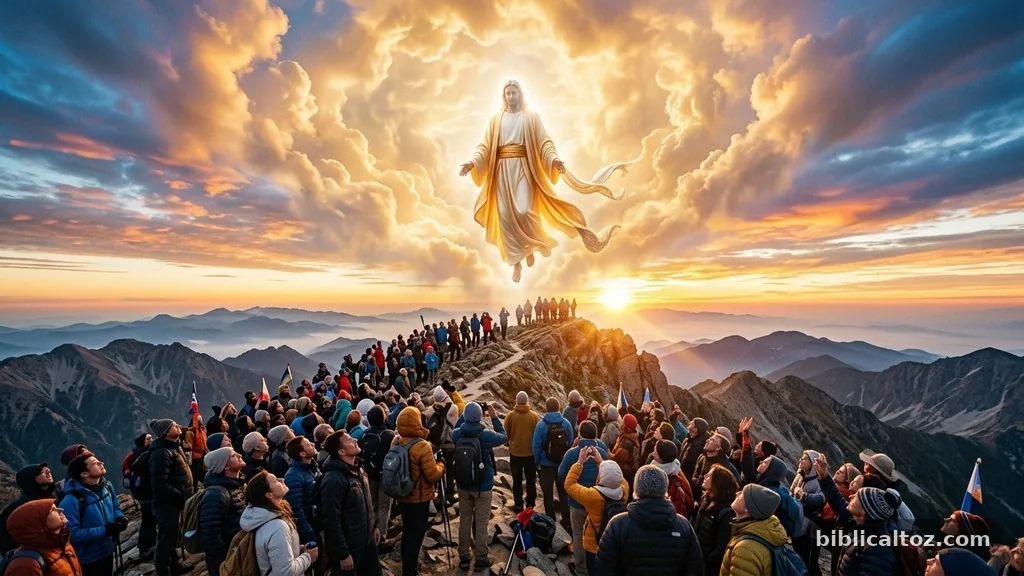
The Second Coming is a broader, more widely recognized event in Christian theology compared to the specific nuances of the Rapture. It refers to the visible, glorious return of Jesus to the earth to establish his kingdom and bring about final justice.
While the gathering of believers is often associated with this return, the Second Coming specifically emphasizes the moment when every eye will see him. It represents the culmination of history, where the sovereignty of God is fully manifested on earth.
Unlike the secret or sudden nature often attributed to the gathering of the church, the Second Coming is described in the Gospels as a cosmic event that cannot be ignored. Matthew 24 describes the sun being darkened and the moon failing to give its light before the sign of the Son of Man appears in the heavens.
This event is the fulfillment of the hope for a new heaven and a new earth, where righteousness dwells. It marks the end of the current age and the beginning of the eternal reign of Christ.
Rapture vs. Second Coming
Distinguishing between the gathering of believers and the final return of Christ is a major point of discussion in theology. The following table highlights some of the common distinctions made in various prophetic frameworks:
| Feature | The Gathering (Rapture) | Second Coming |
|---|---|---|
| Visibility | Often described as sudden or secret | Described as visible to all |
| Location | Meeting in the air | Descending to the earth |
| Purpose | Deliverance of the church | Judgment and establishment of rule |
| Timing | Precedes or coincides with trials | Follows the period of tribulation |
Tribulation and End Times Events
The period known as the tribulation is frequently discussed in the context of the end times, based largely on the book of Daniel and the Revelation of John. It is described as a time of unprecedented distress, a testing period for the world.
Many interpret this as a seven-year week, based on the prophecy in Daniel 9. During this time, the world experiences significant challenges, and the authority of God is challenged by earthly powers.
The biblical meaning of the Rapture is often tied to how one views this period. For those who believe in a pre-tribulation removal, the church is spared from this intense time of testing. Others believe that the church will pass through this period, requiring perseverance and faith.
Regardless of the specific timeline, the focus of these prophetic texts is the ultimate victory of God over evil. They serve as a reminder that even in times of global crisis, the divine plan remains secure.
Different Christian Views of the Rapture
Theology regarding the end times is diverse, with several established perspectives on when the gathering of believers occurs relative to the tribulation. These views are not meant to divide, but rather to reflect different ways of interpreting complex prophetic literature.
- Pre-Tribulation: Suggests the church is removed before the start of the seven-year period.
- Mid-Tribulation: Posits that the gathering occurs halfway through the period of distress.
- Pre-Wrath: Argues that believers remain through the initial trials but are removed before the final judgments.
- Post-Tribulation: Holds that the gathering happens at the very end of the tribulation, coinciding with the Second Coming.
Common Rapture Misconceptions
A frequent misunderstanding is that the concept is a modern invention. While the specific terminology may have evolved, the belief in a gathering of believers is deeply rooted in the writings of the early church.
Another misconception is that these teachings are intended to foster fear or facilitate date-setting. In reality, the biblical intent is to provide comfort, stability, and a call to holy living.
Many also mistake the Rapture for the final end of the world. However, the biblical narrative suggests that these events are part of a transition toward a new creation.
It is not about the destruction of the earth, but its renewal and the reconciliation of all things under the lordship of Christ. Avoiding sensationalism means focusing on the hope these passages provide rather than trying to map them onto current geopolitical headlines.
FAQs
Is the word Rapture found in the Bible?
No, the word itself does not appear in the text of most English Bibles. It is a term used by theologians to describe the concept of believers being “caught up” to meet the Lord, which is explicitly mentioned in passages like 1 Thessalonians 4.
Are we currently in the end times?
Christians have debated the timing of these events for centuries. The Bible encourages believers to live as if the return of Christ could occur at any moment, emphasizing readiness rather than calculating the exact time, as Jesus noted that no one knows the day or the hour.
What happens to those left behind?
Views on this depend on one’s theological framework. Generally, those who are not part of the gathering are described as entering or continuing through the period of tribulation, a time characterized by significant global hardship and eventual judgment.
Why do some Christians disagree on the timing?
The disagreement stems from different ways of interpreting symbolic and prophetic language in the Bible. Because these texts often contain metaphors and complex imagery, scholars and traditions have developed various systems to organize these events into a chronological timeline.
What is the main goal of these teachings?
The primary purpose is not to predict the future with mathematical precision but to offer hope and encouragement. These teachings are meant to inspire believers to live lives of faithfulness, patience, and holiness while waiting for the return of the Lord.
Conclusion
The biblical meaning of the Rapture and end times events is fundamentally rooted in the promise of hope and the restoration of all things. Whether one interprets these prophetic passages through a pre-tribulation or post-tribulation lens, the central focus remains the same: the return of Christ and the union of the church with their Savior.
These teachings are designed to anchor believers in their faith, encouraging them to persevere through challenges and live with a sense of purpose. By shifting the focus away from speculation and toward the character of God, we find the comfort and stability these ancient texts were originally intended to provide.
As you reflect on these significant themes, consider how they might shape your daily walk. The expectation of Christ’s return serves as a powerful motivation for love, service, and integrity.
Instead of becoming distracted by the unknowns of the future, we are invited to trust in the sovereignty of God and the certainty of his promises. If you are looking for more resources to deepen your understanding of these and other biblical topics, we invite you to explore the extensive archives at BiblicalToZ for further study and reflection.