How to Pray the Rosary: A Step-by-Step Guide for Beginners
Learning how to pray the rosary offers a unique way to center your thoughts on the life and teachings of Jesus. By combining vocal repetition with meditative silence, you can move beyond simple recitation into a deeper reflection on the gospel narrative.
While the practice carries a long history in Christian tradition, its core remains straightforward: it is a rhythmic engagement with Scripture, focusing on the story of salvation. Whether you are seeking a daily habit of peace or a structured way to deepen your focus on the person of Christ, this practice provides a steady framework for your personal devotion.
Understanding the Structure of the Rosary
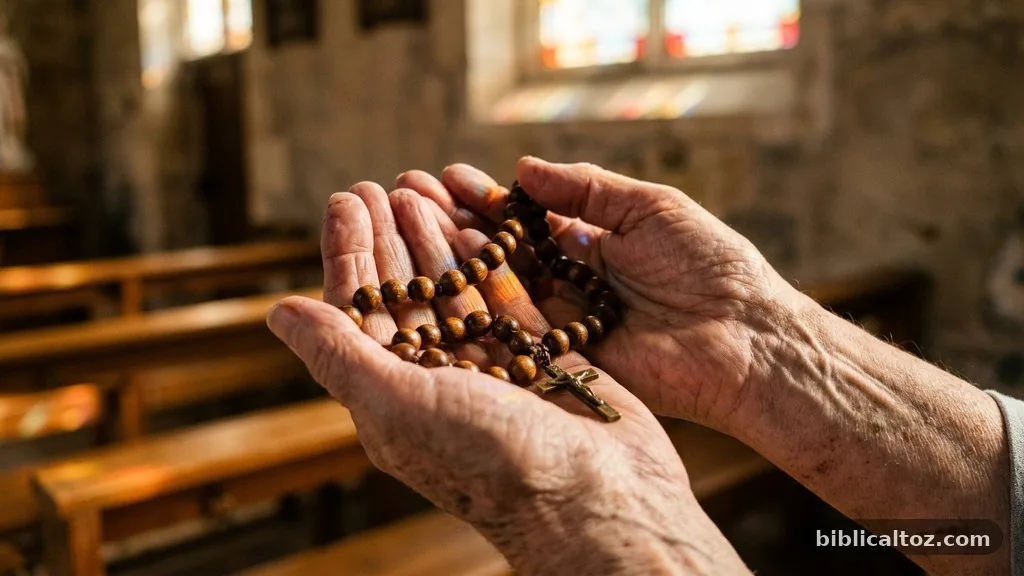
The rosary is more than just a sequence of beads; it is a cycle of prayer that anchors the mind in specific events from the life of Christ. Most people who pray the rosary use a set of beads to keep track of the prayers, which helps minimize distractions during the time spent in reflection.
The structure is divided into decades. Each decade consists of one Our Father, ten Hail Marys, and one Glory Be.
Between these decades, practitioners contemplate a specific mystery—a scene from the life of Jesus or the Virgin Mary. By keeping your hands occupied with the beads and your voice engaged in familiar prayers, your heart is freed to contemplate the deeper meanings of the faith.
The Sequence of Prayers
To begin, you hold the crucifix and make the Sign of the Cross. This opening gesture sets the tone for the time you spend in prayer. After the initial prayers on the crucifix and the first few beads, you enter the main body of the rosary.
- The Apostles’ Creed: Recited on the crucifix.
- The Our Father: Recited on the large beads.
- The Hail Mary: Recited on each of the ten small beads in a decade.
- The Glory Be: Recited at the end of each decade.
- The Hail Holy Queen: Often recited at the very end of the prayer cycle.
The Four Sets of Mysteries

The heart of the experience lies in the mysteries. These are thematic reflections on the life of Jesus. Traditionally, these are rotated throughout the week so that the practitioner reflects on different aspects of the gospel narrative on different days.
| Mystery Set | Focus | Typical Days |
|---|---|---|
| Joyful | The birth and childhood of Jesus | Monday & Saturday |
| Luminous | The public ministry of Christ | Thursday |
| Sorrowful | The suffering and death of Jesus | Tuesday & Friday |
| Glorious | The resurrection and eternal life | Wednesday & Sunday |
How to Meditate While Praying
Many beginners find it difficult to keep their focus during the repetition. The goal of the rosary is not to say the words as quickly as possible, but to allow the rhythm of the prayer to create a quiet space in your mind. As you recite the Hail Mary, you might visualize the specific mystery you are focusing on that day.
If your mind wanders, do not be discouraged. Simply acknowledge the distraction and gently return your focus to the words of the prayer or the image of the mystery.
The repetition serves as a physical anchor. It is meant to be a steady, calming influence that prevents your thoughts from drifting toward the anxieties of daily life.
Common Questions About the Rosary
How do you pray the rosary step by step?
Start with the Sign of the Cross and the Apostles’ Creed on the crucifix. Move to the first large bead for an Our Father, then three small beads for Hail Marys. Follow the circular path of the beads, alternating between the large beads for the Our Father and the decades of ten small beads for the Hail Marys, while meditating on the chosen mystery.
What are the five mysteries to focus on each day?
The mysteries are grouped into sets of five. For example, the Joyful Mysteries include the Annunciation, the Visitation, the Nativity, the Presentation, and the Finding of Jesus in the Temple. You focus on one set per day based on the weekly schedule.
What should I avoid when praying the rosary?
Avoid treating the prayer as a mindless chore or a superstitious ritual. The effectiveness of the practice does not come from the object itself, but from the intent of your heart and your desire to focus on the life of Christ.
Should I sleep with my rosary?
There is no biblical or theological requirement regarding where you keep your beads. Some people keep them under their pillow or on a nightstand as a reminder to pray, but this is a matter of personal preference rather than a spiritual obligation.
Living a Life of Prayer
Engaging in the practice of praying the rosary provides a consistent rhythm that can strengthen your walk with God. By grounding your day in these familiar words, you create a dedicated time to stop, breathe, and center yourself on the story of the gospel. Whether you are praying for others, seeking guidance, or simply looking for a way to stay connected to your faith, this traditional method offers a reliable path.
If you are new to this form of devotion, start slowly. You do not need to memorize every detail perfectly on your first attempt.
The beauty of this practice is that it is meant to grow with you over time. We invite you to explore more resources on BiblicalToZ as you continue your journey of faith and deepen your understanding of these ancient traditions.