Elijah in the Bible: Life, Ministry, and Legacy
The life of Elijah in the Bible represents a pivotal moment in the history of Israel, marking a period defined by intense spiritual conflict and divine intervention. As a prophet who stood against the tide of idolatry during the reign of King Ahab, his narrative offers a profound look at what it means to serve God under immense pressure. By examining his journey—from the dramatic confrontation on Mount Carmel to his quiet moments of exhaustion in the desert—readers can gain a clearer understanding of the challenges and rewards of living a life of faith.
Who Was Elijah the Prophet?
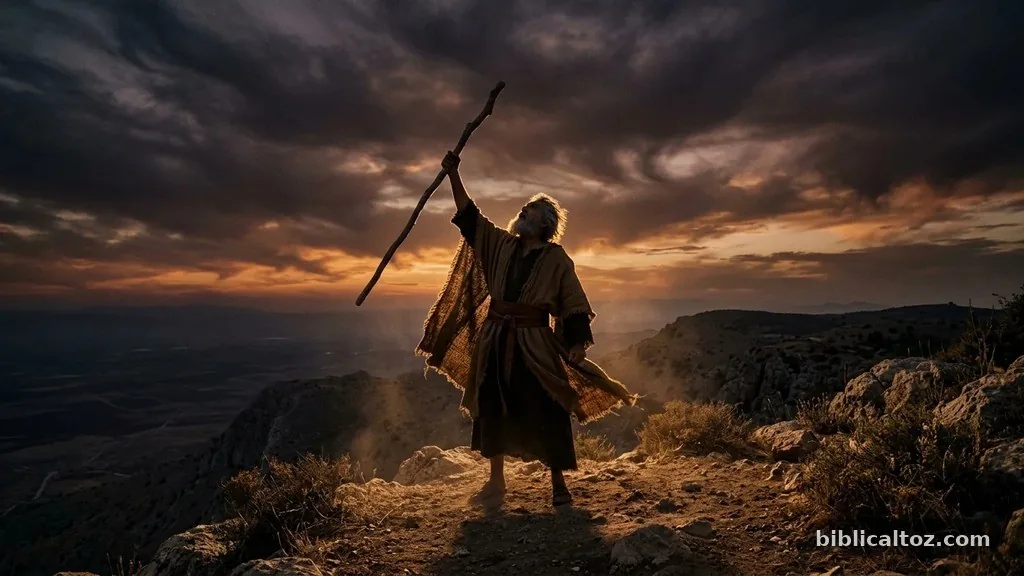
Elijah, whose name means “the Lord is my God,” emerges in the biblical record with little preamble. He appears in 1 Kings 17 as a Tishbite from Gilead, stepping onto the stage of history to deliver a harsh message to the throne of Israel.
Unlike many other prophets who were part of established schools or guilds, Elijah appears as a solitary, rugged figure, often clothed in hair and a leather belt. His identity is inextricably linked to his devotion to the God of Israel, setting him apart as a fierce defender of the covenant during a time when the nation was turning toward the worship of Baal.
Elijah During the Reign of Ahab
The reign of Ahab is described in the Bible as one of the darkest periods in the spiritual history of the northern kingdom of Israel. Ahab, influenced by his wife Jezebel, promoted the worship of Baal, a Canaanite deity associated with fertility and storms.
Elijah’s ministry was a direct response to this state-sanctioned apostasy. He acted as the primary voice of dissent, challenging the king’s authority by asserting that the true source of rain, life, and sustenance was not Baal, but the God of Israel.
Elijah and the Drought
The first major act of Elijah’s ministry was the announcement of a severe drought. This was not merely a natural disaster; it was a theological declaration.
By decreeing that there would be no dew or rain for several years, Elijah directly attacked the claims of Baal, who was believed to control the weather. This period of waiting and scarcity served as a crucible for both the nation and the prophet, demonstrating that the Lord remained in control even when the land was parched and the people were suffering.
Elijah and the Widow of Zarephath
During the drought, the Lord directed Elijah to Zarephath, a town outside of Israel, to be cared for by a widow. This encounter highlights several key themes in the prophet’s life:
- The Lord’s provision transcends national and geographic boundaries.
- Faith is often required in the face of dwindling resources.
- Compassion for the vulnerable remains a central component of the prophetic mission.
- The miraculous is often found in the daily, ordinary acts of obedience.
When the widow’s son fell ill and died, Elijah’s prayer for the boy’s life reaffirmed his role as a messenger of the living God. This event underscored that the power of the Lord was not limited to the public stage but was equally present in the private sorrows of a single family.
Elijah on Mount Carmel
The confrontation on Mount Carmel stands as the most iconic moment in the life of Elijah in the Bible. It was a high-stakes test of power designed to settle the question of who was the true God of Israel. Elijah challenged the prophets of Baal to a contest, where the deity who answered by fire would be recognized as the rightful object of worship.
When the Lord sent fire to consume the sacrifice, the people were forced to acknowledge the truth of Elijah’s message. This event remains a powerful illustration of the triumph of faith over cultural compromise.
Elijah’s Discouragement and Encounter at Horeb
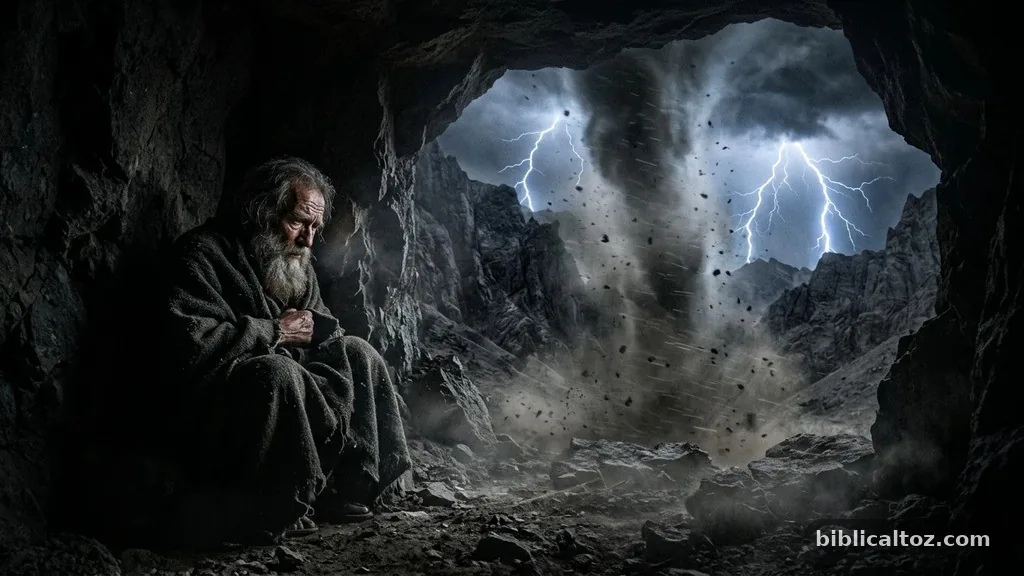
Following his victory on Carmel, Elijah faced a sudden collapse in his morale. Threatened by Jezebel, he fled into the wilderness, where he expressed a desire to die. His experience at Mount Horeb is essential for understanding his humanity.
The Lord did not meet him in the wind, the earthquake, or the fire, but in a “still small voice.” This encounter taught the prophet—and readers—that the work of the Lord is often accomplished through quiet persistence rather than loud, dramatic displays of power.
Elijah and Elisha
The relationship between Elijah and his successor, Elisha, marks the transition of the prophetic office. Elijah found Elisha plowing a field and cast his mantle upon him, a symbolic gesture of choosing him for a shared mission.
Their time together was defined by mentorship and the preparation of a new generation to continue the work. This partnership demonstrates that even the most singular figures in the Bible were part of a larger, ongoing process of divine revelation.
| Event | Significance |
|---|---|
| The Drought | Proving God’s sovereignty over nature. |
| Mount Carmel | Defeating the influence of Baal. |
| The Still Small Voice | Learning to recognize God’s gentle guidance. |
| Mentoring Elisha | Ensuring the continuity of the prophetic line. |
Elijah’s Final Departure
The narrative of Elijah concludes with a departure that is as mysterious as his arrival. He was taken up into heaven in a whirlwind by a chariot of fire, with Elisha as the sole witness.
This event solidified his status as one of the most significant figures in the history of Israel. He did not experience death as others did, which fueled the hope that he would one day return to prepare the way for the coming of the Lord.
Elijah in the New Testament: John the Baptist, the Transfiguration, and Prophetic Expectations
The legacy of Elijah persisted long after his departure. In the New Testament, John the Baptist is identified as fulfilling the spirit and power of Elijah, preparing the hearts of the people for Jesus.
Furthermore, Elijah appeared alongside Moses during the Transfiguration, standing with Jesus as a representative of the Law and the Prophets. These connections show how the ministry of Elijah was not an end in itself, but a signpost pointing toward the arrival of the Messiah.
What Can Readers Learn from Elijah’s Life?
The story of Elijah serves as a reminder that devotion to the Lord often requires standing alone. His life shows that even the most courageous individuals experience periods of deep doubt and exhaustion.
By watching him process his fear and his fatigue, we learn that it is acceptable to bring our struggles directly to the Lord. Ultimately, his journey encourages us to listen for the quiet guidance of the spirit, even when the world around us is loud and chaotic.
Frequently Asked Questions
What was the main story of Elijah in the Bible?
The primary narrative involves his prophetic ministry during the reign of King Ahab, where he stood against the worship of Baal, predicted a drought, and demonstrated the power of the true God through miraculous events like the fire on Mount Carmel.
What was Elijah’s weakness in the Bible?
Like many humans, Elijah struggled with fear and isolation. After his great victory on Mount Carmel, he became overwhelmed by the threats against his life and fell into a state of deep discouragement, even asking God to take his life.
Why was Elijah taken to heaven?
The Bible describes Elijah being taken to heaven in a whirlwind, a unique departure that signaled the completion of his prophetic mission and established his enduring status as a bridge between the old covenant and the future hope of Israel.
How is Elijah connected to John the Baptist?
The New Testament writers describe John the Baptist as walking in the “spirit and power of Elijah.” This connection was a fulfillment of Old Testament prophecies that a forerunner would arrive to prepare the people for the coming of the Messiah.
Conclusion
The story of Elijah in the Bible provides a timeless look at the complexities of faith. His life was not one of constant triumph, but rather a series of moments that balanced public courage with private vulnerability. By engaging with his history, we can see how the Lord works through imperfect people to accomplish great things.
Whether you are facing your own challenges or simply seeking to understand the foundations of the faith, the journey of this prophet offers profound insights into what it means to trust in the Lord. Keep returning to these stories to find the strength and clarity you need for your own path.