Selah Meaning: Biblical Context and Interpretation
The word selah appears frequently throughout the book of Psalms, yet it remains one of the most enigmatic terms in the biblical text. Readers often encounter this mysterious Hebrew word during their daily devotions, only to find that it lacks a simple, universally accepted definition.
Grasping the selah meaning requires looking beyond a single dictionary entry and instead considering the rhythmic, musical, and liturgical life of ancient Israelite worship. By exploring how this term functions within the structure of Hebrew poetry, you can gain a deeper appreciation for the moments of reflection embedded in the inspired scriptures.
Biblical Distribution and Context
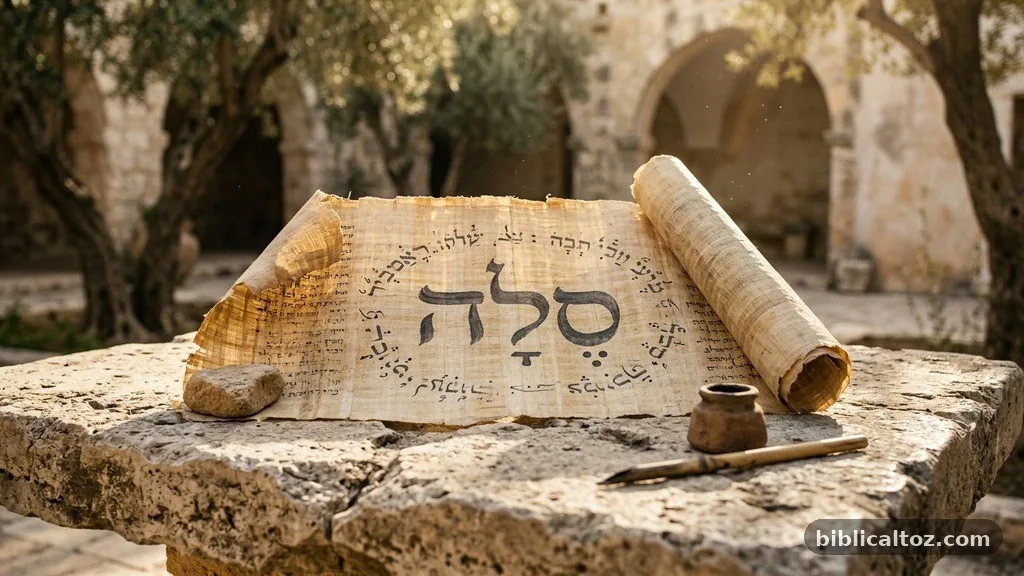
The term is found seventy-one times in the book of Psalms and three times in the prayer of Habakkuk. It almost always appears at the end of a verse or a stanza, acting as a structural marker that separates distinct sections of a song or prayer. Because it appears exclusively in poetic literature, most scholars agree that it served a technical function in the performance of these texts.
In the Psalms, the word often follows a shift in tone or a particularly poignant declaration. For instance, in Psalm 3, the psalmist expresses deep distress while surrounded by enemies, yet concludes the opening section with this term before moving into a statement of confidence. This suggests that the word functioned as a signal for the musicians or the congregation to acknowledge the weight of what had just been sung.
Key Passages of Interest
* Psalm 3:2, 4, 8: Used to punctuate cries for help and declarations of divine protection.
* Psalm 46:3, 7, 11: Highlights the contrast between raging waters and the presence of the Lord.
* Psalm 62:8: Appears after an exhortation to trust in God at all times.
* Habakkuk 3:3, 9, 13: Utilized in a prophetic song to mark transitions in a vision of divine judgment and mercy.
When you analyze these passages, you see that the term is not merely decorative. It is woven into the very fabric of the psalm’s movement.
In Psalm 46, for example, the repetition of the term draws the reader’s attention toward the stillness of God amidst global turmoil. Treating the term as a structural hinge helps you see how the writers of the Bible intended for their words to be felt as much as they were to be read.
Scholarly Perspectives on Function
The primary challenge in defining the term lies in the lack of contemporary records explaining its precise usage. Because the Hebrew language evolved significantly over centuries, the original musical notation system used in the temple eventually became obscure. While many modern readers wish to find a single, fixed translation, scholars remain divided on its exact purpose.
The most common theory is that the term is a musical notation derived from the Hebrew root for to lift up. This could imply a crescendo, a signal for the instruments to play louder, or perhaps an instruction for the singers to lift their voices. Another prominent theory suggests it indicates a liturgical interlude, where the congregation might bow, pray, or remain silent while the instruments continued a melody.
Comparing Interpretive Theories
| Theory | Primary Focus | Implication |
|---|---|---|
| Musical | Volume or Pitch | An instruction to increase sound or intensity. |
| Liturgical | Audience Response | A cue to bow, pray, or reflect in silence. |
| Structural | Textual Division | A mark separating stanzas or thematic sections. |
It is important to note that because the precise function is not definitively established, caution is required when assigning it a single dogmatic meaning. While many devotional resources suggest it always means “pause and think,” this is a modern application rather than a historical certainty. Recognizing this distinction allows you to engage with the text more honestly, respecting the mystery of the ancient Hebrew word while still drawing personal value from the rhythm of the verses.
Translation and Interpretation

Translators have long struggled with how to handle this term. The Greek Septuagint, an early translation of the Hebrew Bible, translates the term as diapsalma, which implies an interlude or a musical break. This has influenced many English translations to simply leave the word transliterated as it appears in the original manuscripts.
The nature of Hebrew poetry relies heavily on parallelism—the repeating or contrasting of ideas—and these markers act as the joints of the poem. When a translator opts to leave the term in the text rather than replacing it with a phrase like “pause here,” they are preserving the original structure of the liturgy. This choice invites you to interact with the text as a living performance rather than a static document.
Practical Application for Devotional Study
Even if the historical function of the term remains debated, you can still use these moments in the Bible to enrich your prayer life. When you encounter the word in your reading, view it as an invitation to stop and process the weight of the previous verses. You don’t need a definitive historical definition to allow the text to move your heart.
- Read the preceding verses out loud to feel the rhythm of the poetry.
- Identify the central emotional shift occurring at the marker.
- Allow for a moment of silence to let the truth of the passage settle in your mind.
- Reflect on how the following verses build upon or contrast with the previous section.
- Consider how these words might be turned into a personal prayer or song of praise.
This approach turns your Bible study into a meditative experience. Instead of rushing to the next chapter, you are choosing to linger in the presence of the text. By treating these markers as intentional hinges, you get to participate in the ancient tradition of worship that the original authors intended.
Frequently Asked Questions
What is the most accurate translation of the term?
There is no single, universally agreed-upon translation. Most scholars believe it is a musical or liturgical instruction, likely related to lifting up the voice or instruments, but its exact meaning is lost to history.
Should I say the word out loud while reading the Bible?
There is no requirement to read it aloud. Most scholars and theologians suggest that it functions as a visual marker for the reader or a technical instruction for a choir, rather than a word meant to be spoken as part of the prayer itself.
Is it the same as saying Amen?
No, the two terms serve different purposes. Amen is a declaration of agreement or truth, often used at the end of a prayer. The term in question is a structural marker used within the body of a song or poem to indicate a transition or a musical interlude.
Can I use the term as a name?
While it is an ancient term, it has become a popular modern name. Choosing it for a name is a personal decision, often rooted in an appreciation for its biblical associations with music, reflection, and worship.
Why do some translations omit the word?
Some modern translations omit it to make the text flow more easily for contemporary readers who may find the inclusion of untranslated technical terms distracting. However, many scholars prefer to keep it to maintain the integrity of the original poetic structure.
Conclusion
Engaging with the mystery of this ancient term offers a unique window into the devotional life of the biblical authors. While we may never possess a perfect understanding of its musical origins, we can clearly see its purpose as a guide for reflection and intensity in worship. By honoring these markers as structural hinges, you allow the Psalms to dictate the pace of your own study, creating space for stillness and contemplation in a busy world.
As you continue to read the scriptures, let these moments of pause serve as a reminder that God’s word is meant to be deeply felt. Whether it was originally a command to raise the volume or a signal to bow in silence, the effect remains the same: a profound invitation to stop, look at the truth of God, and lift your heart in response.