Shechinah Glory in the Old Testament: Meaning and Origins
The concept of Shechinah glory in the Old Testament captures the profound reality of God’s dwelling among His people. While the term itself does not appear in the original Hebrew text of the Bible, it remains a vital piece of theological language used to describe the visible, radiant manifestation of the divine presence.
By examining the accounts of the cloud, the tabernacle, and the temple, readers can gain a clearer perspective on how the Lord interacted with humanity throughout history. This look at the historical and linguistic roots of the term will help clarify why this idea continues to resonate in modern faith discussions.
The Linguistic Origins of the Term

The word Shechinah is not found in the Hebrew Bible. It is a post-biblical term derived from the Hebrew root s-k-n, which means to dwell or to settle. In the Targums—which are ancient Aramaic translations and paraphrases of the Hebrew Scriptures—rabbis used the word “Shechinah” to refer to the immanent presence of God.
This term served as a way to describe God’s nearness without implying that the Creator is physically constrained by a location. It bridges the gap between the infinite nature of the Lord and the finite experience of the people living in ancient times. While it isn’t an inspired word found within the text of Scripture, it effectively summarizes a biblical reality where the divine glory settles upon a specific place or person.
The Cloud and the Manifest Presence
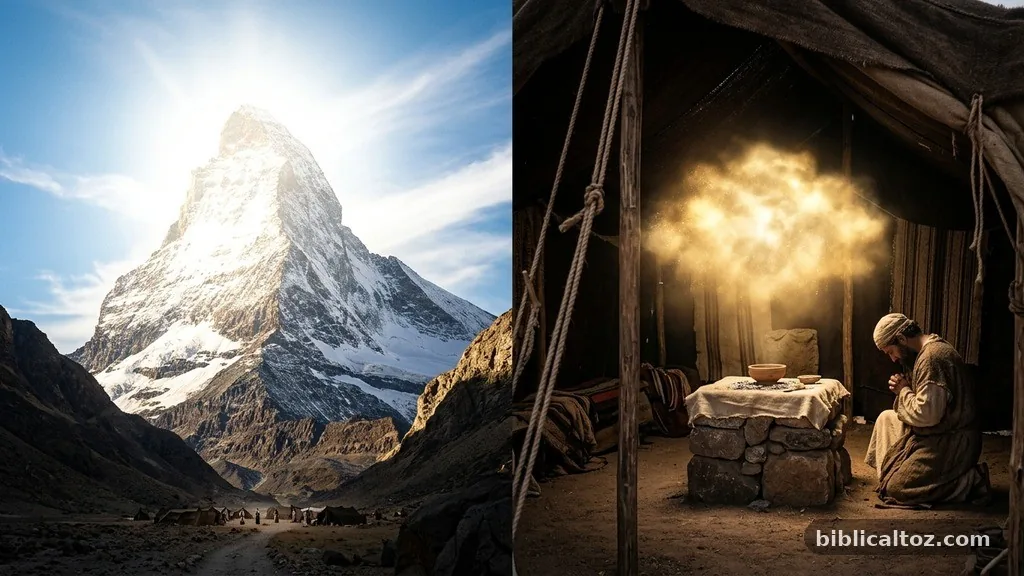
In the Old Testament, the presence of God was often associated with a cloud or a thick darkness. This phenomenon served as a physical sign that the Lord was actively leading and protecting His people. When Moses met with God on Mount Sinai, the mountain was covered in a cloud, and the glory of the Lord rested there like a consuming fire.
This manifestation was not merely a symbolic gesture; it was a powerful, tangible event that changed the environment. The following table highlights key instances where the divine presence was localized in a way that aligns with the later theological concept of the Shechinah.
| Event | Scriptural Context | Manifestation |
|---|---|---|
| Exodus from Egypt | Exodus 13:21 | Pillar of cloud by day, pillar of fire by night |
| Giving of the Law | Exodus 24:16 | Glory of the Lord rested upon Mount Sinai |
| Tabernacle Dedication | Exodus 40:34 | Cloud covered the tent, glory filled the tabernacle |
| Temple Dedication | 1 Kings 8:10-11 | Cloud filled the house of the Lord |
Distinguishing Glory from Shechinah
It is helpful to differentiate between the general concept of glory and the specific usage of the term Shechinah. In the Hebrew Bible, the word for glory is kabod.
It carries the weight of importance, honor, and majesty. When the kabod of the Lord appeared, it was often described as a brilliant light or an overwhelming radiance that humans could barely withstand.
The Shechinah is essentially the “localized” or “dwelling” aspect of that glory. Think of it this way: kabod is the weight or the majesty of God’s character, while the Shechinah is the manifestation of that majesty settling into a space to dwell among humanity. The following list outlines key differences often discussed in theological study:
- Kabod refers to the intrinsic weight or majesty of God, whereas Shechinah is a descriptive term for the presence settling in a location.
- Kabod can be seen in creation or through God’s actions, while Shechinah is specifically tied to the concept of God’s residence.
- The Bible uses kabod as a primary, inspired term, while Shechinah is a tradition-based term used to interpret those occurrences.
The Significance of Dwelling
The central theme behind these manifestations is that God desires to dwell with His people. When the tabernacle was completed, the glory of the Lord filled it so completely that Moses could not enter. This was the ultimate realization of the promise that the Lord would walk among the people of Israel.
This presence was the source of life and direction. It was not a static object but a dynamic, living interaction. When the cloud moved, the people moved.
When the cloud stopped, they pitched their tents. This rhythm of life centered on the awareness of the divine presence, providing a model for how the people were to relate to their Creator in daily life.
FAQs
Is the term Shechinah glory mentioned in the Bible?
No, the word Shechinah does not appear in the Hebrew Bible. It is a later term developed by scholars and rabbis to describe the visible presence of God that is described in passages like Exodus and 1 Kings.
Are Shechinah glory and the Holy Spirit the same?
While both relate to the presence of God, they are distinct in their context. The Shechinah is a term for the visible, localized manifestation of God in the Old Testament, while the Holy Spirit is the third person of the Trinity, who indwells believers in the New Testament.
What is the difference between glory and Shechinah glory?
Glory, or kabod in Hebrew, refers to the weight, honor, and majesty of God’s character. Shechinah is a traditional, descriptive term used to point specifically to the instances where that glory was manifest and settled in a physical location.
How did people experience this glory in the Old Testament?
People experienced the glory of God through physical manifestations like clouds, fire, and overwhelming light. These events were often accompanied by a profound sense of awe, reverence, and the realization that the Creator was in their midst.
Conclusion
Reflecting on the Shechinah glory in the Old Testament invites us to appreciate the lengths to which the Lord went to reveal His presence to humanity. By using terms that describe how He “settled” among the people, we better understand the intimacy of the relationship He sought with Israel. While the word itself is an extra-biblical label, the reality it points to—the radiant, dwelling presence of the Almighty—is woven throughout the tapestry of the Scriptures.
Engaging with these ancient accounts encourages a deeper awareness of how the divine presence continues to shape the lives of those who look to the Bible for guidance today. If you enjoyed this overview, feel free to explore more resources at BiblicalToZ.com to continue your study of the Scriptures.