Wilderness Symbolism in the Bible
The wilderness serves as a recurring landscape in biblical narratives, representing far more than a simple geographical expanse. It acts as a crucible for transformation, a place where the familiar comforts of settled life are stripped away to reveal the raw reality of the relationship between humanity and the divine. By examining these accounts, one can see how this challenging terrain functions as a necessary stage for spiritual development.
The Wilderness as a Place of Testing and Preparation
In the scriptural tradition, the desert is rarely a destination; it is a transition. When the people of Israel fled Egypt, their journey through the wilderness was not merely a physical trek toward a new home.
It was a process of unlearning the habits of slavery and learning to rely entirely on the Lord for provision. This period of waiting taught them that survival was not dependent on their own labor, but on the sustenance provided by the divine.
The Paradigm of Moses and the Israelites
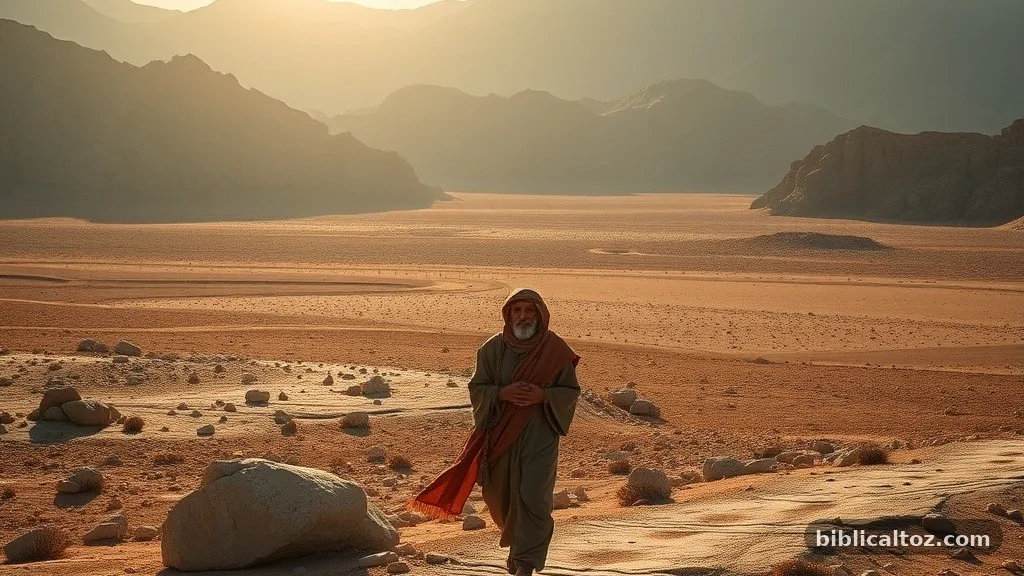
The story of Moses highlights how the wilderness functions as a training ground for leadership. Before he could lead a nation, he had to spend decades in the quiet, isolated spaces of Midian. Similarly, the forty years the Israelites spent wandering served to refine their character. It was in this harsh environment that they were given the Law and established the foundations of their identity as a set-apart nation.
Solitude and Encountering the Divine
Beyond the communal experience, the wilderness is often depicted as a sanctuary for personal encounter. Away from the noise of civilization, individuals find the silence necessary to hear the voice of the Creator.
This theme is evident in the life of Hagar, who, when cast out, found refuge and a promise from the Lord in the desert. The lack of distractions makes the wilderness an ideal location for deep, undistorted worship.
Jesus and the Forty Days
The life of Jesus provides the ultimate model for this spiritual pattern. Before beginning his public ministry, he retreated into the desert for forty days of fasting and prayer. This period of isolation was not an escape from life, but an active engagement with the spiritual realities of his mission. By enduring temptation in the wild, he demonstrated that reliance on the word of God is the primary source of strength against life’s pressures.
Transitioning from Wilderness to Promise
The biblical narrative consistently contrasts the wilderness with the garden or the promised land. While the garden represents cultivation, rest, and abundance, the wilderness represents the hard work of the journey. It is the place where one learns to trust through the process of waiting, knowing that the current season of difficulty is not the final destination.
Finding Purpose in the Waiting
Many people view their own seasons of struggle as a barren desert, yet the Bible suggests these times are vital for growth. Just as the Israelites had to navigate the terrain to reach the land, modern believers are encouraged to view their own “wilderness” moments as opportunities for maturation. Through this lens, the desert is not a sign of abandonment, but a specific place where the divine presence is often felt most keenly. The wilderness is where the soul is prepared for what lies ahead, ensuring that when the time comes to enter the next phase of life, the character is ready to sustain it.