The Tabernacle in the Bible: Meaning, Symbolism, Parts & Significance
The Tabernacle in the Bible serves as a profound window into how a holy God chooses to dwell among His people. Described in great detail throughout the book of Exodus, this portable sanctuary functioned as the center of Israelite life during their wilderness journey.
By examining the structure, the priesthood, and the sacrificial system, readers gain a clearer picture of the holiness of Yahweh and the necessity of atonement. Whether you are studying the layout of the tent of meeting or seeking to understand the foreshadowing of Christ, exploring the Tabernacle in the Bible reveals how God provided a way for sinful people to approach His presence.
What Was the Tabernacle?
The Tabernacle was a portable sanctuary that God commanded the Israelites to build after their departure from Egypt. According to Exodus 25:8, the Lord said, “Let them make me a sanctuary; that I may dwell among them.” It was essentially a specialized tent designed to house the glory of God.
Because the Israelites were nomadic, this structure had to be dismantled, transported, and reassembled as they moved through the desert. It functioned as the focal point of the camp, positioned in the center, signifying that God’s presence was the priority and anchor for the entire nation.
Why Did God Tell Israel to Build the Tabernacle?
The primary purpose of the structure was to establish a dwelling place for God’s glory. Through this, He taught the Israelites that He was near, yet He remained entirely separate from human sin.
The Tabernacle served several vital functions:
- It provided a designated place for communal worship and sacrifice.
- It established the priestly order to mediate between God and the people.
- It reinforced the terms of the covenant made at Mount Sinai.
- It served as a constant visual reminder of God’s holiness and the need for purity.
The Main Parts of the Tabernacle
The design was divided into specific areas, each with a distinct purpose related to the approach toward God.
The Outer Court
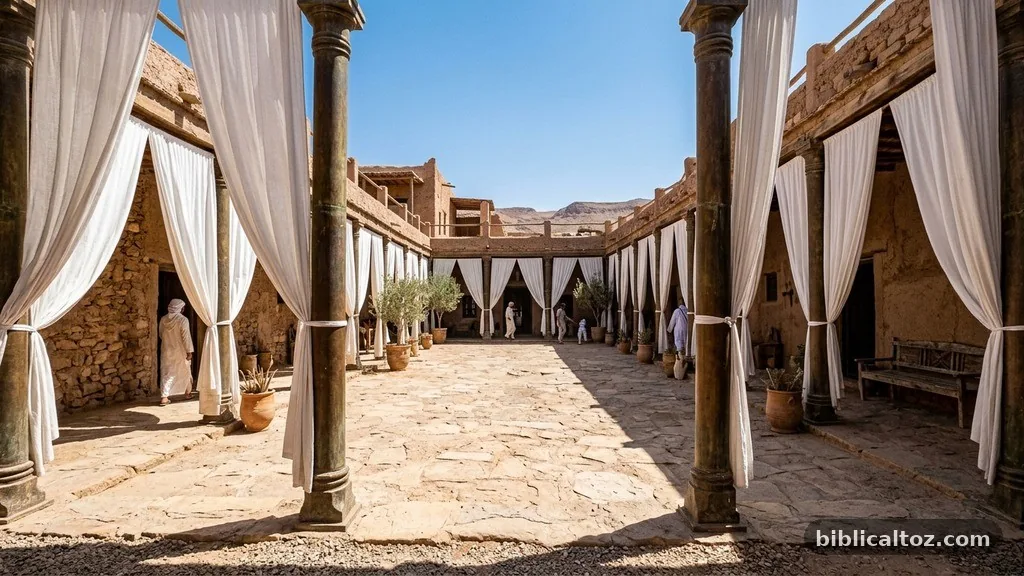
The Outer Court was the large, fenced-in area surrounding the tent itself. It contained the Bronze Altar, where animal sacrifices were offered, and the Bronze Basin, where priests washed their hands and feet before performing their duties.
The Holy Place
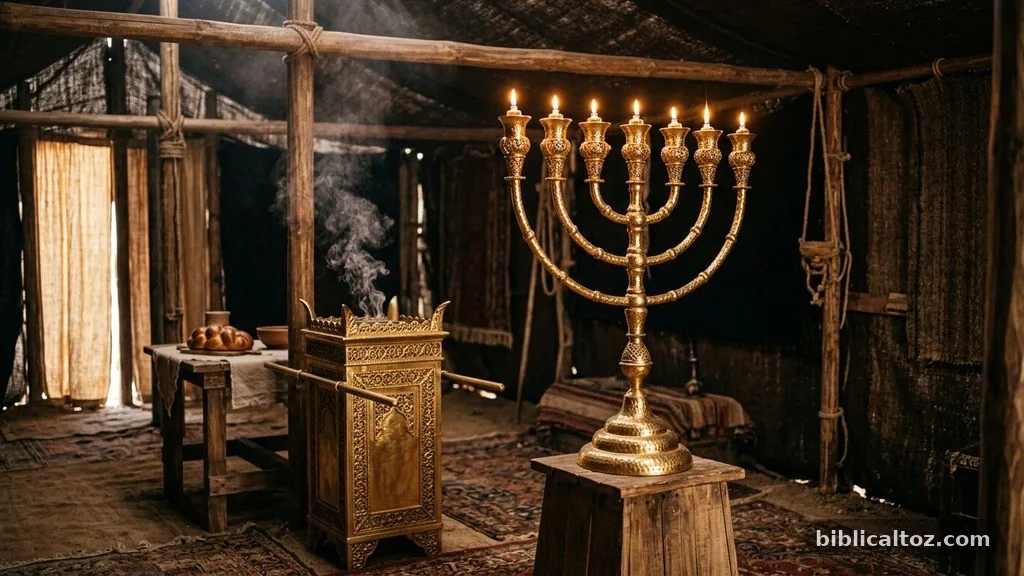
Inside the tent, the first room was known as the Holy Place. It contained three key items:
- The Golden Lampstand: Provided light and symbolized the illumination of God’s truth.
- The Table of Showbread: Held twelve loaves of bread, representing the twelve tribes of Israel before the Lord.
- The Altar of Incense: Where prayers ascended to God like the fragrant smoke.
The Most Holy Place
Separated by a thick veil, the Most Holy Place housed the Ark of the Covenant. This golden box contained the tablets of the Law, a pot of manna, and Aaron’s rod. The lid of the Ark, known as the Mercy Seat, was the place where God’s presence rested above the cherubim.
The Priests and Their Role
The priesthood, established through Aaron and his sons, had the solemn responsibility of maintaining the sanctuary. They were the only ones permitted to enter the Holy Place to trim the lamps or offer incense. The High Priest held a unique position; he was the only individual allowed to enter the Most Holy Place, and even then, he could only do so once per year.
The Day of Atonement
Leviticus 16 describes the Day of Atonement, or Yom Kippur. On this day, the High Priest would enter the Most Holy Place with the blood of a sacrifice.
He would sprinkle this blood on the Mercy Seat to make atonement for his own sins and the sins of all the people. It was a day of intense solemnity, reminding Israel that sin required a life to be given in its place.
What Does the Tabernacle Symbolize?
The Tabernacle symbolism centers on the tension between God’s holiness and human sinfulness. The layers of protection—the fence, the veil, and the priesthood—show that God is approachable but must be approached on His terms. It serves as an object lesson in the gravity of disobedience and the necessity of a substitute to bridge the gap between heaven and earth.
The Tabernacle and Jesus in the New Testament
The New Testament, particularly the book of Hebrews, presents the Tabernacle as a shadow of better things to come. Where the earthly priests offered repeated sacrifices, Jesus Christ offered Himself as the perfect, final sacrifice. He is the true High Priest who entered the presence of God once for all, tearing the veil and providing direct access to the Father for every believer.
Tabernacle vs. Temple
| Feature | Tabernacle | Temple |
|---|---|---|
| Mobility | Portable (tent) | Permanent (stone) |
| Location | Wilderness/Shiloh | Jerusalem |
| Nature | Temporary structure | Fixed, elaborate building |
Common Questions
What does a tabernacle mean in the Bible?
The word literally means a dwelling place or tent. It refers specifically to the portable sanctuary where God manifested His presence to the Israelites.
Why was God so specific about the construction?
The precision was meant to mirror a heavenly pattern and to ensure that the people treated His presence with the reverence it deserves.
What happened to the Tabernacle?
After the temple was built by Solomon, the Tabernacle was eventually replaced, and its specific items were likely moved into the permanent temple or lost during the destruction of Jerusalem.
Does the Tabernacle teach us anything today?
Yes, it teaches us about the holiness of God, the seriousness of our sin, and the immense value of the sacrifice Jesus made to bring us into a relationship with Him.
Lessons for Christians
The primary takeaway for modern believers is that the barrier between God and man has been removed through Christ. We no longer need a physical tent or a human priest to approach God. Instead, we are encouraged to draw near to the throne of grace with confidence.
The Tabernacle in the Bible reminds us that worship is not merely a ritual, but a response to the holiness of the One who chose to dwell among us. As you read through the accounts in Exodus and Leviticus, let the details deepen your appreciation for the finished work of Jesus, who is the ultimate fulfillment of all these shadows.