Spiritual Themes in the Song of Solomon
The Song of Solomon is often misunderstood because its language of intense romantic passion seems out of place in a collection of sacred writings. Many readers feel uncomfortable with the raw, poetic expressions of desire found between the two lovers, leading them to either ignore the text or force it into an allegory that strips away its humanity.
However, when you explore the spiritual themes in the Song of Solomon, you discover a profound celebration of the gift of human connection. This book offers a vibrant perspective on how we reflect the divine through our commitments to one another, providing timeless wisdom for those seeking to honor God in their closest relationships.
What Is the Song of Solomon?
At its core, the Song of Solomon is a collection of lyrical poetry that celebrates the beauty of romantic love and physical attraction. Unlike much of the Old Testament, which focuses on national history or prophetic warnings, this book is a concentrated look at the relationship between a man and a woman. It is structured as a series of exchanges where the lovers express their longing, their admiration, and their joy in each other’s company.
The book is often referred to as the Song of Songs, a title that suggests it is the greatest or most beautiful of all songs. It does not provide a linear narrative in the way a modern novel might; instead, it captures snapshots of affection, courtship, and union. By centering on the experience of two lovers, the text elevates the human experience of love to a place of significance within the canon of scripture.
Who Is the Song of Songs About?
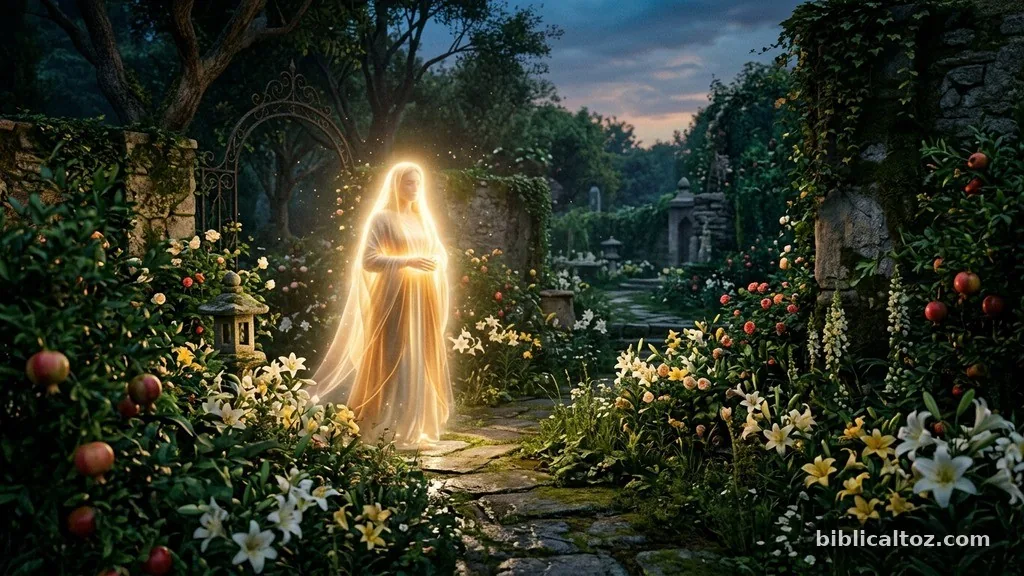
The text primarily features two voices: the beloved and her lover. While some traditions have historically assigned them roles as Solomon and a Shulammite maiden, the characters are best understood as archetypes of human love. They are individuals who are deeply committed to one another, navigating the complexities of attraction, distance, and eventual union.
Because the characters are not defined by historical deeds or political status, they serve as mirrors for the reader. Their focus is almost entirely on the quality of their connection, the depth of their mutual regard, and the exclusivity of their bond. By keeping the spotlight on the relationship itself, the author invites us to consider the sanctity of our own commitments.
Theme 1: Covenant Love
Covenant love is the bedrock of the entire book. It is not merely a fleeting emotion but a steady, intentional choice to belong to another.
The famous declaration in chapter 6, verse 3—that the beloved is her lover’s and he is hers—encapsulates this mutual belonging. This kind of love is secure, providing a safe harbor where both partners can be fully known and fully accepted.
In a biblical context, such love is a reflection of the commitment God makes to His people. It is characterized by loyalty that transcends circumstances. By highlighting this unwavering devotion, the poem sets a high standard for what it means to be united in heart and purpose.
Theme 2: Mutual Admiration
The lovers in the Song of Solomon spend a significant amount of time praising one another. They notice the small details of character and appearance, affirming each other’s value. This mutual admiration is not based on vanity but on a genuine appreciation for the unique qualities of the partner.
When the lover says in chapter 4, verse 7 that his beloved is altogether beautiful, he is not just commenting on her physical appearance. He is expressing a deep-seated appreciation for her personhood. This practice of active, verbal affirmation is a vital component of a healthy relationship, as it fosters an environment of encouragement and security.
Theme 3: Faithfulness and Exclusivity
Exclusivity is a major thread throughout the narrative. The garden imagery used in chapter 4, verse 12—describing the beloved as a locked garden or a sealed fountain—symbolizes the guarded and private nature of their love. It is a relationship reserved solely for one another.
This exclusivity is not meant to be restrictive; rather, it is designed to protect the intimacy that is shared. By setting boundaries, the couple ensures that their love remains a priority, safe from outside interference. This teaches us that true intimacy requires a level of protection and dedication that keeps the bond focused on the two people involved.
Theme 4: Beauty and Attraction
The poem does not shy away from the reality of physical attraction. It uses rich, sensory language to describe the delight the lovers take in one another. From the scent of perfume to the sound of a voice, the text emphasizes that physical attraction is a good and natural part of the human experience when lived out within the bounds of a committed marriage.
This celebration of beauty serves as a reminder that we are created as emotional and physical beings. God, who designed us, intends for us to find joy and pleasure in the person to whom we are united. The text validates these feelings, framing them as a gift to be enjoyed with gratitude and respect.
Theme 5: Desire Within Marriage
Desire is a powerful force in the Song of Solomon. It is presented as a driving energy that draws the couple together.
However, this desire is always framed within the context of their relationship. The longing expressed throughout the verses is a healthy, human response to the beauty of the other person.
By including these expressions of desire, the Bible provides a healthy framework for understanding human sexuality. It is not something to be ashamed of, but something to be celebrated within the safety of a covenantal bond. The poem encourages a mature approach to desire, where it serves as a catalyst for deeper emotional and spiritual closeness.
Theme 6: Communication and Emotional Connection

Communication is the lifeblood of the relationship in the Song of Solomon. The lovers are constantly talking, sharing their dreams, their fears, and their praises. They are adept at expressing their needs and responding to the needs of their partner.
This emotional connection is what sustains them even when they are apart. Their ability to articulate their feelings creates a bridge that keeps them united in spirit. For modern readers, this serves as a practical lesson: the health of a marriage is directly tied to the quality and honesty of the communication between partners.
Theme 7: Patience and the Right Timing of Love
Several times, the poem warns against awakening love before it is ready. The refrain in chapter 2, verse 7 urges the reader not to stir up love until it pleases. This highlights the importance of wisdom and patience in relationships.
Love is a precious thing that requires the right environment and the right timing to flourish. Rushing into deep intimacy without a solid foundation of commitment can lead to unnecessary heartache. The text encourages a thoughtful, measured approach to the development of a romantic bond, honoring the sanctity of the process.
Theme 8: The Strength and Value of Love
The final chapter offers a powerful reflection on the nature of love. It describes love as being as strong as death and as unyielding as the grave. This imagery emphasizes the permanence and the unconquerable nature of a love that is rooted in God’s design.
Love of this magnitude cannot be bought or sold. It is a priceless treasure that must be cultivated and protected. By comparing love to such formidable forces, the poet underscores that true, covenantal love is a transformative power that defines the lives of those who experience it.
Song of Solomon 8:6–7 Explained
The verses in chapter 8 are often considered the climax of the book. They describe love as a fire, a flame that burns with the intensity of the divine. This passage suggests that the love between two people is a reflection of a much larger, eternal reality.
When the text says that many waters cannot quench love, it means that no difficulty or hardship can destroy a bond that is truly anchored in commitment. This is the ultimate hope for any marriage: that it might become a resilient, enduring force that stands the test of time. It is a high calling, but one that is made possible through the grace of God.
Spiritual Interpretations of Song of Solomon
The interpretation of this book has historically balanced two main views. One is the literal, relational view, which sees the poem as a celebration of human love and marriage. The other is the typological or allegorical view, which sees the relationship as a picture of the love between God and His people, or between Christ and the Church.
Both views hold value and are not mutually exclusive. When we read it as a guide for human relationships, we learn how to love one another better.
When we read it as a reflection of divine love, we gain a deeper appreciation for the beauty and intensity of God’s devotion to us. The poem acts as a mirror, showing us the potential for deep unity in both our human marriages and our relationship with the Creator.
Theme Comparison Table
| Theme | Example Passage | Biblical Idea | Modern Application |
|---|---|---|---|
| Covenant Love | Song of Solomon 6:3 | Mutual belonging and loyalty | Choosing your partner daily |
| Exclusivity | Song of Solomon 4:12 | A bond set apart | Protecting the marriage circle |
| Communication | Song of Solomon 5:16 | Honest, loving speech | Practicing active listening |
| Right Timing | Song of Solomon 2:7 | Wisdom in progression | Building a foundation first |
What Christians Can Learn About Love and Marriage Today
The Song of Solomon teaches us that marriage is a holy space where human affection, physical attraction, and spiritual commitment meet. It challenges us to move beyond superficial interactions and to pursue a relationship defined by honesty, admiration, and endurance.
We learn that physical beauty is to be cherished, but character is what sustains the bond. We learn that communication is not just about logistics, but about connecting our hearts. Most importantly, we learn that marriage is a reflection of a deeper, spiritual reality—a witness to the world of the faithfulness that God shows to His people.
Common Misunderstandings
One common mistake is viewing the book as purely sexual or purely allegorical. By focusing too heavily on one, readers often miss the holistic message of the text.
It is not merely a manual for romance, nor is it a dry theological treatise. It is poetry—a medium designed to engage the heart and the imagination.
Another misunderstanding is the idea that every relationship must mirror the exact emotional intensity of the poem. The Song of Solomon portrays a high ideal, but it does not dictate that every day of marriage must feel like a romantic masterpiece. It provides a vision of what is possible, encouraging us to strive for deeper connection even when life is mundane.
FAQs
Is the Song of Solomon only about marriage?
While the text is centered on the union of two lovers, it speaks broadly to the nature of human intimacy and the value of committed, exclusive love. Its principles regarding admiration, communication, and patience are applicable to any deep, covenantal relationship.
How should I interpret the poetic imagery?
The imagery should be viewed as metaphors for the beauty and intensity of the relationship. Rather than creating a rigid dictionary of symbols, focus on the emotion and the intent behind the poet’s words, such as the feeling of being cherished or the desire for closeness.
Does the book promote a specific type of love?
It promotes a love that is intentional, mutual, and exclusive. It is a love that involves the whole person—mind, body, and spirit—and is framed by a commitment that remains strong through all seasons of life.
Why is the Song of Solomon in the Bible?
Its presence in the canon validates the human experience of love and marriage as a significant part of the life of faith. It serves as a reminder that God is the author of intimacy and that our relationships are meant to be a reflection of His love for us.
Can this book help with relationship advice today?
Yes, it offers timeless wisdom on the importance of verbal affirmation, the necessity of protecting the bond of marriage, and the value of patience. By applying these principles, couples can foster a more secure and meaningful connection.
Conclusion
Engaging with the spiritual themes in the Song of Solomon invites us to view our own relationships through a lens of grace and intentionality. The book reminds us that love is a profound gift, one that requires our full devotion and careful tending. As you reflect on these verses, consider how you might practice greater appreciation for your partner or how you might cultivate a more secure foundation in your own commitments.
This ancient poetry remains relevant because it touches on the universal human longing for deep, lasting connection. Whether you are seeking to strengthen a marriage or simply wanting to understand the biblical view of love, the Song of Solomon offers a rich, vibrant path forward. We invite you to continue your study of these scriptures, letting their wisdom shape the way you love those around you.