What Does the Bible Say About Dinosaurs: Faith and Fossils?
Many people find themselves searching for answers regarding the intersection of ancient history and sacred texts when they wonder what the bible say about dinosaurs. While the word dinosaur does not appear in the pages of scripture, the curiosity remains because of the massive gap between modern scientific discovery and traditional religious narratives.
Readers often seek to reconcile the existence of prehistoric creatures with their faith, looking for clues hidden in ancient descriptions of nature. By examining the context of the creation week, the flood, and mysterious creatures mentioned in the book of Job, we can better understand how these two worlds might relate to one another.
Biblical Perspectives on Ancient Creatures
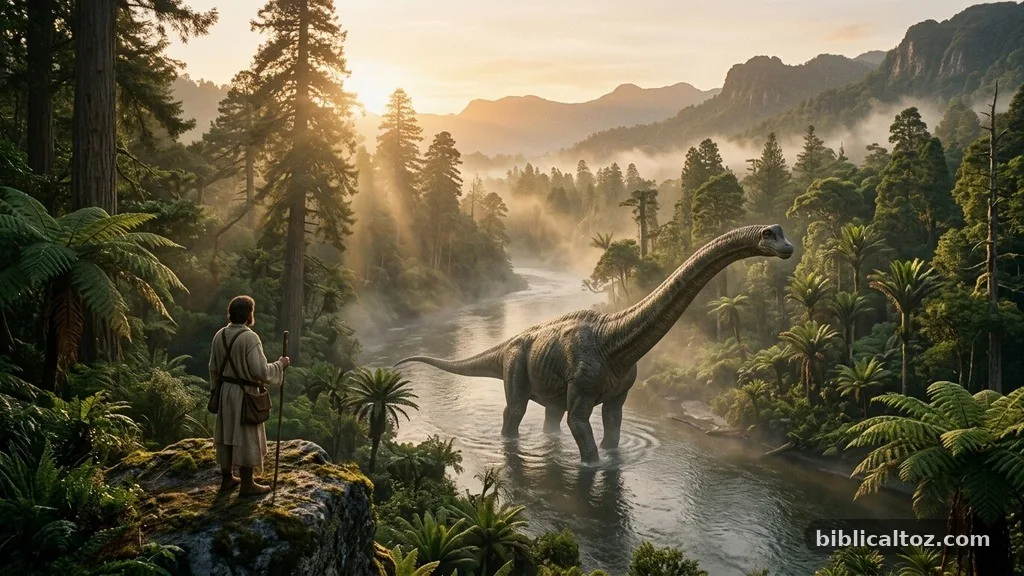
The primary reason the term dinosaur is absent from the Bible is linguistic. The word itself was not coined until 1841 by Sir Richard Owen.
When the King James Version was translated in the early 17th century, the translators used terminology that reflected the scientific understanding of their era. However, this does not mean the text ignores the existence of massive, powerful animals.
The Behemoth and the Leviathan
In the book of Job, God speaks to Job from a whirlwind, highlighting two magnificent creatures to demonstrate His sovereignty over the natural world. In Job 40, the text describes the Behemoth: “Behold now behemoth, which I made with thee; he eateth grass as an ox.
Lo now, his strength is in his loins, and his force is in the navel of his belly. He moveth his tail like a cedar: the sinews of his stones are wrapped together.”
Some researchers suggest this description of a tail like a cedar tree points toward a sauropod dinosaur, given its massive size and herbivorous diet. Others argue the passage refers to a hippopotamus or an elephant, noting that the poetic language of the ancient Near East often employed hyperbole to emphasize power. Similarly, the Leviathan described in Job 41 is often interpreted as a sea monster or a crocodile, though its description—breathing fire and smoke—leads some to wonder if it reflects a memory of a prehistoric marine reptile.
Creation Chronology and the Age of the Earth
Understanding what the bible say about dinosaurs requires a look at how different traditions interpret the creation week. These views generally fall into three categories regarding the age of the Earth and the timing of animal life.
- Young Earth Creationism: Proponents believe the earth is roughly 6,000 to 10,000 years old, meaning humans and dinosaurs likely lived at the same time.
- Old Earth Creationism: This view suggests the creation days in Genesis represent long geological epochs, allowing for the existence of dinosaurs millions of years before the appearance of humans.
- Theistic Evolution: Many hold that God used evolutionary processes over billions of years to bring about the diversity of life, viewing the Genesis account as a theological narrative rather than a scientific textbook.
The Flood and the Fossil Record
A central point of debate involves the global flood described in the time of Noah. Those who follow a literal interpretation of the flood often argue that the fossil record is largely a byproduct of this cataclysmic event.
In this view, many animals were buried rapidly by sediment and water, explaining the distribution of fossils. Critics of this theory point to the vast geological columns and radiometric dating methods that indicate these creatures lived and went extinct long before the emergence of human civilization.
Comparing Interpretations of Prehistoric Life
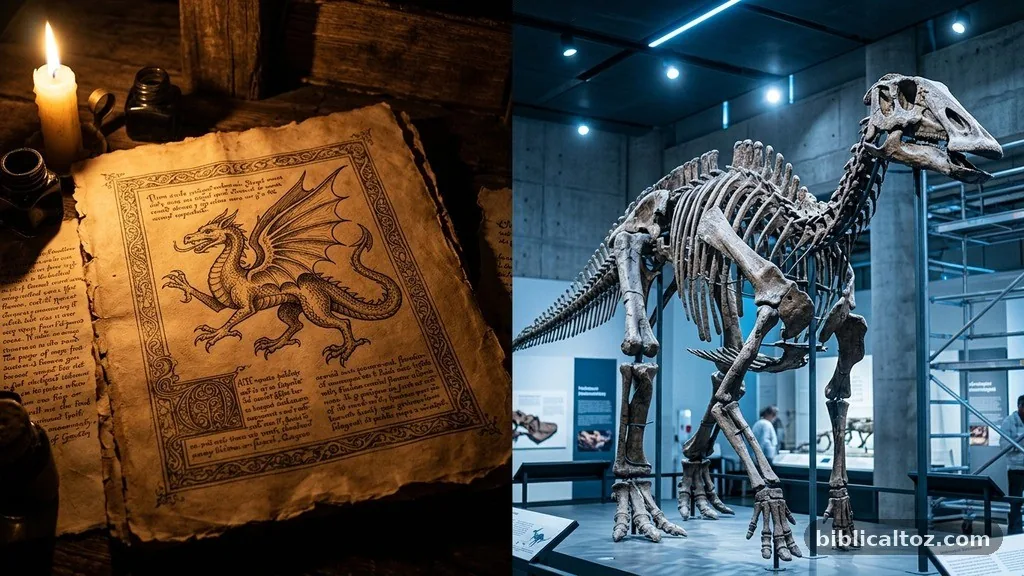
To see how these perspectives differ, it is helpful to look at how each framework accounts for the presence of these creatures in the historical narrative.
| Perspective | Dinosaur Timeline | Relationship to Humans |
|---|---|---|
| Young Earth | Created during the six-day week | Coexisted with early humans |
| Old Earth | Lived millions of years ago | Extinct long before human creation |
| Theistic Evolution | Part of an evolutionary process | Successive eras of life, no overlap |
Reconciling Faith with Scientific Discovery
The challenge of integrating faith with science often feels daunting, yet many find that the two fields can coexist without conflict. Science focuses on the mechanics of the natural world—how things happen—while theology addresses the meaning and purpose behind those events. When asking what the bible say about dinosaurs, it is helpful to remember that the scriptures were written to reveal the nature of God, not to provide a comprehensive catalog of every species that has ever roamed the planet.
Many believers find peace in the idea that the Bible does not need to address every scientific discovery to be considered true. The focus remains on the relationship between the Creator and the created, regardless of whether that creation spanned six days or six million years. Viewing the natural world as a testament to creative complexity allows for a deep appreciation of both the fossil record and the spiritual truths found in the text.
Frequently Asked Questions
Did dinosaurs live alongside humans?
There is no archaeological evidence to support the idea that humans and dinosaurs lived together. While some traditions point to ancient dragon legends as potential memories of dinosaur encounters, the scientific consensus maintains that non-avian dinosaurs went extinct approximately 66 million years ago, long before the first hominids appeared.
Is the Behemoth definitely a dinosaur?
Most biblical scholars view the Behemoth as a poetic representation of raw power. While it is possible the author was inspired by large animals, identifying it as a specific dinosaur is speculative and relies on modern definitions that the original audience would not have possessed.
How do fossils fit into a biblical worldview?
For many, fossils are seen as a record of the history of the earth that God created. Whether one interprets the earth as young or old, fossils are often viewed as a way to understand the vastness of the natural history that preceded our current era.
Why does the Bible not mention dinosaurs by name?
The Bible does not mention dinosaurs by name because the term was invented thousands of years after the text was written. The authors used the common language of their time to describe the world around them, focusing on themes relevant to the spiritual life of the people.
Can a person believe in science and the Bible?
Yes, many people successfully integrate scientific discovery with their religious faith. They often view scientific study as a way to learn more about the mechanics of the world and the Bible as the source for understanding the purpose and morality of human existence.
Summary and Reflection
Exploring what the bible say about dinosaurs reveals more about our search for meaning than it does about the creatures themselves. We are naturally drawn to understand how our faith aligns with the physical evidence we find in the earth beneath our feet. While the text does not contain a biological classification of prehistoric life, it invites us to marvel at the scale and wonder of the world God created.
Whether you view these animals as ancient, extinct creatures or as part of a poetic narrative about divine power, the pursuit of truth remains a valuable endeavor. We hope this overview helps you reflect on these complex questions with confidence. If you enjoyed this look into ancient history and faith, please check back for more insights on our site.