Sanctification in the Bible Explained: Growing in Holiness
Grasping the core of sanctification in the Bible explained requires a shift in perspective from mere moral improvement to a life dedicated entirely to the Lord. Many believers find themselves wondering how to reconcile their standing before God with their daily struggle against internal flaws.
This process is not about earning merit, but about the ongoing transformation that occurs when a person is set apart for divine purposes. By looking closely at the scriptures, you will discover that growth in holiness is a collaborative reality involving both the power of the Spirit and the intentional response of the believer.
What Is Sanctification?
At its heart, the term refers to being set apart. In the original languages of the Bible, the concept carries the weight of being consecrated or made holy for exclusive use by God.
When we consider sanctification in the Bible explained through a theological lens, we see it as the process by which a person is progressively conformed to the image of Jesus. It is not just about avoiding bad behavior; it is about becoming a vessel used for the glory of the Creator.
The scriptures emphasize that this status is both a past event and a present reality. Positionally, a believer is already considered holy because of their union with Christ.
Practically, however, that holiness must work its way into every corner of human existence. It is the restoration of the divine image that was marred by the fall, ensuring that the life of the follower of Jesus increasingly reflects the character of the Lord.
What Does the Bible Mean by Holiness?

Holiness is frequently misunderstood as a synonym for moral perfection or social isolation. Biblically, holiness signifies “otherness” or belonging entirely to God.
When the scriptures command us to be holy as He is holy, they are calling for a life that is distinct from the patterns of the world. It is a state of being dedicated to the purposes of the kingdom rather than the appetites of the flesh.
This quality is inherently relational. Because God is the source of all holiness, we only experience it in proximity to Him. As we draw near, the light of His character exposes our inconsistencies, leading us to repent and realign our hearts.
Holiness is not a cold, distant standard; it is the warm, vibrant life of God lived out in a human context. It is the mark of a life that has been claimed by the Savior.
Sanctification and Justification: What’s the Difference?
Distinguishing between these two terms is vital for a clear understanding of the Christian life. While they are inseparable in experience, they serve different functions in our relationship with God.
| Feature | Justification | Sanctification |
|---|---|---|
| Definition | Legal standing before God | Internal transformation |
| Timing | Instant and complete | Ongoing and progressive |
| Agency | God’s work alone | God’s work and our cooperation |
| Result | Declared righteous | Made holy in conduct |
Justification happens the moment someone trusts in Christ. It is a forensic declaration where God views the believer through the lens of the Savior’s perfection.
Sanctification, by contrast, is the lifelong journey of becoming in practice what you already are in position. You are justified once, but you are being sanctified throughout your entire life.
Is Sanctification Instant or a Lifelong Process?
The tension in the Bible often confuses those who look for a single moment of “arrival.” Some passages speak of sanctification as an accomplished fact, while others describe it as a race to be run.
This “already/not yet” reality is the heartbeat of Christian growth. We are already saints by the call of God, yet we are still in the process of putting off the old ways.
This journey is neither instant nor finished until we see the Lord face to face. It is a series of daily surrenders, moments of grace, and persistent reliance on the Spirit.
Expecting an instant transformation into perfection often leads to discouragement. Instead, the scriptures invite us to view our growth as a steady, grace-fueled movement toward maturity, marked by resilience rather than immediate flawlessness.
The Holy Spirit’s Role in Sanctification
Without the active presence of the Holy Spirit, growth is impossible. The Spirit acts as the internal engine of change, applying the work of Christ to the heart.
As described in Romans 8:1–17, the Spirit provides the power to overcome the desires of the flesh. We are no longer debtors to our old nature; we are led by the Spirit into a new way of living.
Galatians 5:16–25 provides a clear picture of this dynamic. The believer is invited to “walk by the Spirit,” which results in the fruit of love, joy, peace, and self-control. This is not a passive experience where the person does nothing; rather, it is a life of active dependence.
We keep in step with the Spirit by turning away from self-reliance and leaning into the strength that God provides. The Spirit illuminates the Word, convicts the heart, and empowers the change that we cannot achieve through willpower alone.
The Christian’s Role in Spiritual Growth
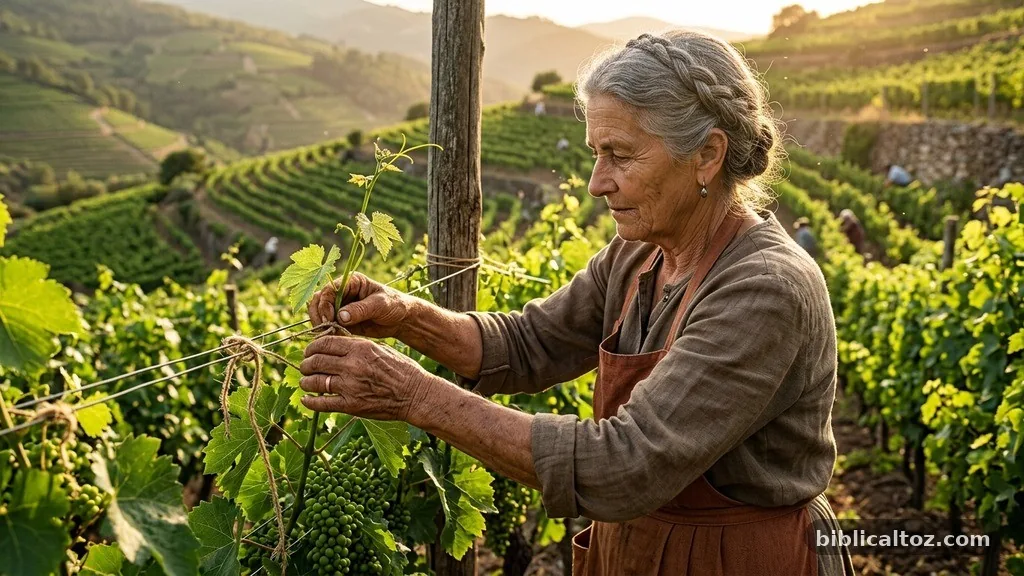
While the Spirit is the source of power, the Christian is responsible for the pursuit of holiness. This is often described as a synergy—God works, and we work.
We are not spectators in our own transformation. Our participation takes several concrete forms:
- Consistent prayer, which aligns our desires with God’s will.
- Regular engagement with the Scriptures to renew our minds.
- Active participation in a community of believers for accountability and encouragement.
- Frequent repentance, turning away from sin as soon as it is identified.
- Intentional obedience to the commands found in the New Testament.
This effort is not legalism. Legalism tries to earn God’s love through deeds; biblical growth is the fruit of already being loved. We act because we are already His, and we want our lives to reflect the beauty of that belonging.
Why Do Christians Still Struggle With Sin?
The presence of sin in the life of a believer can feel like a contradiction, yet it is a consistent theme throughout the Bible. We live in a world that is not yet fully redeemed, and we still possess the residue of our old nature.
Romans 6:1–14 reminds us that while we are dead to sin, we must still consider ourselves dead to its power. It is an ongoing battle of the will.
Struggle is not necessarily a sign of failure; it is often a sign of life. Those who are truly walking with the Lord are the ones most sensitive to the presence of sin.
The goal is not to reach a state where we no longer face temptation, but to reach a state where we are increasingly quick to turn to Christ when we fall. It is a life of constant return to the cross.
What Does “Be Transformed” Mean?
Romans 12:1–2 serves as a cornerstone for understanding the mechanism of change. Paul urges the believers to present their bodies as a living sacrifice, which is described as their reasonable service.
The transformation occurs through the “renewing of the mind.” We are no longer to be conformed to the pattern of this age, but to be reshaped by the truth of God.
This requires a radical shift in how we process information and experience the world. When our thinking is captured by the Gospel, our desires follow.
We begin to value what God values and reject what He rejects. This is not about surface-level changes; it is about a foundational rewrite of our internal operating system.
Signs of Spiritual Growth
Maturity is rarely measured by a checklist of external behaviors. Instead, it is found in the deepening of one’s character and the consistency of one’s walk.
The fruit of the Spirit is the most reliable indicator of progress. Look for these signs of growth:
- Increased sensitivity to sin and a quicker desire to repent.
- A growing love for others, even those who are difficult to love.
- A deeper reliance on prayer and the Word of God during difficult times.
- A decrease in self-centeredness and an increase in service to others.
- Greater peace and patience in the midst of life’s trials.
These are not markers of arrival, but markers of a life that is heading in the right direction. Maturity is the ability to handle life’s pressures with the character of Christ.
Frequently Asked Questions
Can you explain sanctification in a simple way?
Sanctification is the process of being made holy. Imagine it as being set apart for a special purpose, like a tool that is cleaned and dedicated for a specific job. In the life of a believer, it means God is cleaning out our old habits and filling us with His character so we can live for Him.
Is being sanctified the same as being saved?
They are related but distinct. Being saved, or justified, is the moment God declares you righteous through faith in Jesus. Sanctification is the lifelong process that follows, where you actually start living out that righteousness in your daily choices and character.
How do I know if I am sanctified?
You can see it in the trajectory of your life. If you find yourself more concerned with pleasing God, more aware of your need for His grace, and increasingly inclined to love others, you are experiencing the work of the Spirit. It is not about being perfect, but about being changed.
What are the three ways Christians are sanctified?
The Bible speaks of it as a past event (we were set apart at salvation), a present process (we are being made more like Christ), and a future hope (we will be made perfect when we see Him). All three are true for the believer at the same time.
Conclusion
Growing in holiness is the adventure of a lifetime. It is a journey that begins with the grace of God and continues through our daily commitment to walk in His ways.
By understanding that this process is both a gift and a task, you can find the balance between resting in the finished work of Christ and actively pursuing the life He has called you to lead. Do not be discouraged by the distance yet to travel; instead, look at how far you have come by the power of the Spirit.
Keep your eyes fixed on the Lord, stay rooted in the community of faith, and remain diligent in the simple disciplines of prayer and reading the Word. As you do, you will find that the process of sanctification in the Bible explained is not just a theological concept, but a living, breathing reality that transforms your heart one day at a time. Your growth is a testimony to the ongoing work of the Savior, who promises to complete what He has begun in you.