Lessons from Ruth and Naomi: Loyalty and Redemption
The narrative of Ruth and Naomi remains one of the most poignant accounts in the Bible, offering a timeless exploration of faithfulness amidst profound grief. By examining the lives of these two women, readers gain insight into how devotion and integrity can shape a legacy that spans generations.
Their journey from tragedy to restoration demonstrates that even in the darkest seasons of life, there is room for hope, courage, and unexpected grace. Understanding the lessons from Ruth and Naomi requires looking closely at their choices, their cultural context, and the eventual fruit born from their unwavering commitment to one another.
The Historical and Narrative Context
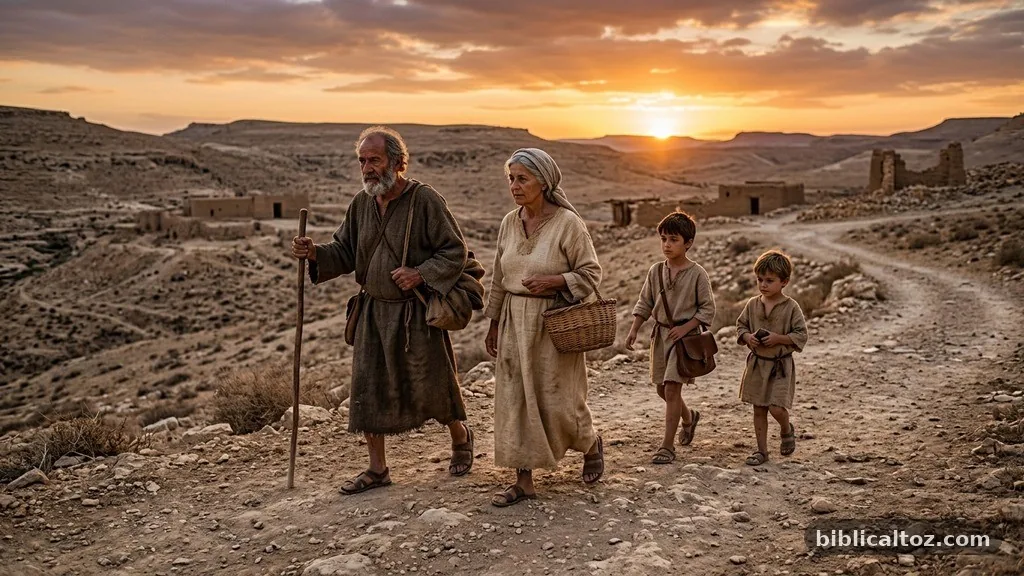
The story begins in the days when the judges ruled in Israel, a period often characterized by social instability and moral confusion. Elimelech, a man from Bethlehem, moved his family to the land of Moab due to a severe famine, which was a significant departure from his ancestral home.
Within the foreign territory of Moab, Elimelech died, leaving his wife, Naomi, to raise their two sons, Mahlon and Chilion, on her own. Eventually, the sons married Moabite women named Orpah and Ruth, integrating their lives into a culture that was historically distinct from their own.
Tragedy struck again when both Mahlon and Chilion died, leaving Naomi, Orpah, and Ruth as widows in a society where a woman’s security was almost entirely dependent on her husband or father. The loss of these three men stripped Naomi of her status, her financial stability, and her primary support system.
This setting is crucial for understanding the weight of the subsequent narrative, as it establishes the extreme vulnerability both women faced. Naomi, feeling the bitterness of her circumstances, decided to return to her homeland, setting the stage for one of the most famous declarations of loyalty in scripture.
The Choice of Loyalty
When Naomi prepared to depart for Bethlehem, she urged her daughters-in-law to remain in Moab and seek comfort with their own families. Orpah chose to stay behind, but Ruth refused to be separated from Naomi, expressing a devotion that transcended mere familial obligation.
Her pledge to follow Naomi, adopt her people as her own, and embrace her God represents a radical shift in identity and destiny. This decision was not made in ignorance of the hardship ahead; rather, it was a conscious, sacrificial act of love.
The significance of Ruth’s commitment lies in its permanence and its disregard for personal gain. She left behind her homeland, her customs, and her chances for a stable future in a familiar environment to walk into an uncertain life with an elderly, grieving mother-in-law.
This loyalty serves as a foundational element among the various lessons from Ruth and Naomi. It teaches that true faithfulness often requires leaving behind the known to support someone who has nothing left to give in return, reflecting a profound depth of character that defies simple social expectations.
Return to Bethlehem and the Role of Boaz
Upon arriving in Bethlehem, the two women faced the harsh reality of poverty and the need for immediate sustenance. Naomi, feeling the sting of her losses, famously asked the people of the city to call her Mara, meaning bitter, because of the emptiness she felt.
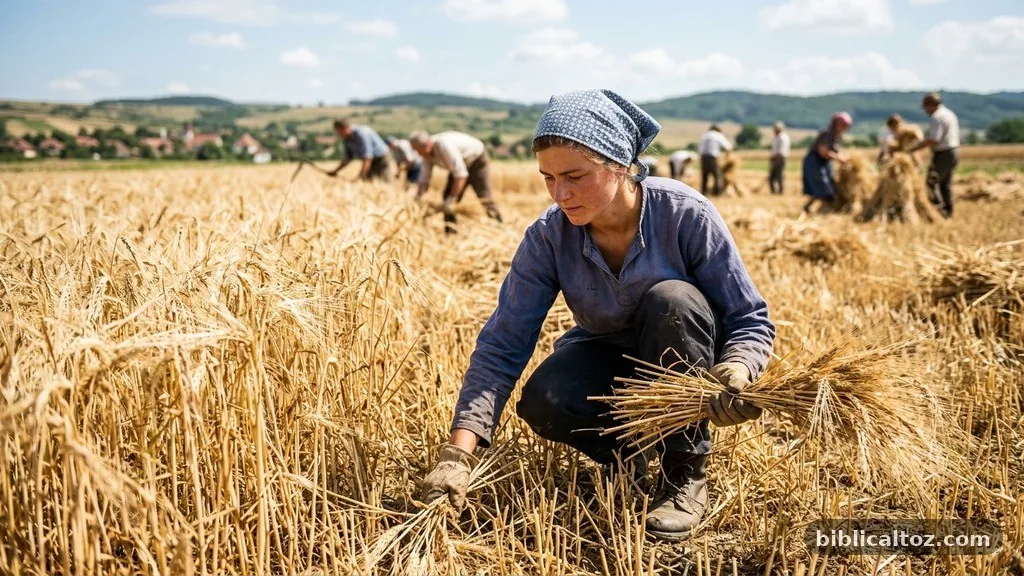
To provide for their basic needs, Ruth took the initiative to glean in the fields during the barley harvest, a practice permitted by law to allow the poor to gather leftover crops. It was in the field of a man named Boaz that Ruth found herself, unknowingly stepping into a situation that would change the course of her life.
Boaz was a wealthy and respected landowner who was also a relative of the late Elimelech. Upon learning of Ruth’s dedication to Naomi and her reputation for kindness, he instructed his workers to leave extra grain for her and ensured she was protected from harassment.
His actions were not just charitable; they were a manifestation of his character as a man of integrity who followed the laws of the land with a generous spirit. The interaction between these individuals highlights how individual acts of kindness can facilitate larger plans of restoration and divine providence.
| Character | Role in the Narrative | Primary Attribute |
|---|---|---|
| Naomi | Matriarch and guide | Resilience |
| Ruth | Devoted daughter-in-law | Loyalty |
| Boaz | Kinsman-redeemer | Integrity |
The Concept of the Kinsman-Redeemer
Central to the resolution of the story is the biblical concept of the goel, or kinsman-redeemer. In ancient Israelite society, this was a male relative who had the responsibility to act on behalf of a family member who was in distress or unable to provide for themselves.
This included buying back family land that had been sold due to poverty or marrying a widow to carry on the family name and ensure the inheritance remained within the household. Boaz was uniquely positioned to act in this capacity for Naomi and Ruth.
Understanding this role is essential to grasping why the events at the threshing floor were so significant. When Ruth approached Boaz, she was essentially asking him to fulfill his duty as a kinsman-redeemer, which would restore their family’s standing and provide them with a secure future.
Boaz accepted this responsibility with honor, though he first had to navigate the legal process to ensure there were no other claimants with a prior right to the redemption. This process illustrates the intersection of social duty, legal integrity, and the quiet movement of providence in the lives of ordinary people.
Strategic Wisdom and Restoration
Naomi’s role in the story shifts from a grieving widow to a strategic mentor as she guides Ruth on how to approach Boaz at the threshing floor. This scene is often misunderstood, but in the context of the time, it was a formal and honorable request for protection and marriage.
Naomi’s wisdom ensured that Ruth acted within the boundaries of custom while securing their future. Her guidance reflects a deep concern for Ruth’s well-being, proving that the bond between them was a two-way street of care and protection.
The story concludes with the marriage of Boaz and Ruth, followed by the birth of their son, Obed. This child brought immense joy to Naomi, effectively restoring her hope and her legacy.
The lineage that followed is perhaps the most significant outcome of their story, as Obed became the grandfather of King David, placing Ruth firmly within the genealogy that eventually leads to the birth of Jesus. This outcome emphasizes that the decisions made in moments of obscurity can have profound, long-lasting impacts that reach far beyond the individuals involved.
- Loyalty can bridge gaps between different cultures and backgrounds.
- Integrity in business and personal dealings creates opportunities for others.
- Mentorship and guidance are essential for navigating life’s difficult transitions.
- Kindness often acts as a catalyst for larger, unforeseen blessings.
- Every individual has a place in a larger narrative of hope and redemption.
Frequently Asked Questions
What is the primary message of the story of Ruth and Naomi?
The core message is the power of faithfulness and kindness. It shows how the dedication of two women, coupled with the integrity of a man like Boaz, can lead to restoration after great loss, ultimately demonstrating that no one is beyond the reach of grace.
Why did Ruth decide to leave her home to follow Naomi?
Ruth’s decision was rooted in a deep, personal commitment to her mother-in-law. She rejected the safety of her birth family in Moab to remain with Naomi, choosing to embrace a new life and a new belief system in Bethlehem as a testament to her loyalty.
What does the term kinsman-redeemer mean in this story?
The kinsman-redeemer was a relative responsible for protecting the interests of family members in need. In this context, Boaz acted to restore the family’s land and protect the future of Naomi and Ruth, ensuring their survival and the continuation of their line.
How does this story connect to the wider biblical narrative?
The story serves as a crucial link in history, as Ruth, a Moabite woman, became the great-grandmother of King David. This inclusion highlights that the promise of redemption is not limited to one group but extends to all who show faith and integrity.
Conclusion
The journey of these two women provides a roadmap for how to move forward when life feels empty and broken. Through the lessons from Ruth and Naomi, we see that loyalty is not just a feeling but a series of deliberate actions that can sustain us through the most difficult seasons. By choosing to support one another, they created a foundation that allowed them to survive poverty and grief, eventually finding a path toward a new and meaningful life.
Their story invites us to look at our own relationships and responsibilities with fresh eyes. Whether you are in a season of waiting, grieving, or seeking direction, the example of these lives reminds us that integrity and devotion are never wasted.
As you reflect on their history, consider how you might offer support to those in your own circle or how you might remain steadfast in your commitments despite the challenges you face. Their legacy is an enduring encouragement that even the smallest acts of goodness can echo through time.