Resurrection of Jesus Explained: What the Bible Says About Christ Rising From the Dead
When seeking the resurrection of Jesus explained, readers often find themselves navigating complex theological layers found within the Gospel narratives. This event serves as the cornerstone of Christian faith, marking the moment followers believe Christ transitioned from death to life.
By examining the biblical resurrection of Jesus through the lens of the four canonical Gospels and Pauline epistles, we can better understand the historical claims and the profound impact this narrative has had for millennia. This analysis clarifies how the early church viewed the event, why it holds such weight in scripture, and how it continues to shape the hope of believers today.
What Happened at Jesus’ Resurrection?
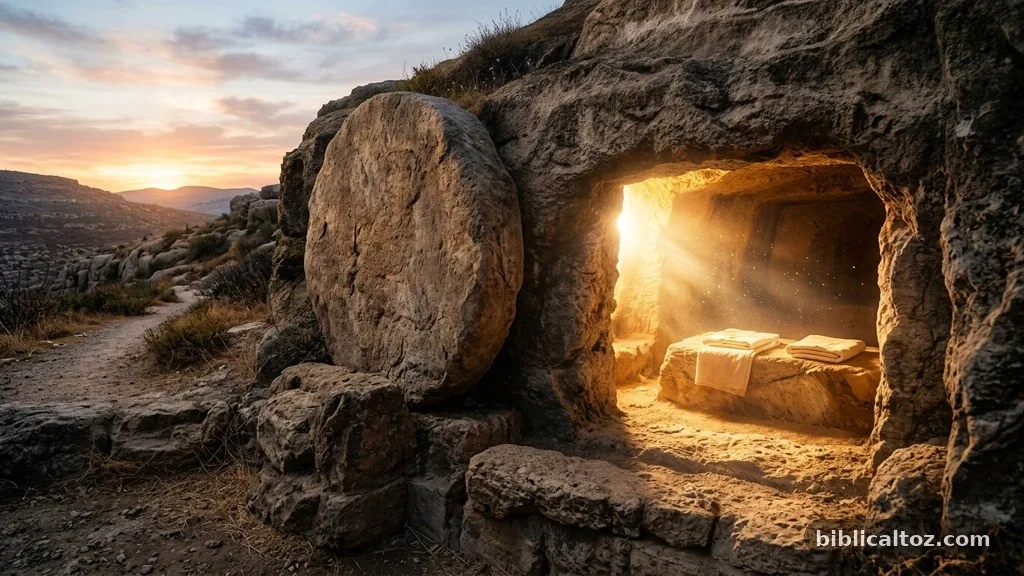
The narrative of Jesus rising from the dead is not presented as a single, uniform report across the New Testament. Instead, the Gospels offer distinct perspectives that highlight different facets of the event.
According to Matthew 27:62–28:20, the chief priests and Pharisees requested a guard at the tomb to prevent the disciples from stealing the body. On the first day of the week, an earthquake occurred, and an angel descended to roll away the stone, causing the guards to tremble in fear.
Mark 15:42–16:8 provides a more concise account, focusing on the women who arrived at the tomb to find the stone already moved. Luke 23:50–24:53 emphasizes the women’s interaction with two men in dazzling apparel who reminded them of Jesus’ prior predictions regarding His death and rising.
John 19:38–21:25 adds the unique detail of Peter and the beloved disciple racing to the site after hearing the news from Mary Magdalene. While these accounts differ in their specific details—such as the number of angels present or the exact timing of the women’s arrival—they all converge on the central claim that the tomb was empty and that Jesus appeared alive to His followers.
The Empty Tomb
The empty tomb Bible accounts are foundational to the Christian narrative. Throughout the Gospels, the absence of the body is the first piece of evidence presented to the disciples. It is important to note that the empty tomb alone was not enough to convince the disciples; rather, it functioned as a prompt for them to remember the words Jesus spoke during His ministry.
In the book of John, the sight of the grave clothes lying in an orderly fashion within the tomb became a significant detail for the disciples. This suggests that the body was not merely taken, but that something extraordinary had occurred within the burial chamber. The following table summarizes the key reports regarding the tomb across the Gospel accounts:
| Gospel | Primary Focus at Tomb | Key Witness |
|---|---|---|
| Matthew | Earthquake and angelic intervention | The guards and the women |
| Mark | The stone moved; young man inside | Mary Magdalene, Mary, Salome |
| Luke | Two men in dazzling apparel | The women and later the Apostles |
| John | The placement of grave clothes | Peter and the disciple Jesus loved |
The Women at the Tomb
A crucial aspect of the resurrection of Christ is the role of the women who visited the sepulcher. In the cultural context of the first century, the testimony of women was often viewed with skepticism in legal and social settings.
The fact that the Gospel writers identify women as the primary witnesses to the empty tomb is a detail that scholars often point to as an indication of the narrative’s authenticity. Had the story been a later invention designed to gain credibility, the authors likely would have chosen male witnesses to report the events.
Jesus’ Resurrection Appearances
The resurrection appearances recorded in Scripture provide the basis for the early church’s proclamation that Jesus was alive. These encounters were not limited to a single location or a small group of people. The major appearances include:
- Mary Magdalene at the garden tomb.
- The other women who were met by the risen Jesus on their way to tell the disciples.
- The two disciples on the road to Emmaus, whose eyes were opened as He broke bread.
- Peter, who saw the Lord privately.
- The disciples in the upper room, including Thomas, who initially doubted.
- The fishing incident at the Sea of Galilee.
- The commissioning of the disciples on a mountain in Galilee.
What Is the Meaning of “He Is Risen”?
The Easter resurrection meaning centers on the victory of life over death and the vindication of Jesus’ ministry. When the angels declared, “He is not here, for he has risen,” they were announcing a shift in the cosmic order. This phrase signifies that the death of Jesus was not the end of His story but the beginning of a new reality.
For the early Christians, this meant that the power that held humanity in the grip of sin and mortality had been broken. It serves as an invitation to view history through the lens of hope rather than despair.
Why Does Paul’s Teaching in 1 Corinthians 15 Matter?

In 1 Corinthians 15:1–28, the Apostle Paul provides the most systematic theological explanation of the resurrection. He argues that the resurrection of Christ is of “first importance” to the faith. Paul emphasizes that if the resurrection did not happen, the entire structure of the gospel message collapses.
He links the resurrection of Jesus to the broader story of humanity, explaining that just as death entered the world through one man, so life comes through the resurrection of the dead in Christ. This chapter remains essential for understanding how the early church interpreted the event as a historical reality with eternal consequences.
Was Jesus’ Resurrection Physical?
The biblical concept of bodily resurrection is distinct from the idea of a ghost or a spirit. The Gospels go to great lengths to describe the physical nature of the resurrected Jesus. He is described as eating food, allowing His wounds to be touched, and walking with His disciples.
These accounts emphasize that the resurrected body was not a disembodied spirit but a transformed physical entity. In 1 Corinthians 15:50–58, Paul describes this as a “spiritual body,” which implies a transformation into a state that is no longer subject to decay or death, yet remains tangibly real.
Resurrection vs. Resuscitation
It is vital to distinguish between resurrection and resuscitation. Resuscitation, such as the account of Lazarus in the Gospels, involves a person returning to their former life, only to face death again later.
Conversely, the resurrection of Jesus is presented as a permanent transition into a new, glorified existence. Jesus did not come back to continue His old life; He emerged as the “firstfruits” of a new creation, possessing a body that was no longer bound by the limitations of the physical world.
Why the Resurrection Matters for Salvation
The resurrection is central to the Christian understanding of salvation, as explained in Romans 4:23–25. Paul writes that Jesus was “delivered up for our trespasses and raised for our justification.” This suggests that the resurrection serves as the “Amen” of God to the sacrifice of the cross.
Without the resurrection, the work of the cross would be incomplete, leaving the believer in a state of condemnation. Romans 6:1–11 further explains that the resurrection provides the power for believers to walk in “newness of life,” effectively dying to their old selves and being united with Christ in His victory.
Resurrection and Christian Hope
The resurrection of Jesus serves as the prototype for the hope of all believers. The biblical narrative suggests that the resurrection of Christ is not an isolated event but the beginning of a general resurrection of all who are in Him.
This hope transforms the perspective of the faithful, shifting their focus from temporal suffering to eternal life. It provides a sense of purpose and endurance, as the promise of the future resurrection is rooted in the historical reality of the risen Christ.
FAQ
Did the disciples expect Jesus to rise from the dead?
No, the Gospel accounts consistently show that the disciples were confused, fearful, and skeptical until they encountered the risen Jesus personally.
Why did the guards at the tomb fail?
According to the Gospel of Matthew, the guards were overcome by the appearance of an angel, which caused them to become like dead men, allowing the women to witness the empty tomb.
What is the significance of the grave clothes?
In the account of John, the orderly placement of the grave clothes suggests that the body was not stolen, as thieves would have likely taken the burial linens along with the body.
Are the resurrection accounts contradictory?
The accounts contain different details, which is common in eyewitness testimony; however, they all agree on the core facts: the tomb was empty, and Jesus appeared to His followers.
Is the resurrection just a metaphor?
The early church, particularly the Apostle Paul, presented the resurrection as a literal, historical event, arguing that if it were merely a metaphor, the Christian faith would be empty.
What does “firstfruits” mean in this context?
Paul uses this agricultural term to signify that Jesus is the first of many to be raised from the dead, establishing a pattern for all believers.
Why is the resurrection essential to Christianity?
It validates Jesus’ claims, confirms His victory over sin and death, and provides the basis for the promise of eternal life for those who believe.
Did Jesus appear to people other than the disciples?
Yes, 1 Corinthians 15 mentions that He appeared to more than 500 brothers at one time, many of whom were still alive when Paul wrote his letter.
What is the difference between the soul and the resurrected body?
Biblical teaching suggests that the resurrection involves the restoration of the whole person—body and soul—in a transformed, glorified state.
How does the resurrection affect daily life?
It provides a framework for living with hope, knowing that death is not the final chapter, and empowers believers to live in alignment with the values of the kingdom of God.
Conclusion
The resurrection of Jesus explained through the lens of scripture reveals a narrative that is both historically grounded and deeply transformative. By examining the empty tomb, the witness of the women, and the recorded appearances of the risen Christ, one can see why this event remains the heartbeat of the Christian faith. It is not merely a historical curiosity but a reality that informs how believers understand salvation, suffering, and the future.
Engaging with these biblical accounts allows for a deeper appreciation of the hope that the early church proclaimed. As you continue to reflect on the resurrection of Jesus, consider how this profound event might reshape your own understanding of life and purpose. Whether you are exploring these texts for the first time or returning to them for further study, the message of the resurrection continues to invite reflection on the enduring promise of new life.