Parting of the Red Sea: Meaning & God’s Deliverance
The miraculous event known as the parting of the Red Sea remains one of the most profound displays of divine intervention in the history of the Israelites. While some might confuse the historical figures involved by questioning the role of Gideon in the Bible, the parting of the Red Sea is exclusively the story of Moses leading the children of Israel out of bondage.
This narrative serves as a foundational pillar of faith, illustrating how the Lord provides a way through impossible circumstances. By examining this account, you will gain a deeper understanding of how God acts to deliver His people from overwhelming threats.
What Happened at the Red Sea?
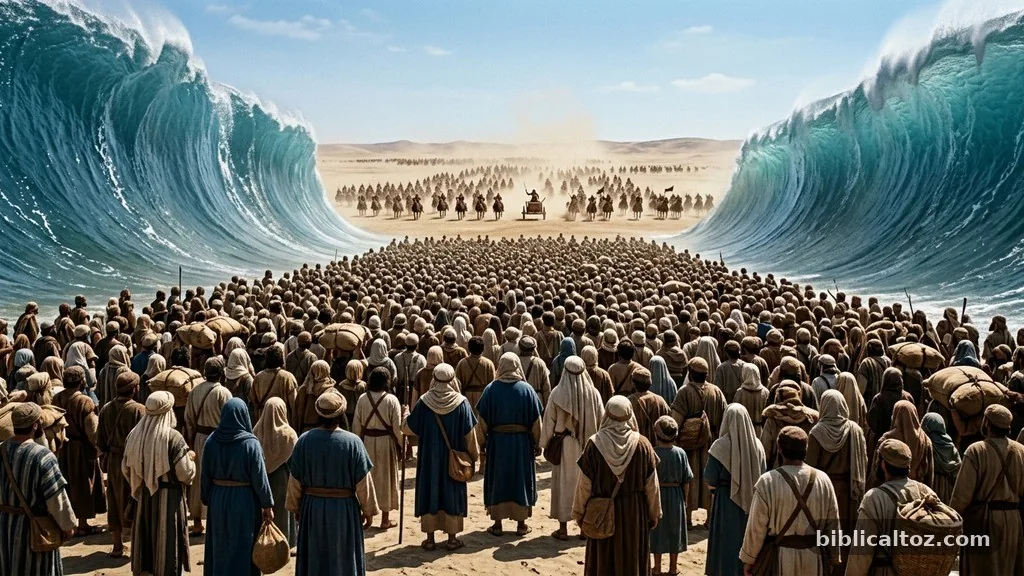
The account recorded in Exodus 14 describes a moment where the entire future of the Hebrew people hung in the balance. Trapped between the encroaching might of the Egyptian military and the impassable waters of the sea, the people faced a situation that human logic deemed hopeless. The event was not merely a mechanical shift in nature but a deliberate act of God to demonstrate His sovereignty over both the elements and the nations of the earth.
Israel Leaves Egypt
After the final plague, Pharaoh finally permitted the people to depart. The Israelites left Egypt in a state of triumph, yet they were not heading toward an easy path.
God led them specifically toward the shore of the sea, guiding them by a pillar of cloud by day and a pillar of fire by night. This route was intentional, designed to draw Pharaoh into a final confrontation that would solidify the reputation of the Lord among the nations.
Pharaoh Pursues Israel
Regret soon filled the heart of the king of Egypt. Realizing he had lost his entire workforce, Pharaoh gathered his elite chariots and his entire army to pursue the fleeing camp.
The Bible notes that the Egyptians moved with speed, fueled by the desire to bring the people back into slavery or destroy them entirely. The sight of the approaching dust clouds sent a wave of terror through the fleeing crowds.
Israel Becomes Trapped
When the Israelites realized they were being hunted, they found themselves in a dire position. The geography of the region effectively boxed them in:
- The steep mountains stood on either side.
- The vast desert blocked their retreat.
- The deep waters of the sea lay directly in front of them.
Moses’ Response
Despite the panic among the people, the leader remained steadfast. Moses told the people not to fear, promising that they would see the salvation of the Lord that very day. He assured them that the enemies they saw behind them would never be seen again, shifting the focus from the immediate danger to the promise of divine protection.
God Commands Moses to Move Forward
The Lord spoke directly to Moses, questioning why he was crying out in prayer rather than taking action. God instructed him to lift his rod and stretch his hand over the water. This command required total obedience, even though it seemed illogical to walk into a body of water while an army approached from the rear.
The Sea Is Divided
As Moses obeyed, the Lord sent a strong east wind that blew all night. This wind caused the water to recede, creating a path of dry ground. The following table illustrates the contrast between the state of the sea before and during the miracle.
| Feature | Before the Miracle | During the Miracle |
|---|---|---|
| Water State | Deep and impassable | Divided into two walls |
| Ground Condition | Submerged | Dry and firm |
| Movement | Stagnant | Driven back by wind |
Israel Crosses on Dry Ground
The entire assembly marched into the middle of the sea. The water stood like a wall on their right and their left, protecting them as they moved. This passage was a supernatural event, allowing millions of people to escape the reach of their oppressors under the cover of darkness.
Pharaoh’s Army Enters the Sea
In their arrogance, the Egyptians followed the Israelites into the seabed. The Lord caused their chariot wheels to become clogged, making them move with great difficulty. Realizing the tide had turned against them, the soldiers attempted to flee, but it was too late to escape the divine judgment.
The Waters Return
At the break of dawn, Moses stretched his hand out once more. The waters returned to their natural place, completely covering the chariots and the horsemen. Not one of the enemy soldiers survived the collapse of the walls of water.
Israel’s Deliverance
When the people saw the dead bodies of the Egyptians on the shore, their fear transformed into reverence. They placed their trust in the Lord and in His servant. This moment marked the final break from their past in Egypt and the beginning of their journey toward the land promised to their ancestors.
What Does the Red Sea Crossing Mean in the Bible?
The crossing symbolizes the ultimate act of liberation. It represents the transition from slavery to freedom, a theme that echoes throughout the rest of the scriptures. It serves as a reminder that when the Lord leads His people, He provides the means to overcome any barrier, no matter how insurmountable it may appear.
Lessons About Faith, Fear, Obedience, and Deliverance
- Faith requires moving forward even when the path is not yet visible.
- Fear is a natural response, but it must be superseded by trust in God.
- Obedience to divine instructions often leads to miraculous outcomes.
- Deliverance is ultimately the work of God, not human strength.
Key Bible Verses
The following passages from the book of Exodus capture the intensity of the event:
- Exodus 14:13: Fear ye not, stand still, and see the salvation of the Lord.
- Exodus 14:21: And the Lord caused the sea to go back by a strong east wind all that night.
- Exodus 14:22: And the children of Israel went into the midst of the sea upon the dry ground.
Common Questions
Is there any historical proof of the sea parting?
The Bible presents this as a historical event. While archaeological evidence for specific ancient migration patterns remains a subject of study, the text emphasizes the event as a supernatural act of God rather than a natural occurrence.
Why is it called the Red Sea?
The name reflects the traditional translation of the Hebrew term used in the text. It refers to the specific body of water that stood between the Israelites and their destination.
Does the Bible mention other miracles like this?
Yes, the Bible records several instances where God controlled nature to aid His people, such as the Jordan River stopping for Joshua, though the parting of the Red Sea remains the most iconic example of total deliverance.
How does this event compare to the story of Gideon?
While many people study the life of Gideon in the Bible to understand how God uses the weak to overcome, the parting of the Red Sea focuses more on God’s collective deliverance of a nation from total destruction.
Conclusion
The story of the deliverance at the sea serves as an enduring witness to the power of the Lord. It teaches that even when we feel trapped by our circumstances, there is always a way forward when we follow divine guidance. While characters like Gideon in the Bible offer lessons on individual courage, the account of Moses at the sea shows the magnitude of God’s hand in shaping the destiny of an entire people.
As you reflect on this narrative, consider the barriers currently standing in your own path. Just as the Israelites were called to move forward, you are invited to trust that the same God who divided the waters remains active today. Take heart in the knowledge that your challenges are never beyond the reach of His intervention.