The Significance and Meaning of the Number 4 in the Bible
The number 4 holds a distinct place in biblical numerology, often serving as a symbol of creation, stability, and the physical realm. While other numbers like seven or twelve appear more frequently in theological discussions regarding perfection or divine government, four is fundamentally linked to the structure of the earth and the universality of God’s reach.
Creation and the Physical World

In the biblical narrative, the number 4 is closely associated with the material world and the scope of God’s creative work. This connection is established early in Genesis, where the four cardinal directions—north, south, east, and west—are implied in the layout of the Garden of Eden, which was watered by a river that parted into four heads.
Because the world is described through these four directions, the number signifies totality in terms of the earth. When scripture refers to the “four corners of the earth,” it is not suggesting a geometric shape, but rather emphasizing that God’s influence, judgment, or salvation extends to every inhabitant of the globe.
Biblical Symbols of Stability and Completeness
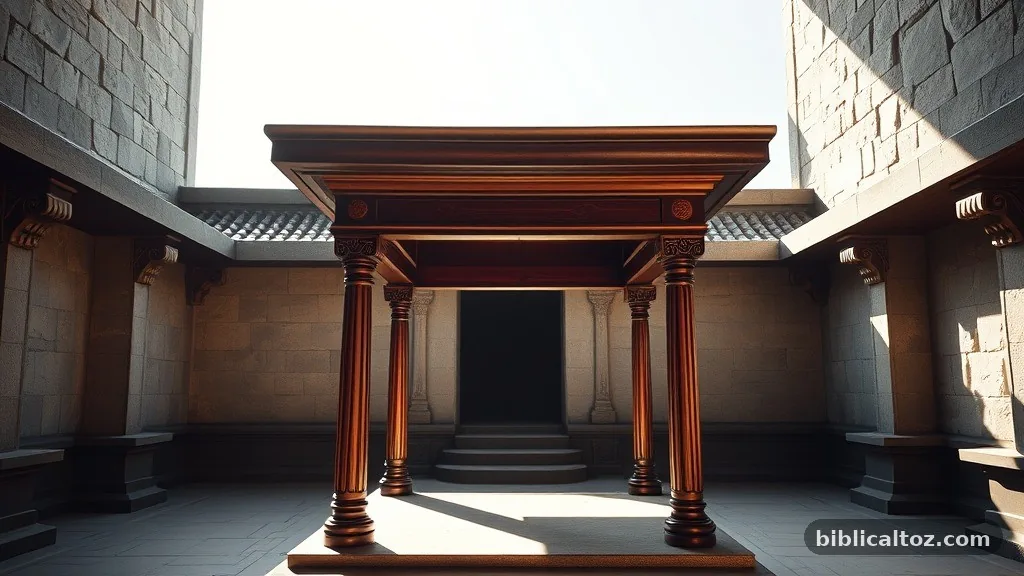
The number 4 frequently appears in contexts that denote stability or a finished order. This is seen in the construction of sacred objects and the organization of the people of Israel.
The Four Living Creatures
In the visions of Ezekiel and the book of Revelation, the throne of God is surrounded by four living creatures. Each creature represents a different aspect of God’s creation—often associated with a man, a lion, an ox, and an eagle. These entities represent the fullness of life on earth and the heavens, serving as a reminder that all of creation is subject to the authority of the Creator.
The Four Gospels
In the New Testament, the life and ministry of Jesus are recorded through four distinct perspectives: Matthew, Mark, Luke, and John. This collection provides a complete portrait of Christ, illustrating his humanity, his kingship, his role as a servant, and his divinity. The presence of four accounts ensures that the message of the gospel is presented in a balanced, comprehensive way.
Time and Testing in Scripture

Beyond physical space, the number 4 and its multiples—such as forty—are deeply woven into the timeline of biblical history. These periods often mark significant transitions or seasons of trial.
* Forty Days: Both Moses and Jesus retreated for forty days of fasting and prayer. These periods of isolation served as a preparation for a monumental shift in their respective missions.
* Forty Years: The Israelites wandered in the wilderness for forty years before entering the Promised Land. This duration represented a complete generation, signifying that the old ways had passed and the people were finally refined enough to receive their inheritance.
* Four Hundred Years: The period of silence or enslavement, such as the time the Israelites spent in Egypt, highlights the sovereignty of God even during long, grueling intervals of human history.
The Spiritual Implication of the Number 4
When analyzing the meaning of this number, it is helpful to view it as the “number of the world.” While the number 1 represents the unity of God, the number 4 represents the manifestation of that unity within the physical realm. It bridges the gap between the divine plan and the reality of human existence on earth.
Whether it is the four winds that blow across the world or the four banners of the tribes of Israel as they camped in the wilderness, the number serves as a sign of order. It reminds the reader that God is not a chaotic force but a designer who brings structure to the lives of those who follow Him. By recognizing the patterns of this number throughout the text, one gains a deeper appreciation for the mathematical precision and symbolic richness inherent in the biblical narrative.