Number 11 Meaning in the Bible: Biblical Significance & Symbolism
Exploring the number 11 meaning in the Bible often sparks curiosity because it appears in diverse, sometimes complex contexts. While some modern perspectives assign mystical or prophetic weight to this figure, a careful study of Scripture reveals a more grounded reality.
By examining how this digit surfaces in historical narratives and apostolic records, we can move past popular speculation to appreciate its role in the unfolding story of faith. Whether you are interested in the structure of the tabernacle or the journeys of the patriarchs, understanding how the number eleven functions helps clarify the broader message of the text without relying on hidden codes or external theories.
What Does This Number Mean in the Bible?
In the study of Scripture, we must distinguish between explicit divine instruction and historical observation. The Bible does not provide a formal “key” that assigns a specific symbolic definition to eleven, as it does for numbers like seven or twelve. Instead, the number often appears as a simple count of items, people, or years.
Many commentators observe that eleven follows the number ten—which often represents completeness or law—and precedes twelve, which is frequently associated with divine governance or the people of God. Because it sits in this position, some view it as a symbol of disorder, imperfection, or a transition between two states.
However, it is vital to remember that these are interpretive frameworks, not direct commands from God. We should prioritize the plain historical context over abstract numerology.
Where Does This Number Appear in the Bible?
The appearance of this number is scattered throughout both Testaments, usually tied to mundane or administrative details. Below is a summary of how the number functions in different biblical records:
| Context | Biblical Reference | Key Detail |
|---|---|---|
| Old Testament | Genesis 32:22 | Jacob‘s eleven children with him while traveling. |
| Old Testament | Exodus 26:7 | Eleven curtains of goats’ hair for the tabernacle. |
| New Testament | Matthew 28:16 | The eleven disciples meeting Jesus on the mountain. |
The Number in the Old Testament
The Old Testament frequently uses this number to describe specific measurements and family groupings. For instance, in the book of Genesis, Jacob traveled with his eleven children during his return to his homeland. This mention is purely descriptive, marking the size of his growing family as he sought reconciliation with Esau.
Another significant instance occurs in Exodus during the construction of the tabernacle. God commanded Moses to make eleven curtains of goats’ hair to cover the tent. Here, the number is a precise engineering requirement.
It serves to emphasize that God cares about exactness and order in the places where His people worship. These examples show that the number is often a tool for narrative clarity rather than a hidden prophecy.
The Number in the New Testament
In the New Testament, the most famous use of this number refers to the apostles. After Judas Iscariot betrayed Jesus and took his own life, the remaining group of followers is consistently referred to as the eleven.
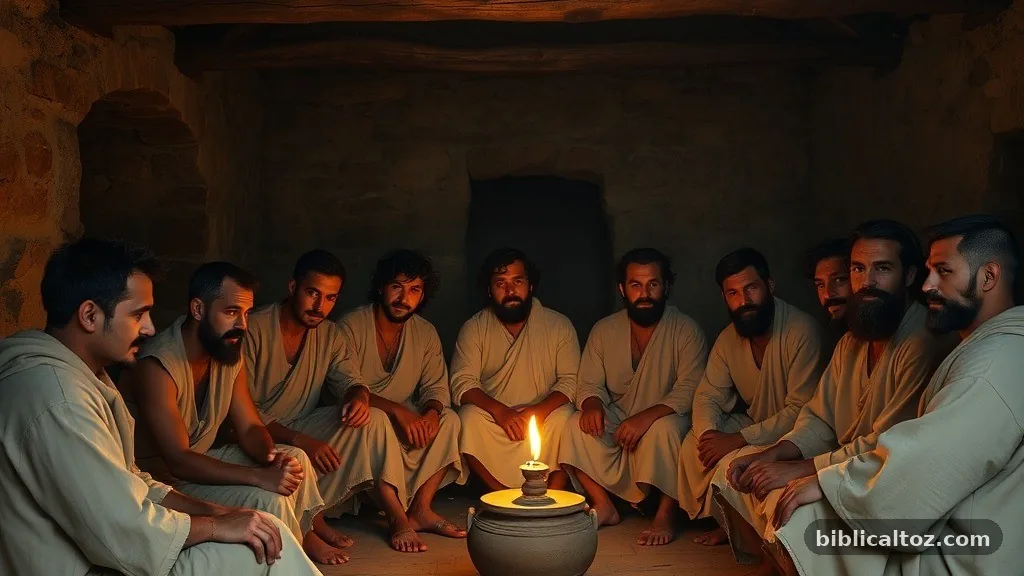
This specific count serves as a marker of the group’s transition. They were in a state of waiting and preparation, moving from the sorrow of the crucifixion to the promise of the resurrection and the eventual appointment of Matthias to restore the number to twelve.
Biblical Symbolism of the Number
While some writers suggest that eleven represents chaos or rebellion because it falls short of the “perfect” number twelve, the Bible itself remains silent on this theory. Readers should be cautious when assigning such labels to numbers. Instead of looking for symbolic meaning, it is often more productive to look at the atmosphere of the text.
For example, the eleven disciples were in a period of intense transition. The “symbolism” here is found in their faithfulness during a time of uncertainty, not in the number itself.
Does the Bible Give This Number a Specific Meaning?
Scripture does not define a specific, recurring symbolic meaning for the number eleven. There is no verse that states, “Eleven signifies this.”
When we look at the text, we find that the number is used for:
- Measurements of physical objects like curtains or tent coverings.
- Counts of people, such as the children of Jacob.
- Historical markers of time, such as years of a king’s reign.
This suggests that the primary function of the number is administrative and historical. Any spiritual meaning we derive should be drawn from the events surrounding the number, not from the number itself.
Important Bible Verses About the Number
* Genesis 32:22: And he rose up that night, and took his two wives, and his two womenservants, and his eleven sons, and passed over the ford Jabbok (KJV).
* Exodus 26:7: And thou shalt make curtains of goats’ hair to be a covering upon the tabernacle: eleven curtains shalt thou make (KJV).
* Matthew 28:16: Then the eleven disciples went away into Galilee, into a mountain where Jesus had appointed them (KJV).
What Can Christians Learn From the Biblical Use of This Number?
The primary lesson is that God is present in the details of our lives. Whether it is the measurement of a curtain or the count of a family, God oversees the specifics.
When we see the eleven disciples waiting for instructions, we learn about the importance of patience and community during times of change. We don’t need to decode the number to find God’s presence; we only need to look at how He guided His people through the circumstances that the number represents.
Common Misunderstandings About the Number
A common myth is that the number eleven is inherently “evil” or “cursed” because it lacks the completeness of twelve. This is an unsupported claim that often leads to unnecessary fear. Another misunderstanding is the obsession with “11:11” as a sign of divine intervention or a “wake-up call” from the universe.
Such ideas borrow more from modern secular spirituality than from the biblical record. We should steer clear of these interpretations, as they can distract us from the clear, life-changing message of the Gospel.
FAQs
Is the number 11 considered unlucky in the Bible?
No, there is no biblical evidence to suggest that the number is unlucky or carries a negative spiritual charge.
What does the 11th hour mean in the Bible?
The “eleventh hour” comes from the Parable of the Workers in the Vineyard in Matthew 20. It refers to the last possible moment before the end of the workday, illustrating the grace of God for those who come to Him even late in life.
Why are there only eleven disciples mentioned?
The group is called the eleven because Judas Iscariot had left the group following his betrayal of Jesus, leaving the remaining apostles to navigate the time before Matthias was selected.
Should I look for patterns involving the number 11?
While it is fine to notice patterns, it is best to avoid building doctrine or spiritual practices around them. It is always better to focus on the clear, direct teachings of Scripture.
Conclusion
Reflecting on the number 11 meaning in the Bible reminds us that the narrative of Scripture is anchored in real history, real people, and real measurements. While it is natural to look for patterns, we find the most peace and wisdom when we focus on the plain message of the text.
Whether the number appears in the construction of the tabernacle or the gathering of the apostles, it serves as a backdrop to the faithfulness of God. By keeping our eyes on the person of Jesus rather than on numerical patterns, we grow in our understanding of His grace and His sovereign plan for our lives.