What Did Jesus Do Between Death and Resurrection? Meaning and Scripture?
The question of what transpired during the silent hours between the crucifixion and the morning of the third day is one that has occupied scholars and believers for centuries. While the Gospels provide a clear account of the physical events surrounding the burial, they remain notably restrained regarding the activity of the spirit of Christ during this interval.
By looking closely at the biblical text, we can separate historical record from theological tradition to gain a clearer picture of this pivotal window in history. Examining the timeline of what Jesus did between death and resurrection allows us to appreciate the weight of the sacrifice and the mystery of the transition from the grave to the empty tomb.
What Happened Immediately After Jesus Died?
Following the death of Jesus on the cross, the immediate concern of the authorities was the removal of the bodies before the Sabbath began. According to the Gospel of John, the Jewish leaders asked the Roman soldiers to break the legs of those crucified to hasten their expiration.
When the soldiers arrived at Jesus, they found He was already dead. Instead of breaking His legs, one soldier pierced His side with a spear, confirming His physical passing.
Once death was confirmed, Joseph of Arimathea, a prominent member of the council, requested the body from Pilate. The process of burial had to be swift, as the Sabbath was approaching.
The body was taken down, wrapped in linen cloths with spices, and placed in a nearby tomb. This physical reality—the cessation of life and the interment of the body—serves as the anchor for the entire resurrection narrative.
Where Was Jesus Buried?
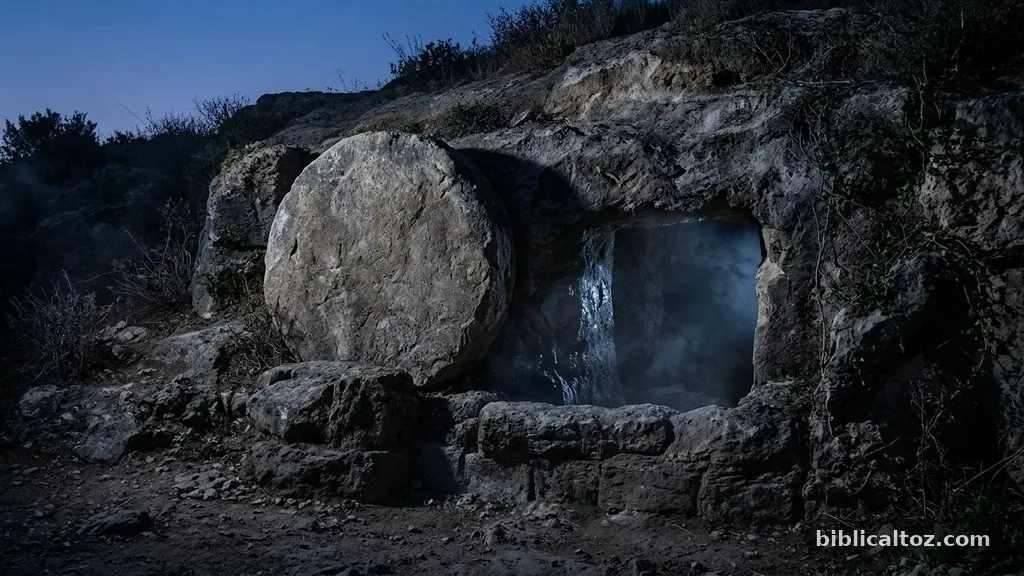
The Gospels are consistent in their description of the burial site. Joseph of Arimathea provided his own new tomb, which had been hewn out of a rock. This location was situated in a garden near the site of the crucifixion.
- The tomb was new, meaning no one had been laid there before.
- It was carved into solid rock, ensuring the security of the site.
- A large stone was rolled against the entrance to seal it.
- Roman guards were later stationed at the tomb to prevent any tampering.
This burial was not a secret act; the women who had followed Him from Galilee witnessed where He was laid. Their presence ensures that the location was well-documented, which becomes essential when they return on the third day to find it empty.
What Does “Three Days” Mean in the Gospel Accounts?
The phrase “three days” is often misunderstood by modern readers who interpret it as a literal 72-hour period. In the cultural and linguistic context of the first century, the expression was inclusive. It meant that any part of a day was counted as a full day.
| Day | Event |
|---|---|
| Friday | Death and burial before sunset (First day) |
| Saturday | The Sabbath (Second day) |
| Sunday | Resurrection at dawn (Third day) |
This interpretation aligns with the Jewish way of reckoning time, where the day began at sunset. By being in the grave on Friday evening, all of Saturday, and rising on Sunday morning, Jesus fulfilled the prophecy of remaining in the heart of the earth for three days.
What Does Luke 23:43 Tell Us?
In the final moments of His life, Jesus spoke to the thief hanging on a cross beside Him. When the man asked to be remembered in the coming kingdom, Jesus responded by saying, “Verily I say unto thee, To day shalt thou be with me in paradise.” This verse is central to understanding the immediate state of the soul after death.
The word “paradise” here is used to describe a place of rest and communion with God. While some emphasize the physical burial, this verse provides a glimpse into the spiritual state of Christ. It suggests that, in His spirit, He entered into a state of peace and presence with the Father, along with the righteous who had passed before Him.
What Does 1 Peter 3:18–20 Say?
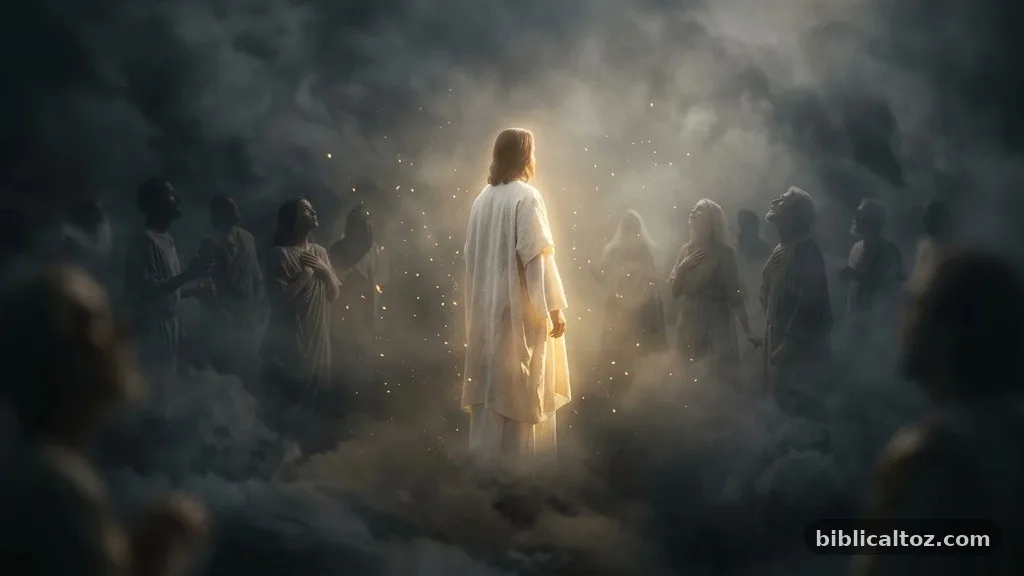
This passage is frequently cited when discussing the period between the death and resurrection of Christ. Peter writes that Christ was put to death in the flesh but made alive in the spirit. He then states that in this spirit, He went and preached to the spirits in prison.
The interpretation of this text has varied throughout church history. Some view this as a proclamation of victory over the fallen powers, while others see it as an extension of the gospel to those who lived in previous ages. The text does not provide a detailed narrative of what occurred, but it emphasizes the triumph of the spirit over the limitations of the physical body.
What Does the Apostles’ Creed Mean by “He Descended to the Dead”?
The phrase “He descended into hell” or “He descended to the dead” found in the Apostles’ Creed is a later addition to the historical narrative. It was not present in the earliest versions of the creed and reflects an attempt by later theologians to explain the transition between death and resurrection.
The term “hell” in this context is often translated from the Greek word Hades, which refers to the realm of the dead rather than a place of torment. Theologically, this phrase is intended to affirm that Jesus truly experienced the fullness of human death. He did not merely appear to die; He entered the state of death completely, confirming His solidarity with humanity in the grave.
What Do the Gospels Tell Us About the Period Before the Resurrection?
The Gospel narratives are silent regarding the activities of Jesus during the Sabbath. After the burial, the disciples were hiding, fearing the Jewish authorities and grieving the loss of their leader. The silence of the text is profound, reflecting the darkness and uncertainty that the followers of Christ experienced.
There is no biblical evidence for a campaign or a specific mission undertaken by Jesus while His body lay in the tomb. The focus of the writers remains firmly on the physical death, the burial, and the subsequent discovery of the empty tomb. Any attempt to fill this time with elaborate narratives often stems from later tradition rather than the canonical records.
What Can We Know and What Remains Uncertain?
We can be certain of the physical facts: Jesus died, His body was placed in a tomb, and He remained there until He rose on the third day. These events are the foundation of the Christian faith. The theological significance of His death is also clear—it was a sacrifice for the sins of the world.
However, the specific movements of His spirit during those hours remain a mystery. Scripture gives us glimpses, such as His promise to the thief and the allusion to a proclamation in the spirit, but it does not satisfy our curiosity with a step-by-step itinerary. We are left to trust in the reality of the resurrection as the primary answer to the question of what happened during that interval.
FAQs
Did Jesus go to hell to suffer for our sins?
The Bible does not state that Jesus suffered in hell after His death. His suffering for sin was completed on the cross when He declared, “It is finished.”
Was Jesus physically in the grave for 72 hours?
No, the “three days” refers to a cultural idiom of the time, covering parts of Friday, the entirety of Saturday, and the morning of Sunday.
What does it mean that Jesus preached to spirits in prison?
This passage in 1 Peter is interpreted by many as a declaration of Christ’s victory over the forces of evil or a witness to those who lived during the time of Noah.
Why did the disciples not expect the resurrection?
The disciples were overwhelmed by grief and fear, and despite Jesus’ previous warnings, they struggled to grasp the reality of His upcoming resurrection until they encountered the empty tomb.
Does the Bible mention Jesus visiting the saints of the Old Testament?
While some traditions suggest He emptied the place of the righteous dead, the Bible does not explicitly detail such a visit, though it hints at His triumph over death.
What is the significance of the Sabbath in the burial account?
The Sabbath was a day of rest, which highlights the fact that Jesus rested from His work of redemption in the tomb before His victory on the morning of the new week.
Conclusion
Reflecting on what Jesus did between death and resurrection reminds us that the silence of the grave was only a temporary pause. The biblical record directs our attention away from speculative activities and toward the transformative power of the empty tomb. By examining the facts of the burial and the limited but profound scriptural references to His spirit, we find a consistent message of victory over the power of death.
The interval between the cross and the resurrection serves as a bridge, grounding the faith of believers in the historical reality of His sacrifice. As you continue to study these events, focus on the witness of the disciples and the promise of new life that emerged on that first Sunday morning. May this exploration of what Jesus did between death and resurrection deepen your appreciation for the central event of the Christian tradition.