Jesus Calming the Storm: Meaning and Significance
The narrative of Jesus calming the storm remains one of the most vivid displays of divine authority found in the Gospels. Whether you are reading from Matthew, Mark, or Luke, the account captures a moment of intense human fear met by the absolute power of the Creator.
As the disciples faced a life-threatening tempest on the Sea of Galilee, they discovered that the presence of the Savior changes everything. Exploring the depth of Jesus calming the storm offers a profound look at how faith operates in the middle of life’s most unpredictable and frightening circumstances.
The Biblical Account of the Tempest
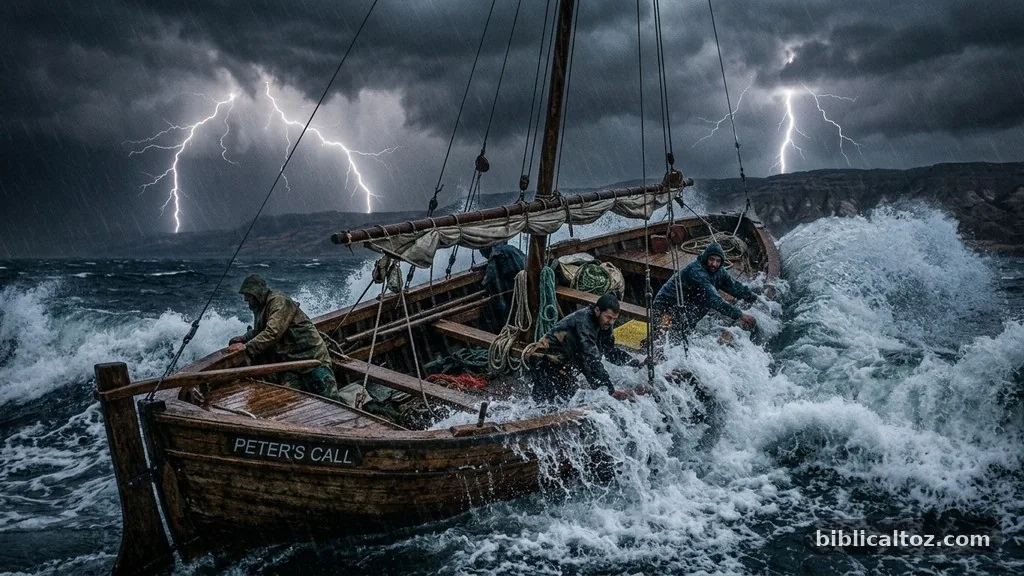
The Gospels of Matthew, Mark, and Luke each provide a perspective on this event, yet they all agree on the core details. The disciples, many of whom were experienced fishermen, found themselves in a boat that was being overwhelmed by the waves. The intensity of the wind and the rising water created a situation that surpassed their ability to manage.
While the storm raged, the Savior was asleep on a cushion in the stern of the boat. This contrast between the human exhaustion of the Lord and the terrifying chaos of the environment highlights the humanity of the Son of God. When the disciples woke Him, they expressed a mixture of fear and accusation, wondering if He cared that they were perishing.
Divine Authority Over Nature
When the disciples finally cried out, the response from the Master was immediate and absolute. He did not merely pray for the weather to change; He addressed the elements directly. The Gospel of Mark records that He rebuked the wind and said to the sea, Peace, be still.
The transformation was instantaneous. The wind ceased, and there was a great calm.
This moment serves as a clear demonstration of the authority inherent in the Word of God. The sea, often used in ancient literature as a symbol of chaos or forces beyond human control, submitted to the voice of the One who created it. The disciples were left in awe, asking one another who this person could be that even the wind and the sea obeyed Him.
Comparison of the Synoptic Accounts
The following table highlights the subtle differences in how the three Gospel writers record the event.
| Gospel | Key Focus | Disciples’ Question |
|---|---|---|
| Matthew 8:23-27 | The lack of faith | Save us, Lord, we are perishing |
| Mark 4:35-41 | The mystery of His identity | Do you not care that we are perishing? |
| Luke 8:22-25 | The challenge to trust | Master, Master, we are perishing |
Lessons on Faith and Fear
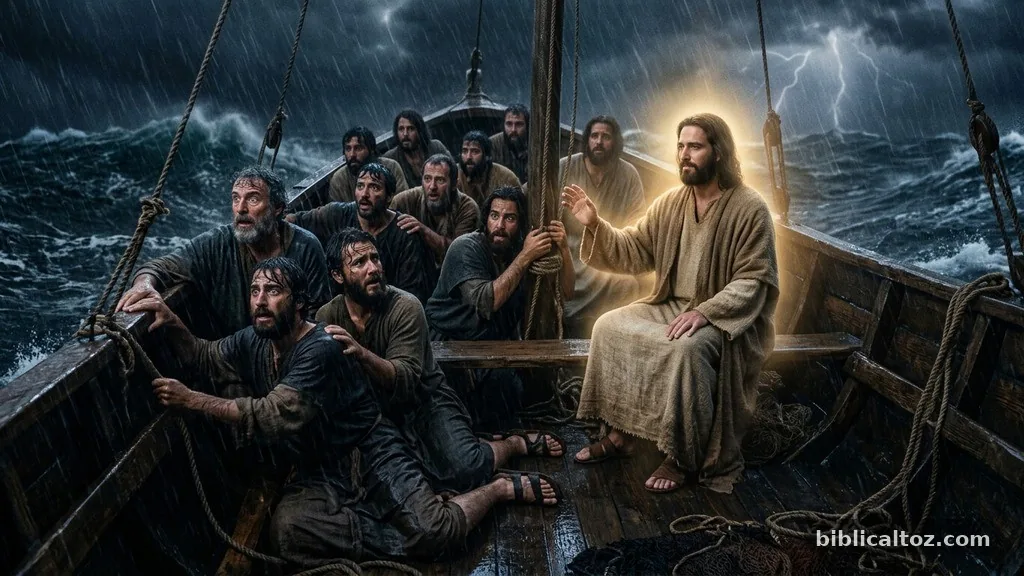
A central theme throughout the passage is the interplay between faith and fear. The disciples had witnessed miracles, yet when the storm hit, their immediate reaction was panic.
The Lord addressed this by questioning their lack of faith. He did not rebuke them for being afraid of the danger, but rather for failing to trust that His presence in the boat was enough to ensure their safety.
This serves as a reminder that the presence of the Savior does not guarantee an absence of storms. Instead, it guarantees that the storm does not have the final say. True faith is not the absence of fear, but the decision to trust in the sovereignty of God even when the waves seem to be rising higher than our own strength can handle.
Common Misconceptions About the Storm
* The storm was a punishment for the disciples’ sins. The Bible does not state this; rather, it shows them following His command to cross the water.
* The storm stopped because the disciples prayed hard enough.
The text shows the storm stopped because He acted on their behalf.
* Faith means the storm will never happen. The narrative proves the opposite, showing that followers of the Lord may still encounter life’s tempests.
The Significance of the Calm
The peace that followed the rebuke of the wind was not merely a return to normal weather. It was a sign of the kingdom of God breaking into the fallen world.
When the water became still, it signified that the chaos of the world is subject to the rule of the Creator. This event provides a tangible picture of the promise that God is ultimately in control of every force that threatens to overwhelm the human heart.
Frequently Asked Questions
What is the main message of Jesus calming the storm?
The primary message is the revelation of the identity and authority of the Savior. By commanding the elements to be still, He demonstrates that He is not just a teacher or a prophet, but the Lord of creation who holds authority over the natural world.
Why did the disciples fear the storm if Jesus was with them?
The disciples were human and reacted to the visible danger. Even though they had seen His works, they had not yet fully grasped that His divine nature meant they were secure regardless of the external circumstances. Their fear highlights the common human struggle to trust in God’s presence when facing immediate crises.
Does this passage mean Christians will never face problems?
No, the Bible does not teach that faith creates an exemption from life’s difficulties. Instead, it teaches that the believer is never alone in those difficulties. The presence of the Savior in the boat did not prevent the storm, but it did provide the source of the victory over it.
What does it mean that He rebuked the wind?
To rebuke the wind is to speak with authority to a power that is otherwise uncontrollable by men. It signifies that the forces of nature are not random or autonomous but are under the sovereign command of God.
Reflecting on the Sovereignty of God
The account of Jesus calming the storm continues to speak to the human condition today. We all face moments when the waves of life feel overwhelming, and it is natural to wonder if God is aware of our struggles.
Yet, the story reminds us that He is present, even when it feels like He is silent or asleep. The same power that stilled the Sea of Galilee is the power that sustains the believer through every trial.
If you are looking for more resources to deepen your understanding of the Gospels and the life of Christ, we invite you to browse the rest of our collection at BiblicalToZ.com. We are here to support your journey through the scriptures with clarity and faithfulness.