Hagar in the Bible: Meaning, History, and Significance
The narrative of Hagar in the Bible remains one of the most poignant accounts of displacement, divine intervention, and human struggle found in the patriarchal records. As an Egyptian servant caught in the complex domestic tensions of Abram and Sarai, her experience offers a unique lens through which to examine ancient social dynamics.
Readers seeking to understand her life will discover how her story shifts from a domestic dispute to a profound encounter with the divine. By tracing her journey from the household of faith to the wilderness, we gain insight into how God interacts with those whom society often overlooks or renders invisible.
Historical and Narrative Context
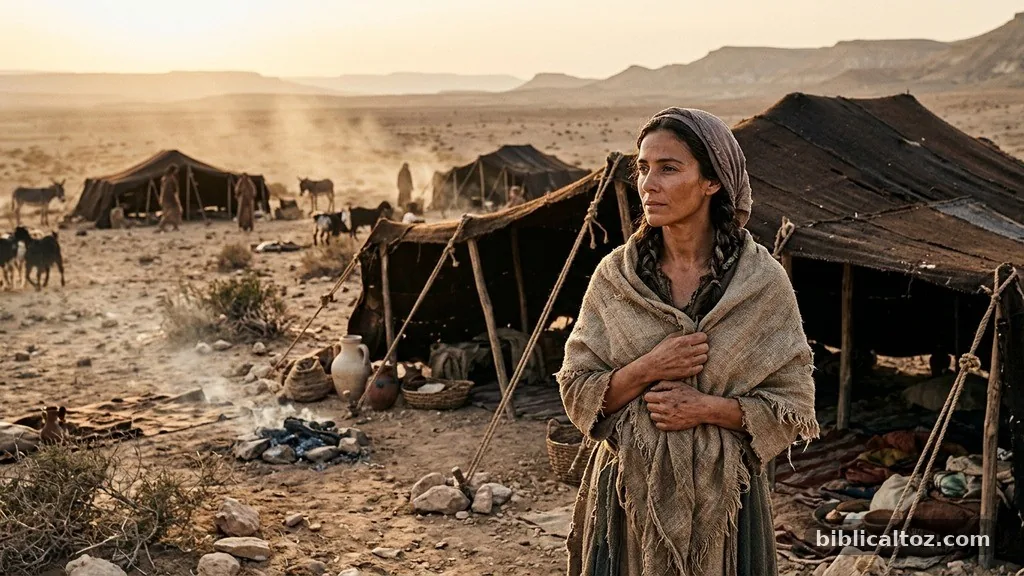
During the patriarchal period, social structures were defined by kinship, land, and the necessity of producing heirs to secure a family legacy. Within this setting, the household of Abram and Sarai operated under specific cultural norms regarding marriage and childbearing. When a wife remained barren, it was customary for her to provide a servant to her husband to secure an heir.
This practice, while socially accepted, created immense emotional and interpersonal strain. Hagar, an Egyptian woman, functioned as a pawn in these high-stakes family negotiations, finding herself caught between the expectations of her masters and her own personal dignity.
Chronological Account of Hagar
The story of Hagar unfolds in two primary segments within the book of Genesis. The first account occurs in Genesis 16, where, following Sarai’s suggestion, Hagar becomes pregnant by Abram.
This leads to immediate friction between the two women, resulting in Hagar fleeing into the desert. The second account takes place in Genesis 21, following the birth of Isaac, where the tension between Sarah and Hagar reaches a breaking point, leading to Hagar’s final exile.
- Genesis 16: Hagar conceives, suffers mistreatment from Sarai, and flees to the desert.
- The Angel of the Lord: Hagar encounters a divine messenger who instructs her to return.
- The Birth of Ishmael: Hagar gives birth to a son, fulfilling the promise of a future line.
- Genesis 21: Sarah demands the departure of Hagar and her son after seeing Ishmael playing.
- The Wilderness: Hagar and Ishmael face near-death in the desert before God provides water.
Divine Encounters and El Roi
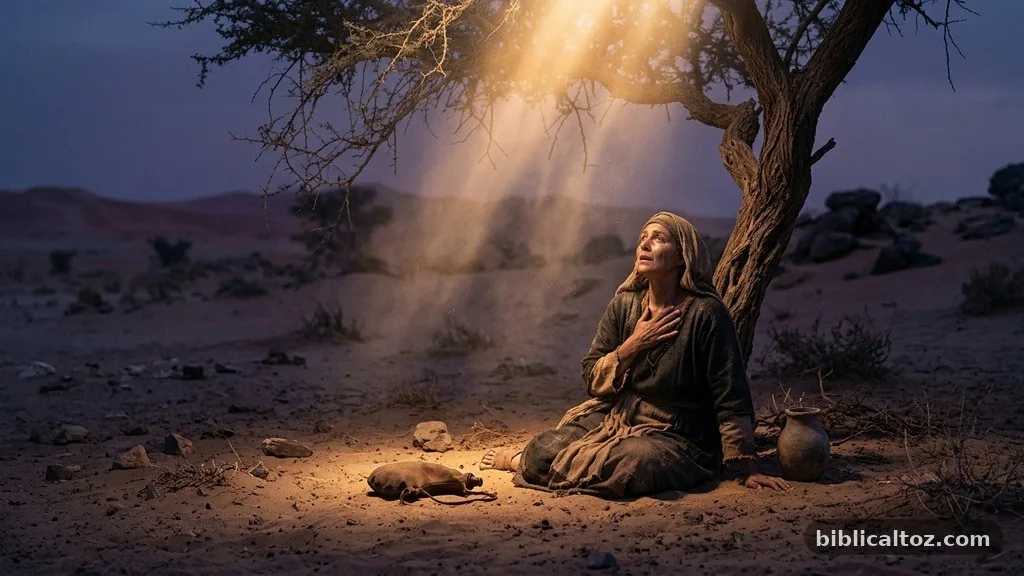
One of the most significant aspects of Hagar’s story is that she is the first person in the biblical text to give God a name. After her first flight into the wilderness, the Angel of the Lord finds her by a spring. When he speaks to her, promising that her descendants will be too numerous to count, she calls the Lord “El Roi,” which translates to “the God who sees me.”
This title highlights a central theological theme: God observes the suffering of the marginalized. Hagar is not merely a background character; she is a woman who experiences a direct, personal revelation of the Almighty in the midst of her deepest vulnerability.
Thematic Analysis
The narrative of Hagar in the Bible avoids easy moralizing, presenting a complex reality where human error and divine grace intersect. The text does not shy away from the harshness of the treatment she receives, nor does it ignore the complexities inherent in the relationship between Abraham, Sarah, and their servant.
| Theme | Narrative Evidence |
|---|---|
| Social Injustice | Hagar suffers as a tool for succession and later faces abandonment. |
| Divine Attention | God hears her cry in the wilderness and provides for her survival. |
| Family Conflict | The rivalry between Sarai and Hagar highlights the fragility of the household. |
| Promise | God extends a specific promise regarding the future of Hagar’s son. |
Key Verses and Practical Application
Key passages concerning Hagar are found in Genesis 16:13, where she declares, “You are the God who sees me.” Another vital verse is Genesis 21:17, where God hears the voice of the boy Ishmael crying in the desert.
For the modern reader, these verses offer a reminder that no one is truly forgotten by the Creator. The practical application is clear: just as God attended to the needs of a displaced woman in the ancient world, there is a call to recognize the dignity of those currently living on the fringes of our own communities.
Frequently Asked Questions
Was Hagar Abraham’s wife or concubine?
While the text refers to her as a servant or slave, she is also described as a wife in the context of her union with Abram. In the cultural setting of the time, her status was that of a secondary wife or concubine, serving the purpose of providing an heir.
What does the name Hagar mean?
The name Hagar is often associated with the Hebrew word for “flight” or “sojourner,” reflecting her life as a wanderer who was forced to leave both her home in Egypt and the household of Abraham.
Why did God send Hagar back to Sarah?
The initial instruction to return in Genesis 16 is often interpreted as a call to face her circumstances with the assurance of God’s presence, rather than an endorsement of the mistreatment she suffered. It establishes that her life has purpose even within a difficult situation.
What happened to Ishmael and Hagar after they left?
The biblical account tells us that they settled in the wilderness of Paran, where Ishmael became an archer and eventually took a wife from Egypt, establishing a lineage of his own as promised by God.
Conclusion
The legacy of Hagar in the Bible is one of resilience and divine recognition. Her story serves as a testament to the fact that God’s concern extends far beyond the central figures of history to include those who are displaced, suffering, or feeling invisible. By engaging with her narrative, we are invited to look at our own neighbors with the same compassion that the Creator showed to her in the wilderness.
If you enjoyed this exploration of Hagar’s life, we encourage you to continue your journey through the scriptures with us. There is always more to discover about the lives of those who walked before us, and we invite you to explore further articles on BiblicalToZ.com to deepen your understanding of these ancient, life-changing accounts.