Garden of Eden Symbolism in the Bible: Meaning and Origins
The garden of Eden serves as the foundational setting for the human story, representing a state of perfect harmony between God and creation. By examining the Garden of Eden symbolism in the Bible, we uncover profound truths about our original purpose, the tragedy of the fall, and the enduring hope for restoration.
Whether you are a student of scripture or simply curious about these ancient narratives, understanding this sacred space helps clarify the trajectory of the entire biblical account. We will look at how this location functions as more than just a historical site, acting instead as the archetype for communion, holiness, and the eventual promise of eternal life found in the Gospel.
What is Garden of Eden symbolism in the Bible?

At its core, the garden represents the presence of God and the intended order of creation. It is the place where man lived in unhindered fellowship with the Creator.
When we study the Garden of Eden symbolism in the Bible, we see it as a sanctuary, a prototype for the later tabernacle and temple where God dwells with His people. It matters to the biblical narrative because it establishes the standard of “goodness” that was lost in the fall and the standard to which believers look forward in the hope of heaven.
Where is Garden of Eden symbolism in the Bible?
The geographical setting described in Genesis 2 mentions four rivers—the Pishon, the Gihon, the Tigris, and the Euphrates. While many have attempted to pinpoint an exact location in modern-day Iraq or surrounding regions, the Bible does not provide coordinates that allow for a definitive identification today.
The text presents it as a historical reality, yet its significance transcends a simple map location. It represents a lost paradise that humanity can no longer access by its own efforts.
Garden of Eden symbolism in the Bible in the Old Testament
The narrative of the garden unfolds primarily in the opening chapters of Genesis.
- Genesis 2:8-14: The planting of the garden. Here, the focus is on God’s provision and the specific placement of Adam within a lush, life-giving environment.
- Genesis 3:1-7: The temptation and fall. The presence of the tree of the knowledge of good and evil introduces the reality of human choice and the subsequent fracture of the divine relationship.
- Genesis 3:22-24: The expulsion. God places cherubim and a flaming sword at the entrance, signifying that holiness and sin cannot coexist in that space.
Garden of Eden symbolism in the Bible in the New Testament
The New Testament does not focus on the physical location of the garden, but rather on the reversal of the consequences brought about by the first Adam. Jesus is presented as the “last Adam” who succeeds where the first failed. The imagery of the garden is brought to its final form in the book of Revelation, where the tree of life reappears in the New Jerusalem, signifying that the barrier between God and man has been permanently removed through the work of Christ.
Major Biblical Meanings of Garden of Eden symbolism in the Bible
God’s Presence
The garden was not merely a park; it was a space where God walked with man. This establishes the biblical precedent that humanity’s highest calling is to enjoy the presence of the Creator.
The Tree of Life
This tree represents the immortality and vitality that come from obedience and dependence on God. It stands in contrast to the tree of the knowledge of good and evil, which represented the desire to define morality apart from God’s wisdom.
Major Biblical Events Connected to Garden of Eden symbolism in the Bible
| Event | Reference | Significance |
|---|---|---|
| Creation of Man | Genesis 2:7 | Man is placed in the garden to tend it and commune with God. |
| The Fall | Genesis 3:6 | Sin enters the world, leading to spiritual death and separation. |
| The Expulsion | Genesis 3:23 | Humanity loses access to the tree of life and the garden sanctuary. |
Garden of Eden symbolism in the Bible as a Biblical Symbol
As a symbol, the garden functions as a “temple-like” structure. It is a place of holiness, guarded by angelic beings, where God’s law is given. When the Bible describes the later temple in Jerusalem, it uses motifs reminiscent of the garden, such as carvings of flowers, trees, and cherubim, signaling that the temple is a place where we briefly touch the peace of that original paradise.
How the Meaning of Garden of Eden symbolism in the Bible Develops Through the Bible
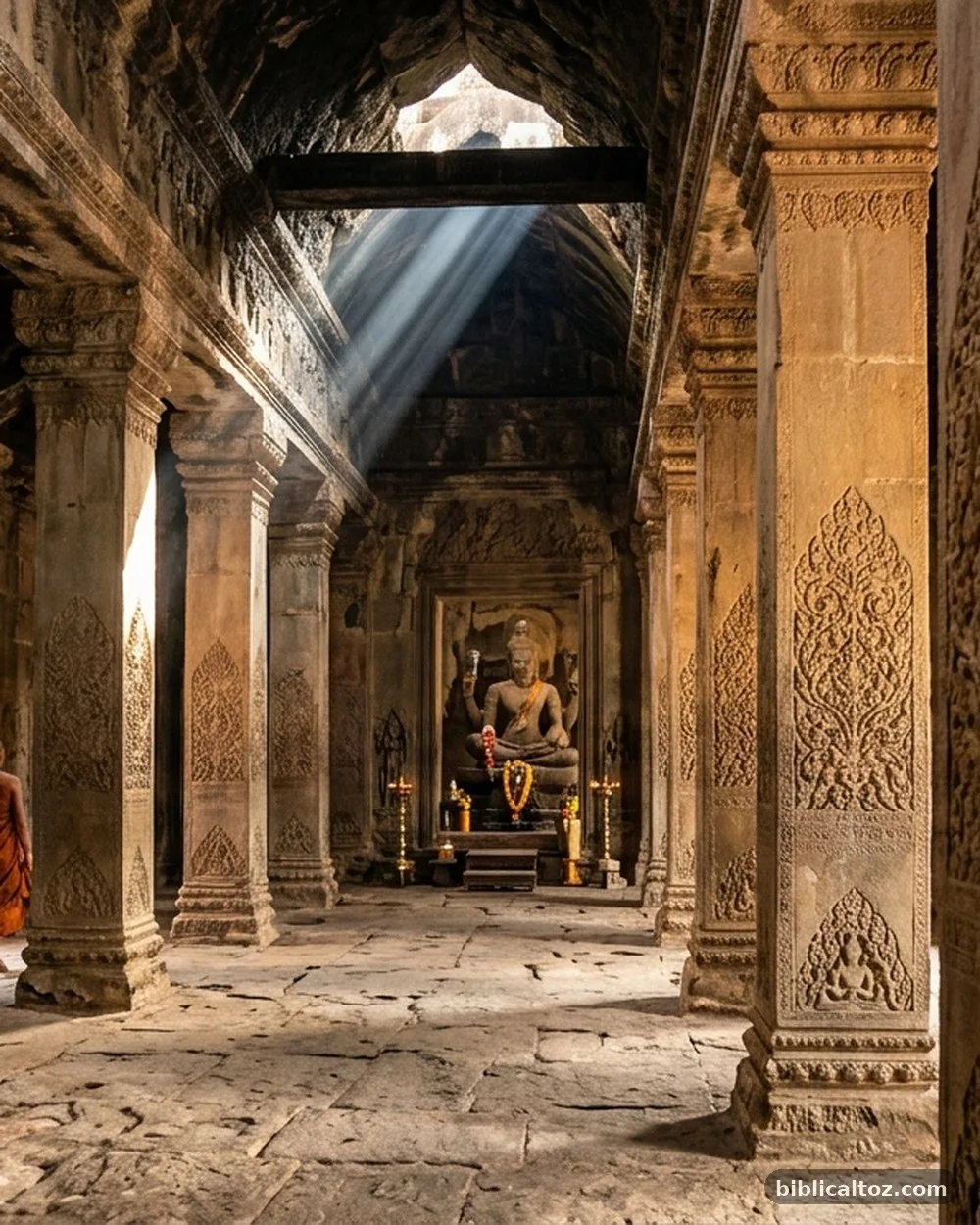
The narrative begins with a physical garden, moves to the tabernacle and temple as a localized dwelling of God’s glory, and culminates in the vision of a redeemed creation. This progression shows that the Garden of Eden symbolism in the Bible is not static. It evolves from a historical home to a theological goal, illustrating God’s plan to bring His people back into a state of perfect unity with Himself.
Garden of Eden symbolism in the Bible and Jesus Christ
Jesus is the key to reopening the garden. While the first man was cast out, Jesus invites the thief on the cross to join Him in “Paradise.” By His death and resurrection, He removes the flaming sword of judgment, granting believers access to the true tree of life.
Garden of Eden symbolism in the Bible and Christian Faith Today
For the modern believer, the garden reminds us that we were created for more than just survival. We were made for intimacy with God. Today, we experience a “down payment” of this communion through the Holy Spirit, looking forward to the day when the full restoration of the garden is realized in the new heaven and new earth.
Does Garden of Eden symbolism in the Bible Always Have the Same Symbolic Meaning?
The meaning remains consistent in its focus on God’s holiness and human dependence, but the application shifts. In Genesis, it acts as a warning against disobedience. In the prophets and Revelation, it acts as a promise of future restoration and comfort for those who have suffered under the weight of a broken world.
Common Misunderstandings About Garden of Eden symbolism in the Bible
A common error is to treat the garden as a purely mythological story with no historical intent. However, the text presents it as a concrete beginning. Another misunderstanding is assuming that the “knowledge of good and evil” was inherently bad; rather, the sin was the attempt to acquire that knowledge by disobeying God’s clear instruction.
Important Bible Verses About Garden of Eden symbolism in the Bible
- Genesis 2:9: Mentions the tree of life and the tree of knowledge, setting the stage for the moral choice.
- Genesis 3:24: Describes the expulsion, marking the start of the human struggle.
- Revelation 22:2: Links the tree of life back to the healing of the nations, showing the full circle of redemption.
Related Biblical Places and Themes
The garden is closely linked to the concept of the Temple, where God’s presence resides. It also connects to the Covenant, as God’s relationship with humanity is defined by His promises and our response to them.
FAQs
Was the garden of Eden a real place?
The Bible presents it as a historical location with specific geographic markers, though its exact position is no longer identifiable.
Why did God put the tree of knowledge in the garden?
The tree served as an opportunity for man to exercise free will and choose to trust God’s definition of good rather than seeking to define it independently.
Does the garden represent heaven?
It is a prototype of heaven, representing a state of peace and closeness to God, but it is distinct from the final resurrected state described in the New Testament.
Is the garden of Eden still on Earth?
According to the narrative, it was barred from human access after the fall, and the subsequent flood likely altered the geography of the world significantly.
Conclusion
Reflecting on the Garden of Eden symbolism in the Bible provides a clear lens through which to view our own spiritual journey. We see the tragedy of our separation from God, but more importantly, we see the persistence of His love. He has never stopped working to bring us back into that perfect relationship.
As you continue your study of the scriptures, let these themes of paradise and restoration encourage your heart. We are not just looking back at a lost home; we are moving forward toward a glorious future where every tear will be wiped away. May you find peace in the promise of that ultimate return to His presence.