The Fall of Jericho: What Happened and Why It Matters
The fall of Jericho remains one of the most compelling narratives in the Old Testament, representing a turning point in the Israelite conquest of Canaan. As the people of Israel stood at the threshold of the Promised Land, this fortified city stood as a massive obstacle to their progress. Through a series of divinely ordained actions, the massive defenses were brought down without a single sword strike from the human army.
Understanding the fall of Jericho requires looking closely at the intersection of unwavering faith and radical obedience to the instructions provided by the Lord. This account serves as a profound example of how divine intervention operates when a people align themselves with the commands of God.
What Was Jericho?
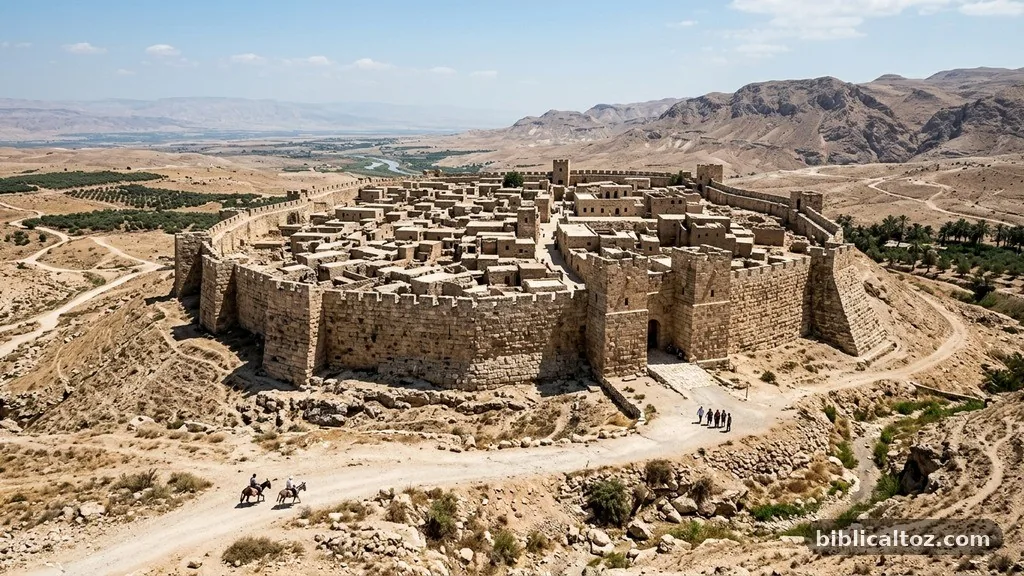
Jericho was a formidable city-state located in the Jordan Valley, serving as a gateway to the central highlands of Canaan. Known for its thick, imposing walls, the city represented the military strength of the Canaanite people. In the biblical record, it was a site of significant strategic importance, as its capture would secure a foothold for the Israelites as they began their occupation of the region.
Israel’s Situation Before Jericho
Following the death of Moses, the leadership fell to Joshua. The Israelites had just crossed the Jordan River miraculously, but they were now faced with a city that was “straitly shut up” because of the fear the Israelites inspired in the inhabitants. They were a nation of nomads transitioning into a land occupied by well-entrenched, hostile kingdoms.
God Gives Joshua the Battle Instructions
The Lord appeared to Joshua with a specific strategy that defied conventional military wisdom. Instead of using siege engines or battering rams, the Israelites were commanded to conduct a liturgical procession. This unconventional approach ensured that the glory for the victory would belong entirely to God rather than the military prowess of the Israelite men.
The Seven Days of Marching
The instructions were precise and required strict adherence from the army and the priesthood. The march around the city followed a specific order:
- The armed men led the procession.
- Seven priests carrying seven trumpets of rams’ horns followed.
- The Ark of the Covenant was carried behind the priests.
- The rear guard followed the Ark.
This daily march was to be performed once for six consecutive days, with the people remaining silent until the final command was given.
The Final March Around Jericho
On the seventh day, the pace of the operation changed significantly. The Israelites were instructed to march around the city seven times rather than just once. This intensified the psychological and spiritual weight of the event, signaling the culmination of the siege.
The Trumpet Blast and the Shout
When the priests blew a long, sustained blast on the rams’ horns during the seventh circuit, Joshua gave the order for the people to shout. This was not a random cry but a communal act of faith. The sound of the trumpets combined with the collective shout of the people signaled their total trust in the promise that the victory was already secured.
The Walls Fall
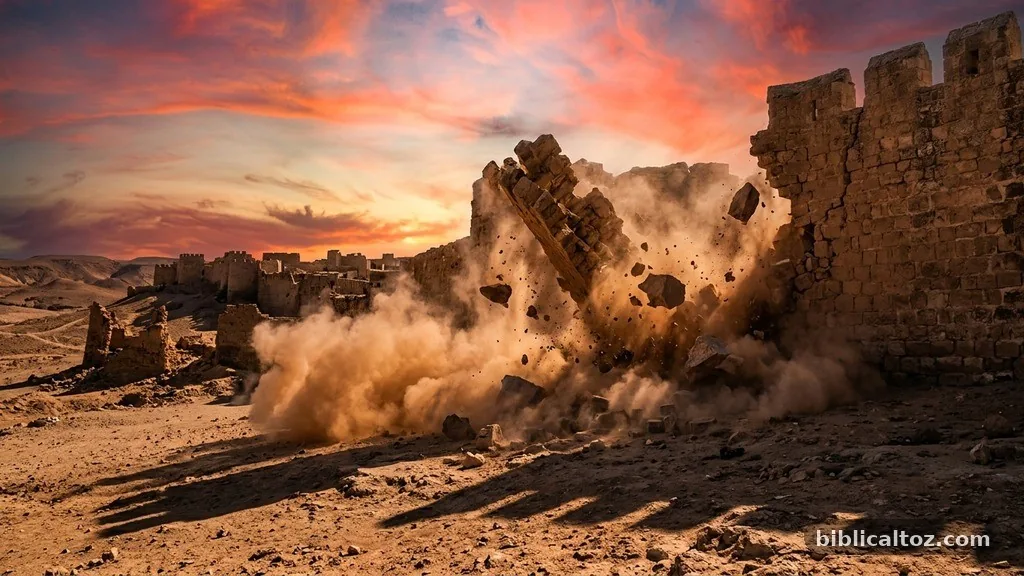
The biblical text states that the walls fell down flat immediately following the shout. This event demonstrates that the structural integrity of the city was no match for the power of the Lord. The collapse allowed the Israelites to charge straight into the city, effectively neutralizing the defensive advantage the Canaanites had relied upon.
Rahab Is Spared
Before the battle began, Joshua had sent two spies into the city. They were protected by a woman named Rahab, who hid them from the king of Jericho. Because of her faith and her agreement with the spies, she and her family were marked for safety. When the city was taken, she was brought out unharmed, illustrating that God’s mercy extends to those who place their trust in Him, even among those outside the covenant community.
What Happened to the City?
The destruction of the city was total, according to the instructions given to the Israelites. Everything within the city was devoted to destruction as an act of consecration to the Lord, except for the silver, gold, and vessels of bronze and iron, which were set aside for the treasury of the Lord’s house.
Why Was Jericho Important?
The capture of the city served several theological and practical purposes for the nation of Israel:
| Purpose | Description |
|---|---|
| Establishment | Confirmed Joshua as the successor to Moses. |
| Morale | Terrified the surrounding Canaanite nations. |
| Consecration | Demonstrated that the spoils of war belonged to the Lord. |
What Does the Fall of Jericho Teach?
The narrative teaches that human strength is secondary to divine favor. It highlights that the methods of the Lord often seem foolish to the world, yet they achieve results that human effort cannot replicate. It also emphasizes the importance of following instructions exactly as they are given, even when the logic behind them is not immediately apparent.
Faith and Obedience in Joshua 6
The entire account hinges on the willingness of the people to follow orders that made no tactical sense. Marching in silence for six days required immense discipline. The fall of Jericho is, at its core, a testament to the power of faith-driven obedience.
Key Bible Verses
- Joshua 6:2: And the Lord said unto Joshua, See, I have given into thine hand Jericho, and the king thereof, and the mighty men of valour.
- Joshua 6:20: So the people shouted when the priests blew with the trumpets: and it came to pass, when the people heard the sound of the trumpet, and the people shouted with a great shout, that the wall fell down flat.
Common Questions
How long did the Israelites march around Jericho?
The Israelites marched around the city once a day for six days, and then seven times on the seventh day.
Why did the walls fall?
According to the biblical account, the walls fell due to the power of the Lord in response to the faith and obedience of the Israelites.
What role did the trumpets play?
The trumpets were a signal for the people to shout and served as a liturgical element, indicating that the battle was a spiritual event led by God.
Was Rahab a part of the city’s destruction?
No, Rahab and her household were spared because of the promise made to her by the two spies.
Conclusion
Reflecting on the fall of Jericho provides a window into the nature of the relationship between God and His people. The event shows that when the community remains united in purpose and obedient to the divine word, obstacles that seem insurmountable can be removed in an instant. This historical moment serves as a reminder to look for guidance from the Lord in times of difficulty rather than relying solely on personal strategy or physical strength. By remembering the lessons of faith demonstrated by Joshua and the people of Israel, one can find encouragement when facing personal challenges today. The story remains a foundational piece of biblical history, inviting all to consider the power of obedience in their own lives.