El Roi Meaning: The God Who Sees Me
Finding comfort in the depths of isolation often begins with discovering the profound nature of the name El Roi. When life feels overwhelming or when you believe your circumstances have rendered you invisible, the biblical narrative provides a compelling perspective on divine attention.
By examining the El Roi meaning, you gain insight into a God who does not merely observe from a distance but actively notices the plight of the individual. This exploration offers a path to understanding how ancient Hebrew titles for the Divine continue to resonate with the human experience of struggle and hope today.
Linguistic Roots of El Roi
The Hebrew expression El Roi carries a specific, weighted significance that stems from its grammatical components. In the Hebrew Bible, the term “El” is a foundational word for God, signifying power, strength, or divinity.
It is often used as a prefix or root in many names for God, emphasizing His authority and majesty. The second part of the title, “Roi,” is derived from the Hebrew root “ra’ah,” which means to see or to look.
When combined, the phrase translates literally to “God of seeing” or “the God who sees me.” It is important to note that this is not an abstract philosophical description of God’s omniscience.
Instead, it is a personal designation that links divine vision directly to human experience. The name functions as a testament to the idea that being seen by God is a deliberate, caring action rather than a passive observation.
Grammatical Breakdown

To appreciate the nuance of the name, we can look at its components:
- El: A primary Hebrew term for God, denoting strength and power.
- Ro’i: Derived from the verb ra’ah, meaning to see. The suffix “i” makes it personal, meaning “my” or “me.”
This structure elevates the title from a general description of a deity to a specific, relational name. It implies that God’s act of seeing is always directed toward the person who is suffering.
The Narrative Context of Genesis 16
The origin of this name is found in the life of Hagar, an Egyptian servant to Sarai. Her story is one of the most poignant records of human vulnerability in the early chapters of Genesis.
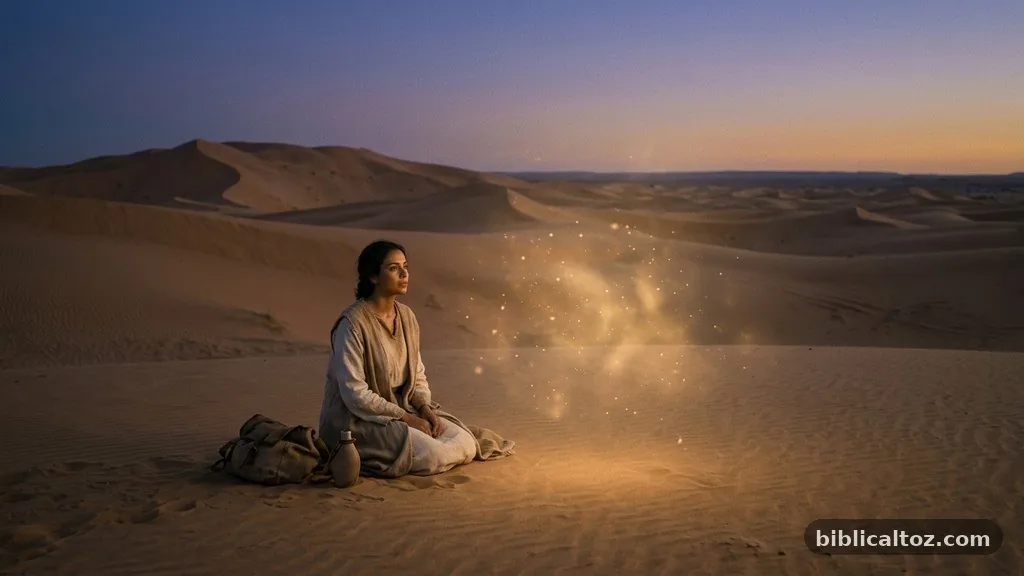
After being mistreated by Sarai, Hagar fled into the wilderness, finding herself in a state of desperation near a spring of water. It was in this desolate place—far from the comforts of home and the protection of her household—that she experienced a divine encounter.
The angel of the LORD appeared to her, offering both a command to return and a promise regarding her future. Hagar’s reaction to this interaction is what birthed the name.
In Genesis 16:13, she calls upon the name of the LORD who spoke to her, saying, “You are a God who sees me,” for she said, “Have I even here looked after him who sees me?” This moment marks the first time in the Bible that a woman gives a name to God, underscoring the personal nature of the revelation.
Comparing Divine Attributes in the Narrative
The following table highlights the contrast between Hagar’s perception of her situation and the reality of her encounter with God.
| Condition | Human Perspective | Divine Reality |
|---|---|---|
| Location | Lost in the desert | Found by God |
| Status | Invisible servant | Valued individual |
| Emotional State | Hopelessness | Divine assurance |
Theological Significance of Divine Attention
The theological weight of the El Roi meaning rests on the concept of visibility. In many ancient cultures, servants and those of lower social status were often ignored or treated as commodities.
By choosing to reveal Himself to Hagar in the wilderness, God challenged the social norms of the time. He demonstrated that no one is truly hidden from His sight, regardless of their social standing, ethnicity, or personal failures.
This name suggests that God’s attention is a form of grace. When we discuss “God sees,” we are talking about an active, involved presence. The biblical text does not portray God as a detached observer.
Rather, He is depicted as a participant in the lives of those who feel discarded. This theological stance provides a foundation for the belief that human dignity is derived from being seen by the Creator, even when the world fails to acknowledge our existence.
Practical Application for Modern Life
Applying the significance of this name to contemporary life requires a shift in perspective. Many people navigate seasons of intense loneliness, professional rejection, or personal grief.
The message behind this name is not a promise that all suffering will vanish immediately; Hagar was sent back into a difficult situation. Instead, the comfort lies in the knowledge that one is not alone in the struggle.
Recognizing that God is the one who sees allows for a sense of peace in the midst of turmoil. It encourages a practice of honesty in prayer, as one realizes that they do not need to hide their pain or their failures.
Because God already sees the entirety of the situation, the individual is free to bring their authentic self into their spiritual life. This awareness can act as an anchor, grounding the individual when external circumstances feel chaotic.
Ways to Reflect on Divine Awareness
- Practice honest reflection during times of solitude.
- Acknowledge that God is present in both successes and struggles.
- Find comfort in the fact that your story is known by the Creator.
- Seek to see others with the same care that God shows to you.
Frequently Asked Questions
Why is God called El Roi?
God is called by this name because Hagar, a servant in the household of Abram and Sarai, encountered Him in the wilderness. She gave Him this title to express her gratitude that He had noticed her when she felt completely abandoned.
How is this name pronounced?
In Hebrew, it is typically pronounced “El Ro-ee.” The “El” sounds like the ‘el’ in “elephant,” and “Ro-i” carries a long ‘o’ sound followed by a short ‘ee’ sound.
Can I use this as a name for my child?
While it is not a common name, some people choose it for its deep, symbolic meaning. It is a way to remind the child of the importance of being seen and valued by God throughout their life.
Where is this name found in the Bible?
This name appears specifically in Genesis 16:13. It is a unique designation used by Hagar to describe her experience of divine encounter in the desert.
Is this name used elsewhere in scripture?
The specific title “El Roi” is unique to the account of Hagar in Genesis. While the concept of God as an all-seeing protector is woven throughout the biblical narrative, this specific name is limited to this singular, powerful story.
Conclusion
The depth of the El Roi meaning serves as a reminder that every individual possesses inherent value in the eyes of their Creator. By exploring the narrative of Hagar, we see that divine attention is not reserved for the powerful or the prominent but is extended to those in the margins.
Embracing this truth can fundamentally change how one approaches times of isolation and uncertainty. It shifts the focus from the pain of being unseen by the world to the comfort of being fully known by God.
As you continue your journey through the scriptures, consider how this name might offer you a new perspective on your own experiences. Whether you are in a season of waiting or a time of transition, remember that you are never truly out of sight. We invite you to explore more insights into biblical names and stories at BiblicalToZ.com to further deepen your understanding of the complexities and comforts found within the text.