The 7 Crowns in the Bible and Their Significance
The mention of the 7 crowns in the Bible often leads to confusion because readers frequently conflate the symbolic crowns found in apocalyptic literature with the rewards promised to believers. While the number seven appears throughout scripture to signify completion or divine perfection, the specific references to crowns vary significantly in context, ranging from prophetic imagery in the book of Revelation to the spiritual rewards mentioned in the epistles.
Distinguishing Symbolic Crowns from Believers’ Rewards

A common point of confusion arises when comparing the prophetic visions in Revelation with the rewards discussed by the Apostle Paul. In the New Testament, there is a clear distinction between the “crowns” worn by entities in prophetic visions and the “crowns” that symbolize the spiritual inheritance of those who follow Christ.
The Seven Crowns of the Dragon
In Revelation 12:3, the text describes a great fiery red dragon that has seven heads and ten horns, with seven crowns upon its heads. This imagery represents a counterfeit authority or earthly power that opposes the kingdom of God. Unlike the rewards given to believers, these crowns symbolize worldly dominion, political influence, and a temporary authority that stands in direct opposition to the Lord.
The Five Crowns of Reward
When scholars and theologians discuss the crowns believers receive, they typically focus on the five distinct rewards mentioned in the New Testament. These are often referred to as “crowns of glory” or spiritual accolades. While some traditions count seven, most biblical study focuses on these five specific categories:
- The Crown of Life: Promised to those who endure trials and remain faithful even under the threat of death.
- The Crown of Righteousness: A reward for those who have lived with a longing anticipation for the return of Jesus.
- The Crown of Glory: Specifically mentioned as a reward for faithful church leaders who shepherd their flocks with integrity.
- The Crown of Rejoicing: Often called the “soul-winner’s crown,” this is associated with the joy of bringing others into a relationship with God.
- The Incorruptible Crown: A reward for those who demonstrate self-discipline and mastery over their own fleshly desires.
The Biblical Significance of the Number Seven

The number seven is perhaps the most significant numerical symbol in the Bible. It first appears in the creation account, where God completes His work in a week of seven days. Because of this, the number is inherently linked to perfection, fullness, and divine completion.
When the number seven is attached to an object—such as the crowns on the dragon—it signifies a totality of power or a complete system of worldly influence. Understanding this helps readers distinguish between the literal rewards promised in the NLT or NIV versions and the highly symbolic, figurative language used by John the Revelator to describe spiritual warfare.
What God Says About Crowns
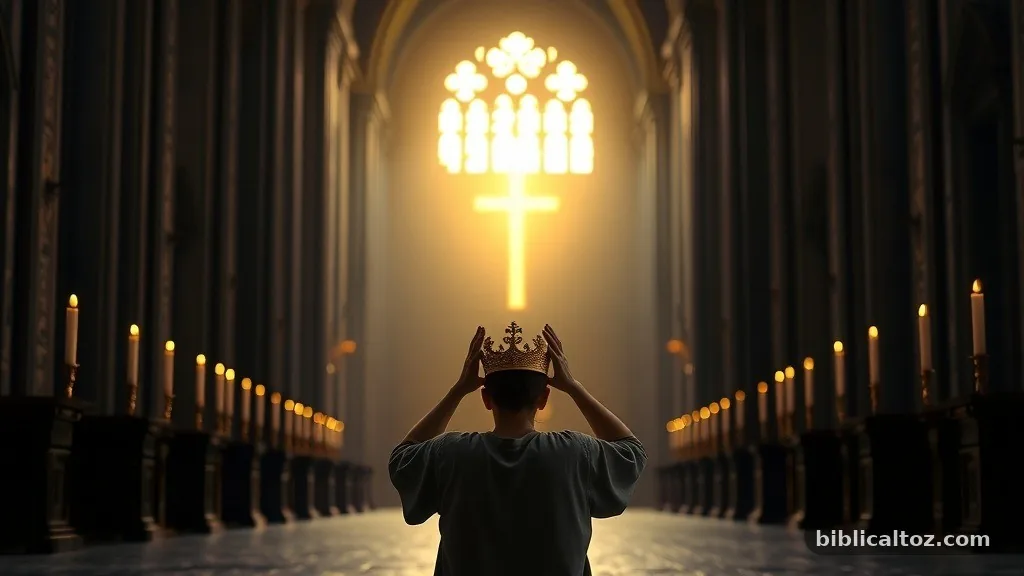
The concept of receiving a crown from the Lord is not meant to encourage pride, but rather to highlight the value God places on faithful service. In the NKJV and other translations, these crowns are often described as something believers may cast at the feet of Jesus. This act serves as a profound reminder that all glory, honor, and achievement belong to Him.
If you are looking to understand these concepts further, it is helpful to look at the context of each passage. When the Bible mentions a crown, it is almost always linked to the idea of a race, a battle, or a period of testing.
These items are not physical objects to be worn in the traditional sense, but symbolic representations of the eternal value of a life lived in alignment with the will of God. Whether you are reading through the historical accounts or the prophetic visions of the New Testament, focusing on the character of Christ remains the primary way to understand the true intent behind these scriptural promises.