What Is Mercy: Meaning and Biblical Significance?
Mercy is often misunderstood as a passive feeling or a simple act of letting someone off the hook. In reality, it is a profound, active posture of the heart that intervenes when someone is suffering or trapped in the consequences of their own actions. When we explore what is mercy, we discover a virtue that holds back deserved judgment in favor of restoration and kindness.
It is a cornerstone of the biblical narrative, reflecting the character of a Creator who prioritizes reconciliation over retribution. Understanding this concept allows us to engage with others more deeply and grasp the foundational nature of our relationship with the divine.
What Is Mercy According to the Bible?
In the biblical worldview, mercy is not merely an emotion; it is an action born of compassion. It occurs when someone with the power to punish or ignore a person in need chooses instead to provide relief. Mercy in the Bible assumes that there is a standard of justice that has been violated, yet the offended party—or the one in a position of strength—refuses to exact the full toll.
This is not the same as ignoring wrongdoing. Instead, it is the deliberate decision to prioritize the well-being of the one who is hurting or guilty. Throughout scripture, this quality is linked to covenant loyalty, demonstrating that God’s commitment to His people remains firm even when they fail to uphold their end of the bargain.
What Is the Meaning of Mercy in Hebrew and Greek?
The original languages of the Bible provide essential nuance to our understanding of this term. Rather than relying on a single modern definition, we must look at how specific terms were used in their original contexts.
The Hebrew Context: Hesed and Rachamim
In the Old Testament, two primary words define the scope of mercy. The first is hesed, which is often translated as loving-kindness or covenant faithfulness. It describes a deep, steadfast devotion that persists through trials. The second is rachamim, which relates to the concept of the womb and implies a visceral, gut-level compassion. It is the feeling a parent has for a child, a deep empathy that compels action.
The Greek Context: Eleos
In the New Testament, the Greek word eleos carries the weight of mercy. It describes the outward expression of pity, specifically toward those who are in misery or under the weight of a burden they cannot lift themselves. While hesed focuses on the covenant relationship, eleos focuses on the act of intervention.
Is Mercy One of God’s Attributes?

Mercy is indeed an essential attribute of God. It is not something He does occasionally; it is a fundamental aspect of who He is. In Exodus 34:6–7, when God reveals His name and character to Moses, He declares Himself to be compassionate, gracious, slow to anger, and abounding in mercy.
This passage reveals that God’s nature is inherently oriented toward restoration. He is not a distant judge waiting for an error to punish; He is a persistent father seeking to draw His creation back to Himself.
Because mercy is an attribute, it remains consistent throughout all time. It is the filter through which God interacts with a broken world, ensuring that justice is always tempered by the possibility of redemption.
Examples of God’s Mercy in the Old Testament
The Old Testament is a long record of human failure met by divine intervention. One of the most striking examples is found in the life of David.
After his grave moral failure, he does not receive the immediate destruction the law might demand. Instead, he receives the space to repent and be restored to his relationship with the Almighty.
Another example is the sparing of Nineveh. Despite their wickedness, God sends a prophet to warn them, and when they respond with humility, He withholds the destruction He had declared. These instances illustrate that God’s mercy is not a sign of weakness but a testament to His sovereign desire to see the lost return to His favor.
God’s Mercy Revealed Through Jesus Christ
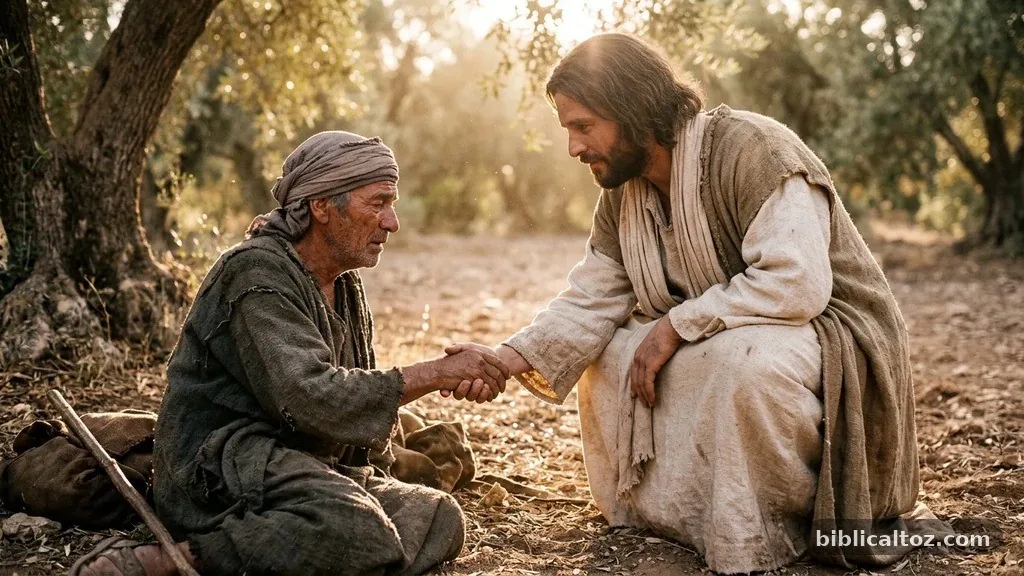
The ultimate expression of mercy is found in the person and work of Jesus Christ. In the New Testament, Jesus does not just talk about mercy; He embodies it. He touches the leper, dines with the outcast, and heals those whom society had discarded.
Ephesians 2:4–5 highlights this, stating that because of His great love, God, who is rich in mercy, made us alive together with Christ. This transition from death to life is the ultimate act of mercy—a gift of restoration that we could never earn on our own. Jesus serves as the bridge, demonstrating that the divine heart is always reaching out to pull the weary toward grace.
What Is the Difference Between Mercy and Grace?
While these terms are often used interchangeably, they have distinct theological functions. Understanding the difference helps clarify how we relate to the divine.
| Term | Definition | Focus |
|---|---|---|
| Mercy | Withholding deserved punishment | Relief from consequences |
| Grace | Giving unmerited favor | Provision of benefits |
Mercy is the “no” to the punishment we deserve, while grace is the “yes” to the blessings we have not earned. They work together as two sides of the same coin, both stemming from the love of God.
What Is the Difference Between Mercy and Forgiveness?
Forgiveness and mercy are closely related, yet they operate in different directions. Mercy is an attitude that leads to action; it is the posture of the one who has been offended. Forgiveness is the specific act of releasing the debt or the resentment caused by that offense.
You can show mercy by helping someone who is suffering, even if the process of full forgiveness is still unfolding. However, true biblical mercy often creates the environment where forgiveness can flourish. By choosing to act with compassion rather than retaliation, we clear the path for reconciliation.
How Should Christians Show Mercy to Others?
The instruction to show mercy is clear throughout the teachings of Jesus. In Luke 6:36, the mandate is simple: be merciful, just as your Father is merciful. This means that our interactions with others should reflect the same grace we have received.
- Practice active listening when someone is struggling with the consequences of their poor choices.
- Provide tangible help to those in physical or emotional distress, regardless of their background.
- Choose to withhold judgment when you have the power to condemn.
- Seek reconciliation in broken relationships, prioritizing peace over being right.
- Advocate for those who are marginalized or treated unfairly by systems of power.
Frequently Asked Questions
Does mercy mean we should ignore sin?
No, mercy does not mean ignoring or condoning sin. In the biblical sense, mercy recognizes the reality of the wrong but chooses to offer a path to restoration rather than immediate destruction. It creates the space for the offender to turn away from their error.
Is there a limit to how much mercy we should show?
Humanly speaking, we often want to set limits, but the biblical standard is rooted in the infinite mercy of God. We are called to be conduits of that mercy, which means our capacity to show it should be dictated by our reliance on God’s grace rather than our own finite patience.
Why is mercy sometimes confused with weakness?
Because our world often equates strength with the ability to dominate or punish, choosing to show mercy can look like a failure to enforce standards. However, it takes more strength to hold back one’s power and offer a hand of restoration than it does to simply strike out in anger.
How can I be more merciful in my daily life?
Start by shifting your perspective. When you encounter someone who has wronged you or is currently failing, ask yourself what they might be suffering. By moving from a posture of judgment to a posture of curiosity and compassion, you begin to act with the heart of a peacemaker.
Conclusion
Living a life marked by mercy is a transformative experience. It requires us to step away from the natural human instinct to keep score or demand immediate justice and instead adopt the character of the one who has shown us such profound kindness. By extending this virtue to others, we participate in the ongoing work of healing a broken world.
As you look for ways to integrate this into your week, remember that small acts of kindness carry significant weight. Whether it is offering a kind word to a family member or choosing to forgive a minor slight, these actions reflect the core of what is mercy. Continue seeking to understand this divine attribute, and you will find it changes how you see both your own life and the people around you.