What Does the Bible Say About the Sabbath?
Many believers often find themselves curious about what the Bible says about Sabbath observance, especially when trying to reconcile ancient commands with modern life. The concept of a set-apart day of rest appears throughout the holy scriptures, shifting from a creation ordinance to a core tenet of the law given to Israel.
By examining the biblical narrative from Genesis through the New Testament, we can better appreciate how the seventh day functioned as a sign between God and His people. Understanding the nuances of these texts helps clarify why this practice remains a significant point of discussion for Christians seeking to honor the Lord through rest and reflection.
What Is the Sabbath in the Bible?
The word Sabbath comes from the Hebrew term Shabbat, which literally means to cease or stop. It is not merely a day off from labor but is fundamentally tied to the idea of stopping work to acknowledge God as the Creator and Sustainer of life. In the biblical record, this period of rest is defined as a holy time, distinct from the other six days of the week.
The Sabbath in Creation

The foundation for this practice is established in Genesis 2:1–3. After finishing the work of creation, the scripture notes that God rested on the seventh day and blessed it, making it holy.
This act of divine rest serves as the original pattern for humanity. By pausing His creative work, God modeled a rhythm of life that emphasizes the importance of stopping to appreciate what has been accomplished and to commune with the Creator.
The Sabbath Commandment
The explicit command to keep the Sabbath appears prominently in the Ten Commandments. However, the Bible provides two slightly different motivations for this observance, reflecting the depth of its meaning.
In Exodus 20:8–11, the command is rooted in the creation narrative. Israel is instructed to remember the seventh day because God Himself rested after six days of work. This links the people directly to the divine pattern established at the dawn of time.
In contrast, Deuteronomy 5:12–15 connects the command to the exodus from Egypt. Here, the focus shifts to liberation.
The Israelites were commanded to rest so that their servants and animals could also find relief, remembering that they were once slaves in Egypt and the Lord brought them out with a mighty hand. This highlights the Sabbath as a day of freedom, justice, and equality.
How the Sabbath Was Observed in Ancient Israel
For the people of Israel, the Sabbath was a serious, strictly regulated time. It was intended to be a day of complete cessation from manual labor.
According to the Torah, this included everything from gathering wood to lighting fires in their homes. It was a sign of the covenant between God and the nation, intended to distinguish them from surrounding cultures.
- It served as a weekly reminder of God’s sovereignty over time.
- It provided physical rest for the entire community, including the marginalized.
- It was a time for corporate assembly and the reading of the law.
- It reinforced the identity of the Israelites as a people set apart for the Lord.
What Did Jesus Say About the Sabbath?
When we look at the ministry of Jesus, we find Him frequently engaging with the religious leaders of His day regarding how the Sabbath should be kept. In Mark 2:23–28, when His disciples plucked grain on the Sabbath, the Pharisees accused them of breaking the law.
Jesus responded by noting that the Sabbath was made for man, not man for the Sabbath. He asserted His authority as Lord of the Sabbath, emphasizing that the intent of the day was to benefit humanity, not to become a burden of legalistic restrictions.
Did Jesus Break the Sabbath?
The accusation that Jesus broke the Sabbath often stems from His healing miracles. In Matthew 12:1–14, Jesus healed a man with a withered hand on the Sabbath, directly challenging the narrow interpretations held by the Pharisees.
Jesus argued that it is lawful to do good on the Sabbath. By prioritizing mercy and healing over rigid interpretations of work, He demonstrated that the spirit of the law—which values life and well-being—should always supersede human traditions that stifle compassion.
| Context | Pharisaic Interpretation | Jesus’ Perspective |
|---|---|---|
| Healing the Sick | Prohibited as work | Consistent with God’s mercy |
| Plucking Grain | Prohibited as harvesting | Permissible for basic need |
| Legalism | Rules above all else | Humanity is the priority |
New Testament Perspectives on Sabbath Observance
The New Testament letters offer a broader view of how the early church approached the Sabbath. Paul writes in Romans 14:5–6 that one person esteems one day above another, while another esteems every day alike, urging believers to be fully convinced in their own minds. In Colossians 2:16–17, he warns against being judged for the observance of festivals or Sabbaths, calling these things a shadow of what was to come, while the substance belongs to Christ.
Hebrews 4:1–11 introduces the concept of a spiritual Sabbath rest that remains for the people of God. This passage suggests that the physical rest of the Old Testament points toward a deeper, eternal rest found in faith, where believers cease from their own works just as God ceased from His.
Is Saturday or Sunday the Christian Sabbath?
The Bible identifies the seventh day, Saturday, as the Sabbath. However, the early church began to gather on the first day of the week, Sunday, to commemorate the resurrection of Jesus.
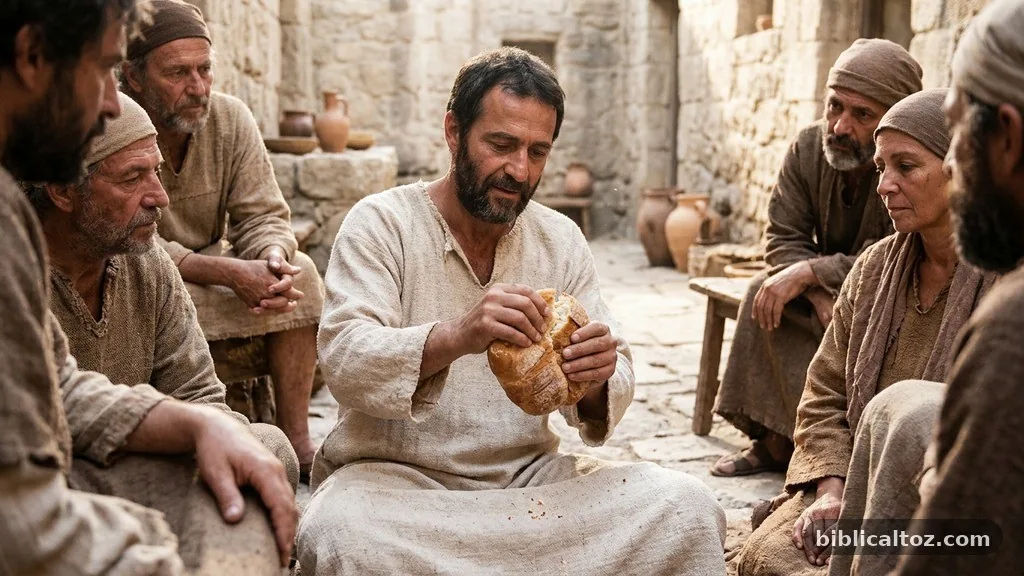
Acts 20:7 mentions the disciples meeting on the first day to break bread. While some traditions maintain that the Sabbath remains on the seventh day, others view Sunday as the Lord’s Day, a time for worship that celebrates the new creation initiated by Christ’s rising from the dead.
Must Christians Keep the Sabbath Today?
There is no single consensus on this question within Christianity. Some groups believe that the commandment to observe the seventh-day Sabbath remains binding for all believers.
Others argue that the Sabbath was a sign specifically for Israel and that Christians now live in the freedom of the new covenant, where every day is a gift from God. Many others hold a middle ground, seeing the principle of a weekly day of rest as a wise and necessary practice for spiritual health, even if they do not view it through a lens of legal requirement.
Sabbath Rest and Everyday Christian Life
Regardless of the specific day chosen, the biblical principles of rest and reflection remain highly relevant. Integrating a time of cessation into the week helps prevent burnout and keeps one’s focus on God.
Isaiah 58:13–14 paints a picture of a Sabbath that is a delight, where one honors God by turning away from selfish pursuits and finding joy in the Lord. This suggests that the heart of the matter is the attitude of the believer toward God’s provision.
Common Misunderstandings
One common misunderstanding is that the Sabbath was designed to make life difficult. On the contrary, the Bible presents it as a gift.
Another misconception is that Jesus abolished the Sabbath; rather, He redefined it, stripping away the layers of human tradition to reveal its original, life-giving purpose. Many also wrongly assume that the Sabbath is only about inactivity, whereas the Bible emphasizes active worship and doing good to others.
FAQs
The Bible describes the Sabbath as a day set apart by God for rest, reflection, and worship, originating in the creation week and later codified in the law given to Israel.
Is the Sabbath Saturday or Sunday?
According to the biblical text, the seventh day of the week is Saturday. Sunday is identified in the New Testament as the day of the resurrection and the day the early church gathered for worship.
Did Jesus keep the Sabbath?
Yes, Jesus kept the Sabbath as part of the Jewish law, but He challenged the legalistic interpretations of the religious leaders, emphasizing that the day was made for human benefit and mercy.
Did Jesus change the Sabbath day?
Jesus did not formally change the day, but His ministry and resurrection shifted the focus of Christian worship toward the first day of the week, which became the standard for the early church.
Are Christians required to keep the Sabbath?
Interpretations vary significantly, with some traditions emphasizing seventh-day observance, others prioritizing Sunday as the Lord’s Day, and some viewing the Sabbath as fulfilled in the spiritual rest found in Christ.
What does Jesus mean by the Sabbath was made for man?
He meant that the Sabbath was created as a blessing to serve human needs for physical and spiritual restoration, rather than a rigid set of rules designed to burden humanity.
What is the difference between the Sabbath and Sunday worship?
The Sabbath is rooted in the Old Testament command for seventh-day rest, while Sunday worship is a practice rooted in the celebration of the resurrection of Jesus on the first day of the week.
What does Hebrews 4 say about Sabbath rest?
Hebrews 4 describes a spiritual rest that remains for the people of God, symbolizing the peace and salvation found in trusting the finished work of Jesus rather than one’s own efforts.
Conclusion
Exploring what the Bible says about the Sabbath reveals a rich tapestry of meaning that spans from the silence of creation to the life-giving ministry of Jesus. Whether one views this as a binding command or a beautiful principle for living, the core message remains that God desires His people to find rest, joy, and peace in Him. This rhythm of life allows us to step back from our daily labors, acknowledge the sovereignty of our Creator, and focus on the grace found in the gospel.
We encourage you to continue studying the scriptures to see how these ancient truths can shape your own walk with the Lord. Visit BiblicalToZ for more insights into the word of God.