Biblical Meaning of Seeing a Hawk: Facts and Context
Spotting a raptor circling overhead often stirs a sense of wonder, leading many to search for the biblical meaning of seeing a hawk. While nature frequently serves as a backdrop for God‘s creation in the Scriptures, people often look for hidden signs or messages in these encounters. It is important to distinguish between appreciating the beauty of God’s design and assigning prophetic significance to common wildlife sightings.
This article examines what the text actually says about birds of prey, helping you maintain a grounded perspective that prioritizes the written Word over personal interpretation. By anchoring your thoughts in Scripture, you can enjoy creation without falling into the trap of seeking signs where none are promised.
Biblical Context of Birds of Prey

The Bible frequently uses birds to illustrate God’s sovereignty and care for His creation. While the term hawk is explicitly mentioned in the King James Version, it appears in lists of unclean animals.
In Leviticus 11:16 and Deuteronomy 14:15, the hawk is categorized among birds that the Israelites were forbidden to eat. This classification does not imply the bird is evil, but rather that it was part of the ritual law governing the diet and holiness of the ancient nation of Israel.
Beyond dietary laws, the book of Job offers a profound look at the intelligence and instinct God placed within these creatures. In Job 39:26, the text asks: “Doth the hawk fly by thy wisdom, and stretch her wings toward the south?”
This rhetorical question emphasizes that the bird’s natural instincts are a product of divine design, not human control. The passage serves to humble humanity by highlighting the vast difference between our limited understanding and God’s infinite wisdom in sustaining the natural world.
Birds in Scripture
| Context | Biblical Reference | Significance |
|---|---|---|
| Dietary Law | Leviticus 11:16 | Categorized as an unclean bird for consumption. |
| Divine Wisdom | Job 39:26 | Highlights God’s role in the bird’s natural instincts. |
| Prophetic Imagery | Isaiah 34:15 | Associated with desolate places in judgment imagery. |
Biblical Evidence vs. Modern Symbolism
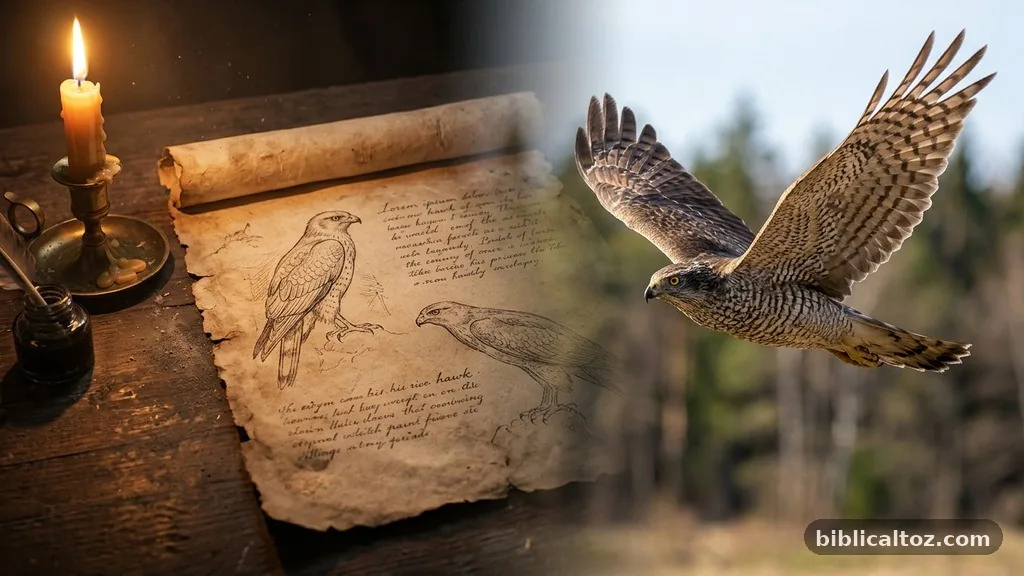
It is common to find claims suggesting that seeing a hawk is a sign of a breakthrough, a warning, or a specific message from heaven. However, it is essential to recognize that these interpretations are modern cultural constructs rather than biblical doctrine.
The Bible does not provide a system for interpreting animal sightings as personal omens or divine messages. Assigning specific meanings to a bird encounter often stems from a desire for clarity in our own lives, but it risks moving toward superstition.
- Scripture does not establish a universal rule for interpreting wildlife encounters.
- Modern spiritual symbolism often reflects human intuition rather than theological teaching.
- Divination and the search for signs in nature are discouraged in the biblical framework.
- True wisdom is found in the application of the written Word, not in observing external phenomena.
Practical Reflection for Christians
When you encounter a hawk or any other bird of prey, your response can be one of worship rather than anxiety or speculation. Instead of searching for hidden meanings, use the moment to acknowledge the Creator. You might offer a prayer of gratitude for the complexity of the natural world or take a moment to reflect on a passage of Scripture that speaks to God’s provision.
This approach keeps your focus on the character of God, who holds the universe together, rather than on the unpredictable movements of birds. Avoiding the search for signs protects your heart from the confusion of divination and keeps your spiritual life firmly rooted in the truth of the Gospel.
Frequently Asked Questions
Does the Bible say that seeing a hawk is a sign from God?
No, the Bible does not teach that seeing a hawk serves as a sign or a message for an individual. While the hawk is part of God’s creation, the Scriptures focus on His direct revelation through His Word and His Son, Jesus Christ, rather than through signs in nature.
Is it wrong to feel a connection to nature when I see a bird?
Appreciating the beauty of creation is a natural and healthy response for a believer. However, there is a clear distinction between admiring God’s handiwork and looking for supernatural messages in animal behavior, which can lead to unbiblical superstition.
What should I do if I feel like a bird sighting is a message?
If you feel a strong impression during a wildlife encounter, it is best to bring that feeling to God in prayer and compare it with the truth of the Bible. If a thought or message does not align with Scripture, it should be dismissed, as God’s primary way of speaking to His people is through the Holy Spirit using the written Word.
Are hawks considered evil in the Bible?
No. Being labeled as unclean in the Old Testament law simply meant that the animal was not to be eaten by the Israelites. It did not carry a moral judgment of the creature, which is simply fulfilling the purpose for which it was created.
Conclusion
The biblical meaning of seeing a hawk is best understood by looking at the text itself: these birds are part of a vast, complex creation that displays the wisdom of God. Rather than trying to decode the flight path of a bird to find divine guidance, you can rest in the assurance that God is sovereign over all things. Your life is not directed by the chance appearance of a bird, but by the steady, unchanging promises found in the Bible.
By keeping your eyes on the Creator instead of the creation, you will find a much deeper and more reliable source of peace and direction. Engaging with nature should always draw you closer to the One who made it, encouraging a life characterized by prayer, gratitude, and a commitment to biblical truth.