Hosanna Meaning: Origin, Context, and Biblical Significance
If you have ever found yourself singing during a worship service or reading through the Gospel accounts of the triumphal entry, you have likely encountered the word hosanna. While it is often used today as a synonym for praise or a shout of joy, the historical reality behind the hosanna meaning is far more nuanced and grounded in a desperate plea for divine intervention. By exploring the linguistic roots and the specific cultural setting of the first century, you will gain a deeper appreciation for why this word served as both a cry for deliverance and an ultimate declaration of faith in the Messiah.
Etymology and the Original Hebrew Roots

To understand this term, we must look beyond its modern usage in hymns and liturgical settings. The word originates from the Hebrew phrase Hoshia-na, which appears in the Old Testament. This phrase is a combination of two distinct words: hoshia, which means to save or to deliver, and na, which is a particle of entreaty or a request.
When combined, the term functions as an urgent imperative. It is not merely a statement of fact or a generic exclamation of happiness; it is a direct appeal to God.
In its original context, this expression was a plea for help. It was the cry of a person who recognized their own inability to overcome a situation and looked solely to the Almighty for rescue. When the ancient Israelites used this phrase, they were essentially saying, “Please, save now.”
This deep-seated sense of dependency is the foundation upon which the later New Testament usage is built. Recognizing this origin shifts our perspective on how the word functions, moving it from a passive shout of praise to a proactive, faith-filled prayer for intervention.
Biblical Context in the Old and New Testaments
The most significant Old Testament reference for this term is found in Psalm 118:25-26. This psalm was part of the Hallel, a collection of songs sung during major Jewish festivals, including the Feast of Tabernacles and Passover.
In these verses, the psalmist writes: “Save now, I beseech thee, O Lord: O Lord, I beseech thee, send now prosperity. Blessed be he that cometh in the name of the Lord.”
When the crowds gathered in Jerusalem during the final week of Jesus‘ life, they were not using the word in a vacuum. They were reciting or echoing these very verses from the Psalms.
By shouting this phrase as Jesus rode into the city, the people were acknowledging Him as the one who comes in the name of the Lord. They were invoking the messianic expectations associated with the Hallel, signaling that they believed the time for national deliverance had finally arrived.
The Triumphal Entry Accounts
The four Gospels capture the scene of the triumphal entry with slight variations that highlight the intensity of the moment. In the accounts of Matthew, Mark, Luke, and John, the repetition of this cry signifies a collective recognition of Jesus as a figure of immense spiritual authority.
| Gospel Account | Primary Emphasis |
|---|---|
| Matthew 21:9 | Focuses on the crowd identifying Jesus as the Son of David. |
| Mark 11:9-10 | Connects the cry to the coming kingdom of their father David. |
| Luke 19:38 | Highlights peace in heaven and glory in the highest. |
| John 12:13 | Explicitly names Jesus as the King of Israel. |
The Shift from Plea to Acclamation
Over time, the usage of this term underwent a significant evolution. While it began as a plea for salvation, the context of the New Testament shows it transitioning into an act of liturgical praise. By the time the Gospels were written and later circulated among the early church, the word had become a fixed expression of welcome and adoration for the Messiah.
This transition does not mean the original meaning of “save us” was lost. Rather, it became a shorthand for recognizing that the salvation requested in the Old Testament had arrived in the person of Jesus.
When believers today sing these words, they are layering the historical plea for rescue with the theological reality of redemption. It is a dual-layered expression that acknowledges both the need for God’s saving power and the celebration of that power being manifest in the world.
Distinguishing Hosanna from Hallelujah
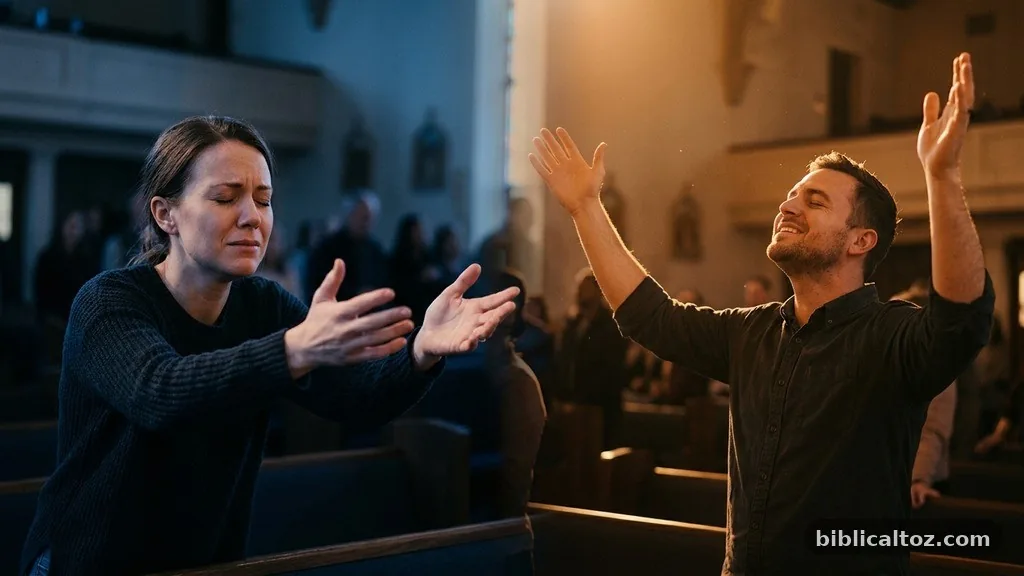
It is common for people to treat these two terms as interchangeable, but they carry distinct theological weights. Understanding the difference helps clarify the nature of our worship.
- Hallelujah is a Hebrew expression meaning “Praise the Lord,” focusing entirely on the character and glory of God.
- Hosanna is a plea for salvation that has developed into a cry of recognition for the Savior.
- Hallelujah is an eternal, celebratory exclamation used in both heaven and earth.
- Hosanna is deeply tied to the human experience of struggle, need, and the historical arrival of the Messiah.
While both are used to honor God, they serve different functions in the life of a believer. One is an objective declaration of God’s worth, while the other is a subjective expression of our reliance on Him to deliver us.
Messianic Expectations of the Crowds
The crowd’s use of the term during the entry into Jerusalem was complex. Many in the crowd were looking for a political or military deliverer—someone who would break the yoke of Roman occupation and restore the earthly kingdom of Israel. For them, the hosanna meaning was tied to immediate physical and national liberation.
However, Jesus’ mission was fundamentally different. He did not come to lead a rebellion against Rome but to offer a spiritual salvation that transcended political boundaries. This gap between the people’s expectations and Jesus’ purpose explains why the enthusiasm of the crowd shifted so dramatically by the end of the week.
When Jesus did not perform the military coup they anticipated, the cry for salvation transformed into a demand for judgment. This serves as a sobering reminder that our own prayers for help must be aligned with God’s sovereign will rather than our narrow desires.
Modern Application in Worship
In modern Christian life, the term remains a staple of our vocabulary. It appears in countless hymns, choruses, and prayers. Using it today is an act of historical continuity; it connects us to the ancient Israelites who prayed for the Messiah, the crowds who welcomed Him, and the early church that recognized Him as the Savior of the world.
When we use this word, we are doing more than singing a song. We are participating in a long tradition of acknowledging that we are a people in need of a Savior.
It is a reminder that the salvation we experience is not something we achieve on our own, but something that must be granted to us by God. Whether in a large gathering or a private moment of reflection, the word retains its power to focus our hearts on the one who comes in the name of the Lord.
Frequently Asked Questions
What is the true meaning of Hosanna?
The true meaning is rooted in the Hebrew phrase Hoshia-na, which translates to “save now” or “please, deliver us.” It is an urgent, faith-filled plea for divine rescue that evolved into an acclamation of praise for the Messiah.
What is the difference between Hallelujah and Hosanna?
Hallelujah is a call to praise God, while Hosanna is a plea for God to save. Hallelujah focuses on God’s glory, whereas Hosanna focuses on God’s role as the deliverer of His people.
Why did the crowds yell Hosanna?
The crowds shouted this during the triumphal entry to signal that they recognized Jesus as the promised Messiah. They were invoking the Hallel from the Psalms, expressing their hope that He would bring the salvation and restoration they believed was promised to Israel.
Is Hosanna considered the highest form of praise?
While it is a powerful expression of worship, it is functionally a cry for salvation. It is often used in high-praise contexts, but its unique role is to acknowledge our dependence on God for rescue and to celebrate His presence among us.
How can I use this word in my personal prayer life?
You can use it as a sincere cry for help during difficult times, acknowledging your need for God’s intervention. Alternatively, you can use it as a declaration of faith, recognizing that Jesus is the Savior who has already come to meet your deepest spiritual needs.
Conclusion
The journey through the history and usage of this term reveals a bridge between human need and divine response. By understanding the original Hebrew roots, we move beyond viewing it as a mere song lyric or a generic shout of joy. We instead see it as a profound, historical confession of faith that bridges the gap between the Old Testament hope for a deliverer and the New Testament revelation of Jesus.
As you incorporate this word into your own life, remember that it carries the weight of both a plea and a celebration. It remains a relevant, powerful way to approach God, acknowledging that He is the only one who can truly save.
Whether you are walking through a season of struggle or a moment of deep gratitude, this ancient cry remains a fitting way to call upon the name of the Lord. We invite you to continue exploring the richness of Scripture and to let these foundational words shape your walk of faith.