What Does the Bible Say About Yoga?
Many believers find themselves wondering how to approach modern wellness trends while remaining faithful to their walk with the Lord. Because the Bible does not explicitly mention yoga, Christians often look to broader scriptural principles to determine if the practice aligns with a life dedicated to Christ.
By examining the roots of these physical movements and applying discernment to our daily habits, we can better understand how to honor God with our bodies. This exploration of what the Bible says about yoga helps clarify the distinction between exercise and spiritual tradition, empowering you to make choices that respect your conscience and your commitment to your faith.
Understanding the Roots of Yoga

Yoga originated in ancient India as a multifaceted system of physical, mental, and spiritual disciplines. While many people today encounter it primarily as a form of low-impact exercise or stress relief, its historical foundation is deeply intertwined with Eastern philosophies and meditative traditions. The term itself is derived from Sanskrit, often interpreted as union—historically referring to the union of the individual consciousness with a universal or divine consciousness.
In the modern Western context, yoga has been significantly secularized. For many, it is simply a way to increase flexibility, build strength, and practice deep breathing.
However, the disconnect between the original religious intent and the current fitness-focused application is where many Christians find the source of their hesitation. Distinguishing between the physical postures, known as asanas, and the underlying spiritual framework is a central part of the conversation for believers.
Biblical Perspectives on Meditation and Focus
The Bible provides clear instructions on how we should occupy our minds. While Eastern meditation often focuses on emptying the mind or achieving a state of detachment, biblical meditation is defined by the active filling of one’s thoughts with the Word of God.
Scriptural Foundations for the Mind
The scriptures emphasize that our focus should remain on the truths of God rather than on internal emptiness. Consider these passages:
- Joshua 1:8 encourages believers to meditate on the law of the Lord day and night, ensuring that they observe all that is written in it.
- Psalm 1:1–3 describes the blessed person as one whose delight is in the law of the Lord, meditating on it constantly.
- Philippians 4:8 instructs us to fix our thoughts on whatever is true, noble, right, pure, lovely, and admirable.
- Romans 12:1–2 calls believers to present their bodies as living sacrifices and to be transformed by the renewing of their minds, rather than conforming to the patterns of this world.
These verses suggest that for a Christian, meditation is an active, external engagement with God’s truth. When evaluating any practice, including yoga, the core question is whether it helps you focus on Christ or encourages a different type of spiritual engagement that might pull you away from the gospel.
Exercise, Stretching, and Christian Conscience
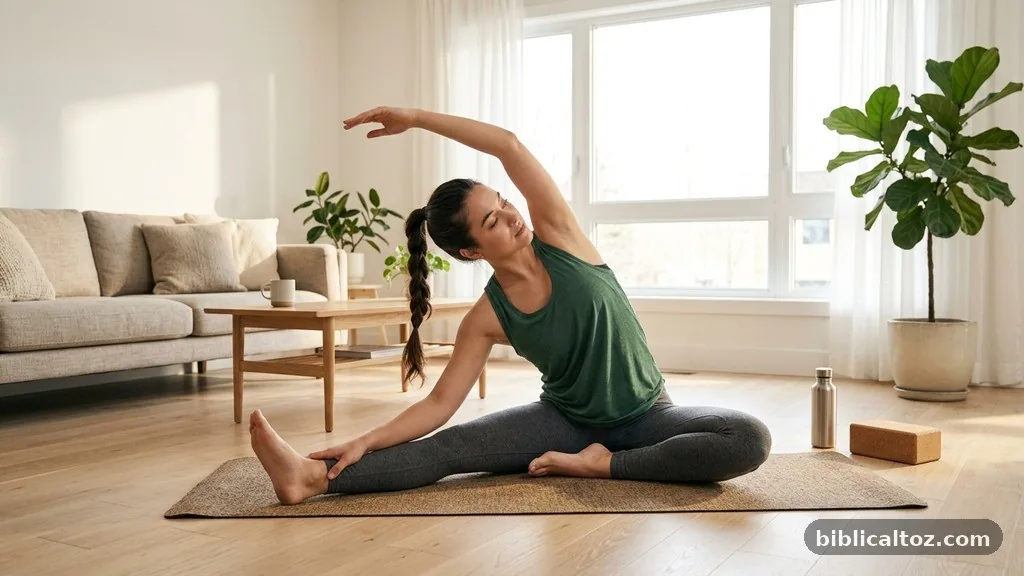
Physical health is a concern for many, and the Bible speaks to the importance of stewarding the body. In 1 Corinthians 6:19–20, the Apostle Paul reminds us that our bodies are temples of the Holy Spirit. Maintaining physical fitness through stretching and exercise is a way to honor that temple.
The challenge arises when a specific class environment incorporates chants, mantras, or spiritual teachings that conflict with Christian belief. If a class is strictly focused on physical fitness—simply stretching muscles and improving cardiovascular health—many Christians feel comfortable participating. However, if the environment requires participation in spiritual rituals, it crosses a line for those who seek to keep their worship reserved for God alone.
Comparing Spiritual Approaches
| Feature | Biblical Meditation | Eastern Meditative Traditions |
|---|---|---|
| Primary Focus | God and His Word | Self-awareness or universal energy |
| Mental State | Active engagement | Detachment or emptying |
| Goal | Renewal of the mind | Union with the divine |
Evaluating Your Participation
Because the Bible does not provide a specific list of prohibited physical exercises, the decision often comes down to individual conviction. Paul addresses the issue of conscience in 1 Corinthians 10:23–31, noting that while all things may be permissible, not all things are beneficial. He encourages believers to do everything for the glory of God and to be mindful of how their actions affect their own conscience and the witness of others.
If you are considering a yoga class, ask yourself these practical questions:
- Is the class purely focused on physical fitness, or does it incorporate spiritual teaching?
- Does the instructor encourage participants to empty their minds, or are you free to pray and reflect on Scripture?
- Do I feel a sense of unease or conviction when I participate in this specific environment?
- Are there alternative forms of exercise that would allow me to care for my body without the potential for spiritual confusion?
Maintaining one’s conscience is vital. If a practice causes you to stumble or creates a conflict in your heart, it is better to seek an alternative. Conversely, avoid judging fellow believers who may have a different level of liberty, provided their actions are genuinely aimed at honoring God.
Common Questions About Yoga and Faith
Is it a sin for a Christian to do yoga?
There is no explicit verse in the Bible that labels yoga as a sin. The determination depends on the intent of the heart and the nature of the specific practice. If the activity is treated as physical exercise and does not replace or conflict with Christian worship, many believers find it acceptable.
Did Jesus practice yoga?
There is no record in the Bible of Jesus practicing yoga. His life was centered on the teachings of the Hebrew Scriptures, prayer, and communion with God the Father.
What should Christians do instead of yoga if they feel uncomfortable?
If you feel uncomfortable with yoga, there are many excellent alternatives. You can engage in Pilates, calisthenics, weight training, swimming, or walking. Many Christian communities also offer “praise moves” or faith-based stretching classes that specifically focus on prayer and worship.
What did church leaders say about yoga?
Perspectives vary widely across denominations and individual leaders. Some emphasize the physical benefits, while others warn against the potential for syncretism. It is wise to seek counsel from your local church leadership if you are struggling with this decision.
Living Out Your Faith in Daily Practice
Navigating wellness trends requires a balance of wisdom and grace. As you consider what the Bible says about yoga, remember that your primary goal is to glorify God in all aspects of your life, including how you care for your body.
If a class helps you stay healthy and does not compromise your devotion to Christ, you may find freedom in it. If it feels like a compromise, trust your conscience and look for other ways to stay active.
Ultimately, your relationship with the Lord is the most important factor. Keep your heart open to His leading as you move through your week.
If you have found this content helpful and want more resources on how to live out your faith in a complex world, we invite you to explore our other articles on BiblicalToZ.com. May you continue to grow in wisdom and discernment as you seek to honor Him in everything you do.