The Woman at the Well Meaning: A Biblical Analysis
The encounter between Jesus and the Samaritan woman at Jacob’s well remains one of the most transformative narratives in the New Testament. By examining the woman at the well meaning, readers discover a profound intersection of grace, cultural barriers, and divine revelation that challenges our modern perceptions of inclusion.
This narrative does more than describe a historical meeting; it invites us to reconsider how we approach those who exist on the margins of society. Through this study, you will gain a clearer perspective on the theological significance of this interaction, the nature of true worship, and the radical way Jesus dismantled social prejudices to offer eternal life to all people.
Historical and Cultural Context of Jews and Samaritans
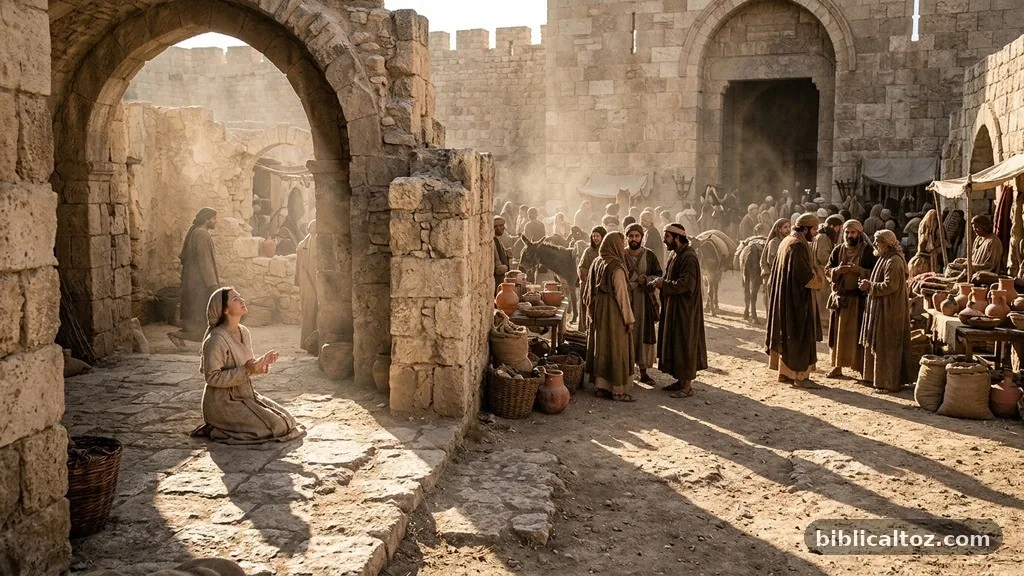
To grasp the weight of this meeting, one must first understand the deep-seated animosity that existed between Jews and Samaritans. By the first century, the relationship was defined by centuries of religious, political, and ethnic tension. The roots of this divide trace back to the collapse of the Northern Kingdom of Israel and the subsequent intermarriage of the remaining population with foreign settlers.
From the Jewish perspective, the Samaritans were considered religiously impure. They held to a different version of the Torah and worshipped at Mount Gerizim rather than the temple in Jerusalem. This led to a state of perpetual hostility.
Jews traveling from Galilee to Judea would often take long, circuitous routes through the Jordan Valley specifically to avoid stepping foot on Samaritan soil. When Jesus chose to travel directly through Samaria, He was making a deliberate, counter-cultural statement that challenged the prevailing prejudices of His time.
The Journey and the Encounter in John 4
The account in John 4:1–42 begins with Jesus leaving Judea and heading back to Galilee. The text notes that He had to pass through Samaria, a phrase that highlights both geographical necessity and the divine appointment of the meeting. Jesus arrived at Jacob’s well near the town of Sychar around the sixth hour—the middle of the day.
While the disciples went into the city to buy food, Jesus sat by the well. A woman from Samaria arrived to draw water, and Jesus initiated the conversation by asking her for a drink. This simple request shattered multiple social protocols.
It was unusual for a man to speak to a woman in public, and it was scandalous for a Jewish man to ask a favor of a Samaritan. The woman’s surprise is evident in her response, as she questioned why He, a Jew, would ask a drink of her.
The Significance of the Samaritan Woman
The identity of the woman is central to the narrative. She was a Samaritan, a woman, and someone carrying a complex personal history.
In the social hierarchy of the first century, she occupied a position of little influence. By engaging her, Jesus demonstrated that the gospel was not restricted by ethnicity, gender, or social status.
| Factor | Social Norm of the Time | Jesus’ Approach |
|---|---|---|
| Gender | Men rarely spoke to women in public | Engaged in deep theological discussion |
| Ethnicity | Jews avoided contact with Samaritans | Traveled through Samaria and asked for water |
| Social Status | Outcasts were often ignored | Offered her the gift of living water |
Understanding Living Water
When Jesus introduced the concept of living water, He used a common physical element to explain a spiritual reality. The woman initially interpreted His words literally, thinking of the water from the deep well. Jesus, however, was speaking of the eternal life that comes only from knowing Him.
He explained that anyone who drinks the water He provides will never thirst again. This living water represents the Holy Spirit and the grace of God that satisfies the deepest longings of the human soul. His response to her questions reveals the depth of His mission: He came to address the spiritual dryness of humanity, offering a refreshment that no earthly source could provide.
Examining Her Marital History
The interaction regarding her marital history is often subject to modern speculation, but the text itself is precise. Jesus asked her to call her husband, and she replied that she had none. Jesus acknowledged this, stating she had five husbands and the man she was currently with was not her husband.
It is important to avoid reading later cultural assumptions into this account. The Bible does not explicitly state that she was a woman of loose morals or that she was being punished for her choices. She may have been a victim of the era’s patriarchal laws, which allowed men to divorce their wives for trivial reasons.
Regardless of the circumstances of her past, Jesus did not approach her with condemnation. He used the truth of her life to reveal that He possessed divine knowledge, which served as a catalyst for her to recognize Him as a prophet.
Worship in Spirit and Truth
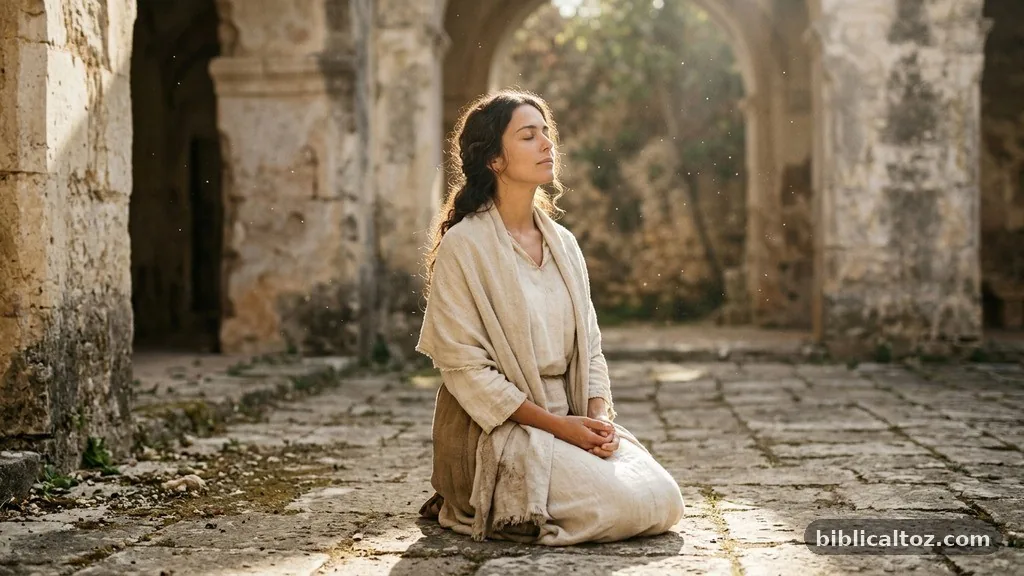
One of the most profound teachings in this passage occurs when the woman shifts the conversation to the debate over where to worship. She asked whether Mount Gerizim or Jerusalem was the correct place. Jesus responded by moving the focus away from geography to the nature of worship itself.
Jesus taught that the time was coming when worship would no longer be limited to specific physical locations. True worship is not about a building or a mountain; it is about the posture of the heart. To worship in spirit and truth means:
- Authenticity: Approaching God without masks or pretenses.
- Spirit-led: Allowing the Holy Spirit to guide our prayers and praise.
- Truth-based: Grounding our understanding of God in His revealed word.
- Universal: Recognizing that God is accessible to all, regardless of background.
The Revelation of the Messiah
As the dialogue deepened, the woman mentioned the coming of the Messiah. Jesus then made one of the most direct declarations of His identity recorded in the Gospels.
He said to her, I that speak unto thee am he. This moment of revelation is significant because Jesus chose to disclose His messianic identity to a woman who was a societal outsider, rather than to the religious leaders in Jerusalem.
This revelation completely transformed the woman’s perspective. She left her water pot—a symbol of her daily, earthly labor—and returned to the city to tell others about the man who had told her everything she ever did. Her testimony was powerful because it was rooted in her personal experience of the truth.
The Testimony and the Village Response
The villagers of Sychar, moved by the woman’s report, came out to see Jesus for themselves. They invited Him to stay, and He remained with them for two days. The result was that many more believed, not just because of what the woman had said, but because they had heard His words firsthand.
This movement from personal testimony to communal faith illustrates the power of the gospel. The woman became the first evangelist to the Samaritans, bridging the gap between her people and the Savior. Her story shows that no one is beyond the reach of God’s grace and that a single encounter with Jesus can change the trajectory of an entire community.
Themes of Grace, Truth, and Inclusion
The overarching themes of the encounter at the well are grace and truth working in tandem. Jesus did not ignore the woman’s life or her past; He spoke the truth about her situation. Yet, He did so with a grace that invited her into a new reality rather than shaming her into silence.
This inclusion is a cornerstone of the Christian faith. The Bible consistently shows that Jesus reached out to those considered unclean or unworthy by the standards of society.
By including the Samaritan woman, He established a precedent that the gospel is for every tribe, tongue, and nation. There is no barrier—ethnic, social, or historical—that can prevent a person from receiving the living water if they are willing to seek the truth.
Practical Applications for Believers
Applying the lessons from this encounter requires a shift in how we view our interactions with others. We are called to be bridge-builders, just as Jesus was. This means we must be willing to step outside our comfort zones and engage with people who are different from us.
Consider how you can model this in your daily life:
* Practice active listening: Take the time to understand the stories of those you meet, rather than judging them based on appearances.
* Prioritize spiritual conversations: Look for opportunities to pivot from everyday matters to the deeper, eternal truths of the Gospel.
* Remove barriers: Identify the biases or social prejudices that might be preventing you from sharing the love of God with others.
* Value truth and grace: Speak the truth in love, ensuring that your words reflect both the holiness of God and His immense compassion.
Frequently Asked Questions
Why did Jesus choose to go through Samaria?
The text notes that He had to pass through Samaria, which suggests a divine necessity. While it was a geographical route, it was also a strategic one for His ministry. By traveling through this region, Jesus demonstrated that His mission was not limited to the Jewish people but extended to all who would believe.
Was the woman at the well an outcast?
While it is often assumed she was an outcast because she came to the well at the sixth hour—the hottest part of the day—the Bible does not explicitly label her as such. She was a woman living in a complex society, but the primary focus of the text is on her spiritual transformation and her role as a witness, not on her social standing.
What is the core message of the living water?
The living water represents the eternal life and satisfaction found only in Jesus. Just as physical water is essential for biological survival, the grace and presence of the Holy Spirit are essential for spiritual life. Jesus offers a source of fulfillment that never runs dry, regardless of the circumstances of one’s life.
Why did Jesus talk about her husbands?
Jesus brought up her marital history to demonstrate His divine knowledge and to bring the truth of her life into the light. This was not meant to shame her but to establish the foundation for their conversation. By acknowledging her reality, He created a bridge to move the discussion from the physical realm to the spiritual one.
What does it mean to worship in spirit and truth?
Worship in spirit and truth is an internal, authentic devotion to God that is not dependent on specific locations or ritualistic traditions. It involves a heart that is aligned with God’s truth and empowered by the Holy Spirit. It is a way of life that honors God in all we do, regardless of where we are.
Conclusion
The encounter at the well is a powerful reminder that Jesus sees the individual behind the label. The woman at the well meaning is found in the intersection of divine grace and human need. When we look at her story, we see a Savior who crosses boundaries to offer life, a woman who leaves behind her past to embrace the truth, and a community transformed by the message of the Messiah.
This narrative serves as a timeless call to believers to carry the same message of hope to the world around them. May we be encouraged to offer the living water to everyone we encounter, trusting that the gospel has the power to change hearts and lives today just as it did in Sychar.
If you found this exploration helpful, we invite you to continue your study of the Scriptures with us at BiblicalToZ. We are dedicated to providing clear, biblically grounded insights to help you grow in your faith. Browse our other articles to deepen your understanding of the Bible and its application to your daily walk with Christ.