Feeding of the 5,000: Meaning, Context and Significance
The feeding of the 5,000 stands as one of the most remarkable displays of divine power recorded in the Gospels. It is the only miracle performed by Jesus that appears in all four canonical accounts, highlighting its importance to the early church. When thousands of people followed Him into a remote wilderness, they faced a desperate situation regarding food.
Instead of sending the hungry crowds away, Jesus chose to demonstrate His authority over creation by multiplying a modest lunch. Understanding the depth of this event offers a profound look at how God provides for those who follow Him, even when human efforts seem entirely insufficient for the task at hand.
The Biblical Account of the Miracle
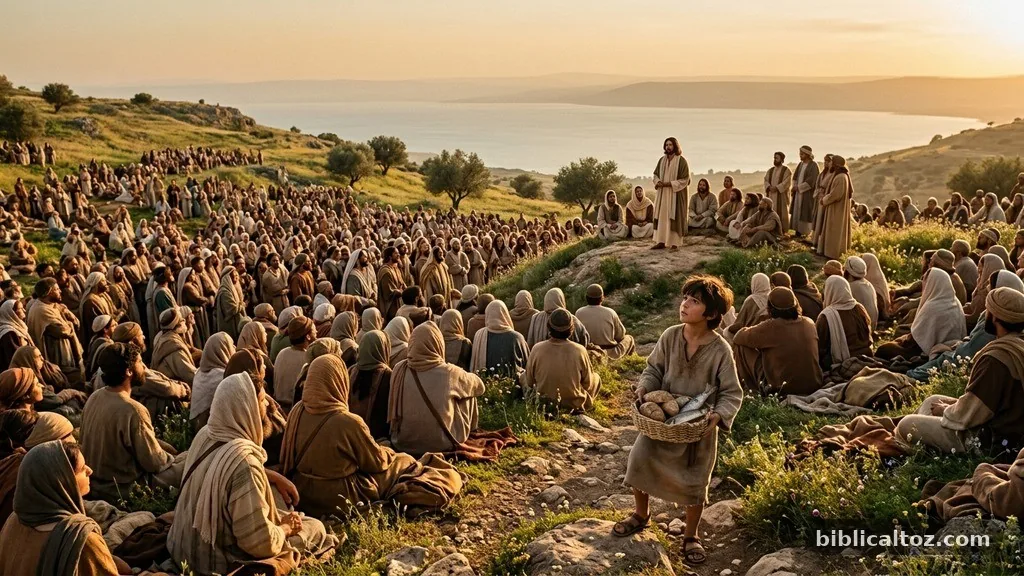
Each Gospel writer offers a slightly different perspective on this event, yet they all agree on the core details. Jesus had been teaching and healing in the region of Galilee when a massive crowd gathered to listen.
As evening approached, the disciples became anxious about the logistics of feeding such a large number of people in a deserted place. The atmosphere was one of concern, as the disciples saw only the physical lack rather than the presence of the One who created the world.
According to the Gospel of John, Jesus tested Philip by asking where they could buy bread. Andrew then pointed out a small boy who had five loaves and two fish. While the disciples looked at the inadequacy of the resources, Jesus looked at the potential for a miracle.
He instructed the crowd to sit on the grass, took the food, gave thanks, and began to distribute it. The result was not just a snack, but a feast that left everyone satisfied with twelve baskets of leftovers remaining.
Distinguishing the Feeding of the 5,000 and the 4,000
Readers often wonder about the difference between the feeding of the 5,000 and the later account of the feeding of the 4,000. While they share similar themes of compassion and multiplication, the biblical text presents them as distinct historical events. They occurred in different regions, involved different numbers of people, and resulted in different quantities of leftovers.
| Feature | Feeding of the 5,000 | Feeding of the 4,000 |
|---|---|---|
| Location | Jewish territory (Galilee) | Gentile territory (Decapolis) |
| Starting Food | Five loaves, two fish | Seven loaves, few small fish |
| Leftover Baskets | Twelve baskets | Seven large baskets |
These variations underscore that Jesus was not repeating a scripted performance but was actively responding to the needs of different groups. The first miracle is recorded in Matthew 14, Mark 6, Luke 9, and John 6.
The second takes place in Matthew 15 and Mark 8. Recognizing these differences helps us see that God is not limited by our previous experiences; He is capable of providing in new and unexpected ways whenever the situation requires it.
Lessons on Faith and Human Effort
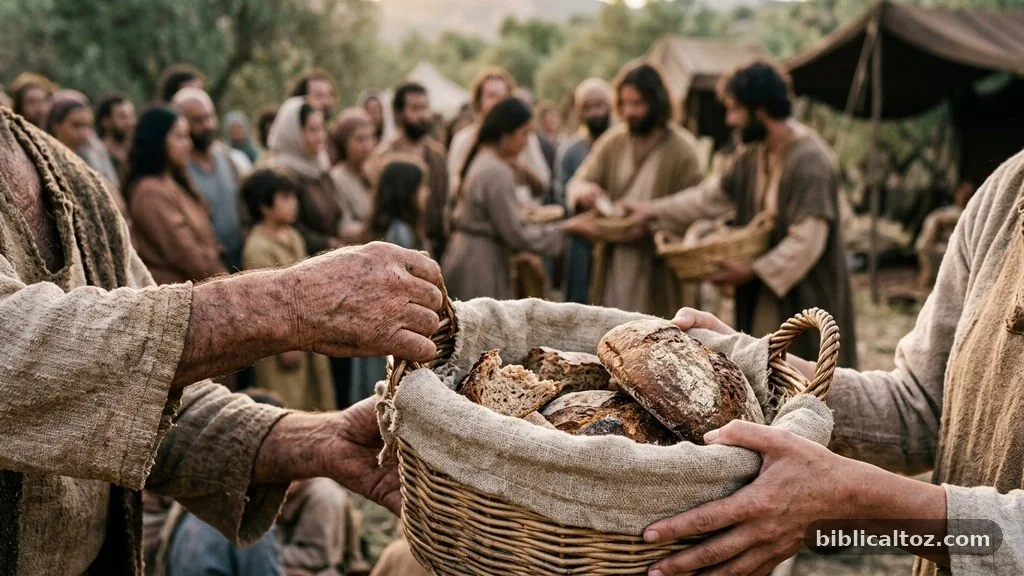
The miracle teaches us that our meager offerings are never too small for God to use. The boy who offered his lunch did not know he was about to feed a multitude. He simply chose to bring what he had to Jesus.
This act reflects a vital principle: we are not expected to solve every problem on our own. We are simply expected to offer our limited resources to the Savior.
- Trusting in divine provision rather than our own limited calculations.
- Recognizing that Jesus cares for the physical needs of people.
- Understanding that God often uses human cooperation to achieve divine results.
- Learning to give thanks before seeing the outcome of our prayers.
When we face a situation that feels overwhelming, it is natural to focus on what we lack. However, the disciples learned that when they bring their efforts to Jesus, He is able to multiply them beyond anything they could imagine. This does not mean that every problem vanishes instantly, but it does mean that we are invited to bring our burdens and our small offerings into His hands.
The Significance of the Setting
The location of this event was significant because it took place in a remote, deserted area. By moving away from the towns, the people were forced to rely entirely on what Jesus would do.
It was a moment of total dependency. This isolation stripped away the distractions of the world and centered the focus of the crowd on the teaching and the person of Jesus.
Imagine the scene: thousands of people sitting on the green grass, the smell of fresh bread, and the quiet awe of the crowd as they witnessed the impossible. It was a physical demonstration of the kingdom of God breaking into the human experience. The people were so moved by this sign that they wanted to make Him king by force, which shows that they grasped the power of the miracle even if they misunderstood the nature of His mission.
Frequently Asked Questions
What is the primary point of the feeding of the 5,000?
The primary point is to reveal the identity of Jesus as the provider and the Messiah. By multiplying the food, He demonstrated authority over nature and fulfilled the expectations of the people who were looking for a leader, while also pointing toward His role as the Bread of Life.
Why did the disciples want to send the people away?
The disciples were looking at the situation through the lens of human logic and limited finances. They calculated the cost of feeding such a large crowd and concluded it was impossible, failing to realize that the solution was standing right in front of them.
Does the number of people include women and children?
Yes, Matthew 14:21 explicitly mentions that the count of five thousand men was exclusive of women and children. This suggests the actual crowd size was significantly larger, perhaps reaching ten thousand or more, which makes the miracle even more substantial.
Why were there twelve baskets of leftovers?
The twelve baskets often symbolize the twelve tribes of Israel. By having exactly twelve baskets left over, the miracle served as a sign that God’s provision was abundant and inclusive of all of Israel, leaving no one behind.
Final Thoughts on the Miracle
The story of the feeding of the 5,000 remains a pillar of the Gospel narrative because it addresses the universal human need for provision. It reminds us that God is deeply interested in our daily lives, our hunger, and our limitations. Whether you are currently in a season of plenty or experiencing a time of great lack, the example of the loaves and fishes encourages us to bring whatever we have to Him.
You do not need to have a perfect plan or endless resources to see God work; you only need a willing heart. We invite you to continue exploring the depth of the Scriptures at BiblicalToZ.com, where we seek to provide clear, grounded insights into the stories that have shaped history and faith.