The Raising of Lazarus: Meaning and Biblical Account
The narrative of the raising of Lazarus stands as one of the most profound displays of divine authority in the Gospel of John. Found in chapter 11, this account details the moment Jesus arrives in Bethany to find his friend had been dead for four days.
This event serves as a pivotal turning point in the ministry of Christ, bridging the gap between his public teaching and the events leading to his own death and resurrection. By examining the text, we can better appreciate the sorrow of Mary and Martha, the humanity of Jesus, and the ultimate display of power that left many who witnessed it forever changed.
The Context of the Miracle in Bethany
The story begins with a message sent to Jesus informing him that his friend Lazarus is ill. Rather than rushing to Bethany immediately, Jesus stays where he is for two more days. This delay is intentional, as he explains to his disciples that this sickness is not meant to end in death but to display the glory of God.
When Jesus finally arrives, he finds the household in deep mourning. The sisters, Mary and Martha, are grieving the loss of their brother, and their interactions with Jesus reveal both their faith and their profound human heartbreak.
Martha expresses her belief that if Jesus had been there sooner, her brother would not have died. She acknowledges his power, yet she is still processing the reality of the situation.
The Conversation with Martha
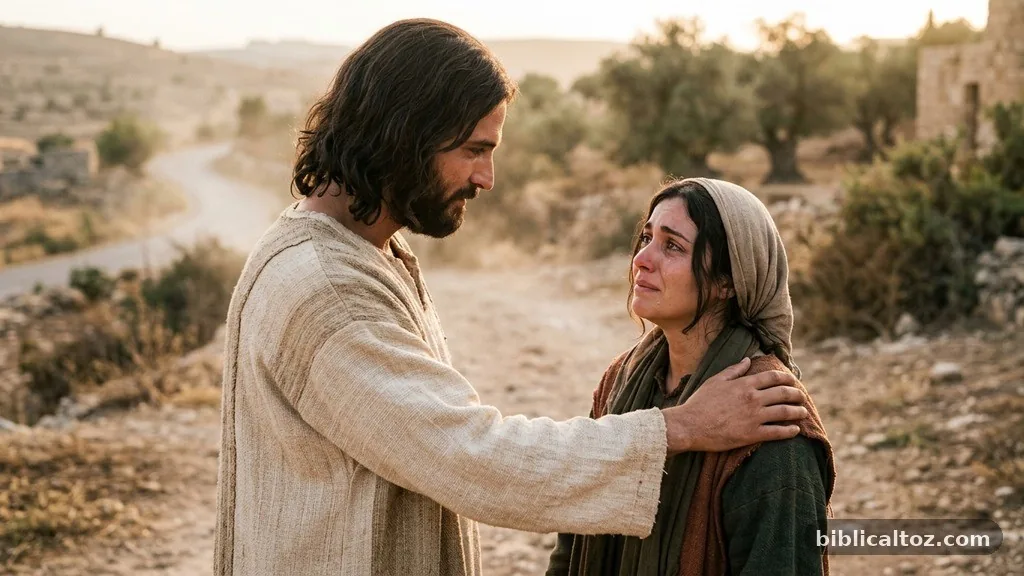
Jesus tells Martha that her brother will rise again. Her response indicates that she understands this in the context of the final resurrection at the end of time. However, Jesus corrects her perspective with a declaration that remains central to the Christian faith.
He identifies himself as the resurrection and the life, emphasizing that those who believe in him, even if they die, will live. This moment shifts the focus from a past event to a present reality found in his person.
The Emotional Depth of the Scene
The account is notable for its raw portrayal of human emotion. Upon seeing Mary and the others weeping, Jesus is deeply moved.
He asks to be taken to the tomb, and it is here that the shortest verse in the Bible is found: Jesus wept. This reaction highlights the compassion of Christ for those he loves and his shared experience of the pain caused by death.
The setting is equally significant. Lazarus had been in the grave for four days, a detail that was culturally important.
In the Jewish tradition of that time, it was believed that the soul departed the body after three days, making the state of death appear final and irreversible. By waiting until the fourth day, the miracle performed by Jesus is undeniable to those present, including the Jews who had gathered to comfort the sisters.
Removing the Stone
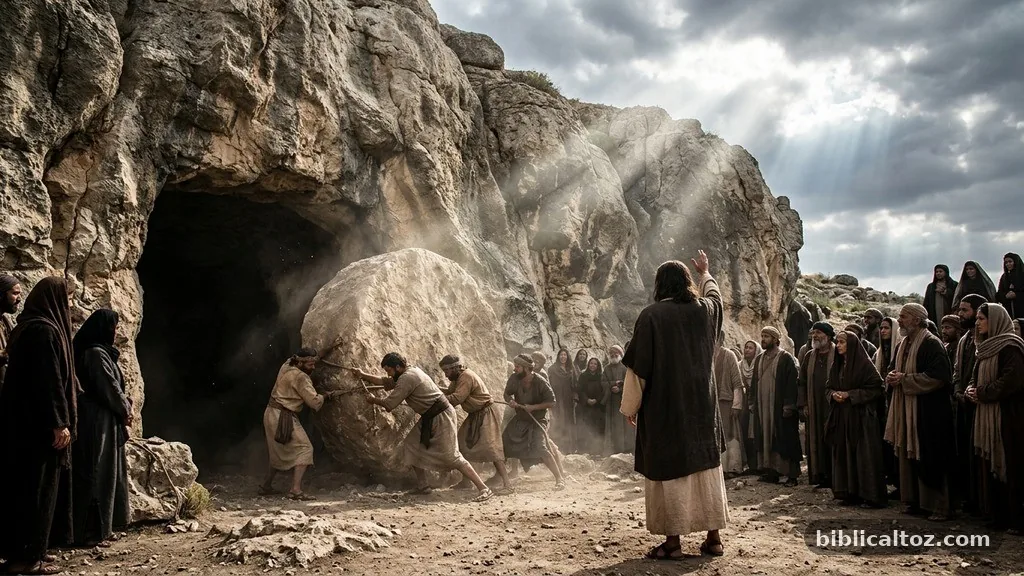
Jesus commands the people to take away the stone covering the entrance to the tomb. Martha hesitates, noting that there will be a stench because of the time that has passed.
Jesus reminds her of his previous promise: if she believes, she will see the glory of God. This interaction underscores the tension between human limitations and divine possibility.
The Resurrection of Lazarus
After the stone is moved, Jesus prays aloud to his Father, not because he needs to, but for the sake of the people standing nearby. He wants them to know that he is sent from God. He then cries out with a loud voice for Lazarus to come forth.
The result is immediate. Lazarus emerges from the grave, still wrapped in his burial cloths, showing that the power of Christ over death is absolute.
The Immediate Aftermath
The reaction to this event is divided. Many of the Jews who saw what happened put their faith in Jesus. Others, however, go to the Pharisees to report what occurred.
This leads the religious leaders to convene a council, fearing that the influence of Jesus is growing too rapidly. They decide that it is better for one man to die for the people than for the entire nation to face ruin.
Observations on the Miracle
To better understand the scale and impact of this event, we can look at the various reactions and details recorded in the text:
| Character/Group | Primary Reaction |
|---|---|
| Martha | Faith mixed with sorrow and confusion |
| Mary | Deep grief and submission to Jesus |
| The Jews | Divided between belief and suspicion |
| The Pharisees | Fear and desire to eliminate Jesus |
The impact of this event can be categorized by how different people processed the miracle:
- The restoration of a relationship between the family and their brother.
- The public validation of the identity of Jesus as the Son of God.
- The escalation of tension between Jesus and the religious authorities.
- The foreshadowing of the eventual resurrection of Christ himself.
Frequently Asked Questions
Where in the Bible can I read about the raising of Lazarus?
The account is found in the Gospel of John, specifically in chapter 11, verses 1 through 44.
Why did Jesus wait four days to go to Bethany?
Jesus explicitly stated that the sickness was for the glory of God. By waiting, he ensured that the miracle was beyond any human explanation, proving his authority over life and death.
Why was Lazarus significant to Jesus?
The Bible describes Lazarus as a friend whom Jesus loved. This relationship highlights that Jesus experienced genuine human friendship and felt the weight of loss just as any person would.
What is the spiritual meaning of this miracle?
The miracle serves as a sign that Jesus has power over the grave. It points toward his own future resurrection and offers a promise of life to those who place their trust in him.
Did Lazarus die again later?
The Bible does not provide specific details about the rest of the life of Lazarus, but as a human being, he would have eventually experienced physical death again. The raising of Lazarus was a miraculous sign of divine power, not a permanent state of immortality on earth.
Conclusion
The raising of Lazarus remains a cornerstone of the Gospel narrative, illustrating the intersection of divine power and human suffering. It reveals a Savior who is not distant or indifferent but one who enters into the grief of his friends. As we look at this story, we see a clear picture of the authority of Christ over the finality of death.
For those exploring the teachings of the Bible, this event serves as a compelling invitation to consider the claims of Jesus regarding life and faith. If you are interested in learning more about the life and ministry of Christ, please visit us at BiblicalToZ.com to explore further resources.