The Parable of the Sower: Meaning and Biblical Significance
Jesus often spoke in metaphors to reveal spiritual truths to those with ears to hear. When considering the parable of the sower, we find a foundational teaching that explains why the message of the Kingdom of God is received differently by various people.
By examining the four types of soil mentioned in the gospels, we gain a clearer perspective on the condition of the human heart and its receptivity to divine truth. This biblical account provides a lens through which we can assess our own spiritual growth and the challenges that hinder the fruitfulness of the gospel in our daily lives.
The Context of the Parable

The account of the sower is recorded in Matthew 13, Mark 4, and Luke 8. Jesus delivered this teaching while sitting by the Sea of Galilee, surrounded by such a large crowd that He had to board a boat to address them. This setting highlights the public nature of His ministry and the diverse group of listeners present, ranging from curious skeptics to dedicated followers.
By using agricultural imagery, Jesus connected with the daily life of His audience. Most people in the first-century agrarian society understood the labor involved in sowing seed and the unpredictability of harvest. By linking the sowing of seed to the proclamation of the word, Jesus framed the spiritual life as a dynamic process of growth and resistance.
The Four Types of Soil
The heart of the teaching lies in the four distinct environments where the seed lands. Each represents a different state of spiritual receptivity.
- The Wayside: The seed falls on hard, packed paths where it cannot penetrate, allowing birds to snatch it away immediately.
- The Stony Ground: The seed finds shallow soil, sprouting quickly but failing to develop roots, leading to it withering under the heat of the sun.
- The Thorny Ground: The seed grows, but it is quickly choked by weeds and thorns, preventing it from ever reaching maturity or bearing fruit.
- The Good Ground: The seed lands in fertile soil, where it takes root, grows, and produces a crop in varying measures.
Analyzing the Spiritual Symbolism
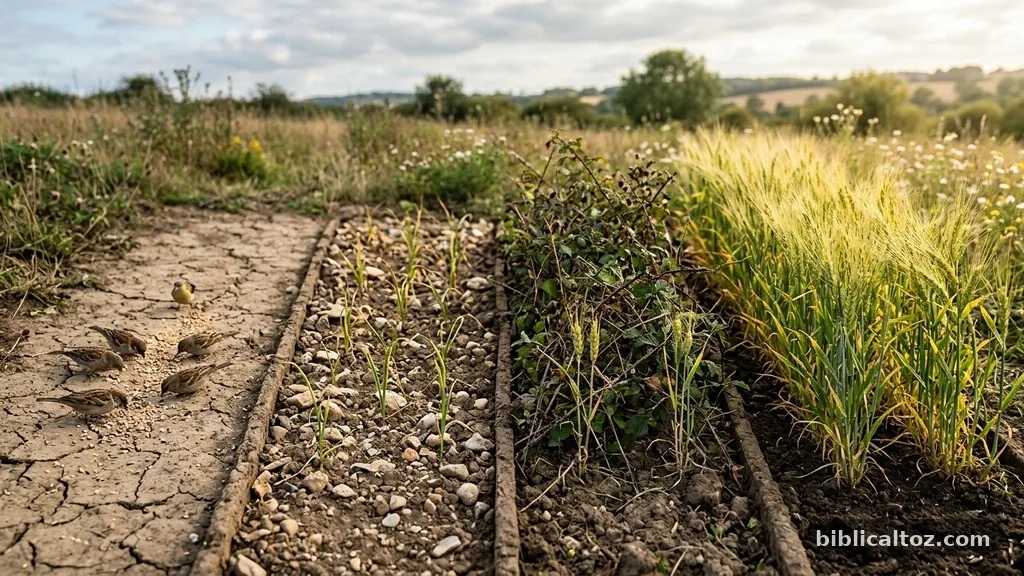
To understand the meaning of the parable, we must look at the explanation Jesus provided to His disciples. The seed represents the message of the Kingdom. The soil represents the heart of the individual hearer.
| Soil Condition | Represented Obstacle | Spiritual Outcome |
|---|---|---|
| Wayside | Hardened, unreceptive heart | The message is stolen away |
| Stony | Lack of depth or commitment | Temporary joy, quick falling away |
| Thorny | Worldly cares and distractions | Fruitfulness is choked out |
| Good | Prepared and honest heart | Spiritual maturity and fruit |
The “birds” in the first scenario are identified by Jesus as the wicked one, who takes the word away before it can take root. The “thorns” are described as the cares of this world and the deceitfulness of riches. These are not necessarily sinful things in themselves, but they become obstacles when they consume the priority of a person’s life.
Common Misconceptions
A frequent error in interpreting this passage is the belief that the soil types are fixed. Some assume that if someone has a “stony” heart, they are permanently incapable of change. However, the Bible teaches that hearts can be softened through repentance and the work of the Holy Spirit.
Another misconception is that the “good soil” represents a person who is naturally better or more moral. In reality, the parable emphasizes the role of the sower and the nature of the seed.
The difference lies in the response of the hearer, which is a matter of the will and the condition of the heart at the time of hearing. The focus remains on the responsibility of the individual to prepare their heart to receive the truth.
Practical Application for Today
Living out the lessons of the parable of the sower requires intentionality. We must regularly examine our own lives to see what kind of “soil” we are providing for the word of God.
If we find our hearts becoming hardened by cynicism, we need to seek God’s grace to soften them. If we feel that worldly distractions are choking our spiritual life, we must prune away those unnecessary anxieties.
Cultivating a “good heart” involves consistent engagement with Scripture, prayer, and community. By removing the rocks of bitterness and the thorns of material obsession, we create space for the word to take root. This is not a one-time event but a daily commitment to prioritize the kingdom over the passing trends of our world.
Frequently Asked Questions
What is the primary message of the parable of the sower?
The main point is that the effectiveness of the gospel message depends on the condition of the listener’s heart. It encourages individuals to cultivate an open, humble, and receptive spirit toward God’s truth.
Why did Jesus speak in parables?
Jesus used parables to reveal spiritual truths to those who were sincerely seeking Him while simultaneously concealing them from those who were proud or hardened. It served as a way to distinguish between the genuine seeker and the casual observer.
Does the parable imply that salvation is based on our performance?
No, the parable illustrates the reception of the message rather than the mechanism of salvation itself. It describes how different people respond to the offer of the gospel and the subsequent impact that response has on their spiritual development.
Can a person change their soil type?
Yes, through the power of the Holy Spirit, a heart that is hardened or distracted can be transformed. The message of the gospel is intended to break up the fallow ground of the human heart, making it fertile for spiritual fruit.
What do the thorns represent in the parable?
The thorns represent the cares of this life, the deceitfulness of riches, and the desires for other things. These distractions compete for our attention and prevent the word of God from growing to maturity in our lives.
Conclusion
Reflecting on the message of the sower reminds us that our spiritual health is directly linked to how we receive and nurture the word of God. We are encouraged to be diligent in clearing the obstacles that prevent us from growing, ensuring that our hearts remain receptive to the truth. By dedicating ourselves to a life of faith, we can move beyond the shallow or distracted responses and instead become fertile ground that produces a lasting harvest.
As you continue your study of the scriptures, consider how you might better prepare your heart to receive the wisdom God offers each day. May your pursuit of His word lead you into a deeper, more fruitful relationship with the Lord.