The Story of Esther: Courage, Providence, and Timing
The story of Esther remains one of the most compelling narratives in the Bible, offering a window into the lives of the Jewish people during their exile in the Persian Empire. While the book of Esther is unique because it never explicitly mentions the name of God, His fingerprints are visible throughout every twist and turn of the plot.
This absence of a direct mention serves as a profound reminder that the Lord often works behind the scenes in ways we cannot immediately perceive. By exploring this account, you will gain a deeper appreciation for how divine timing and human courage intersect to shape history.
The Background of Esther and Her Guardian
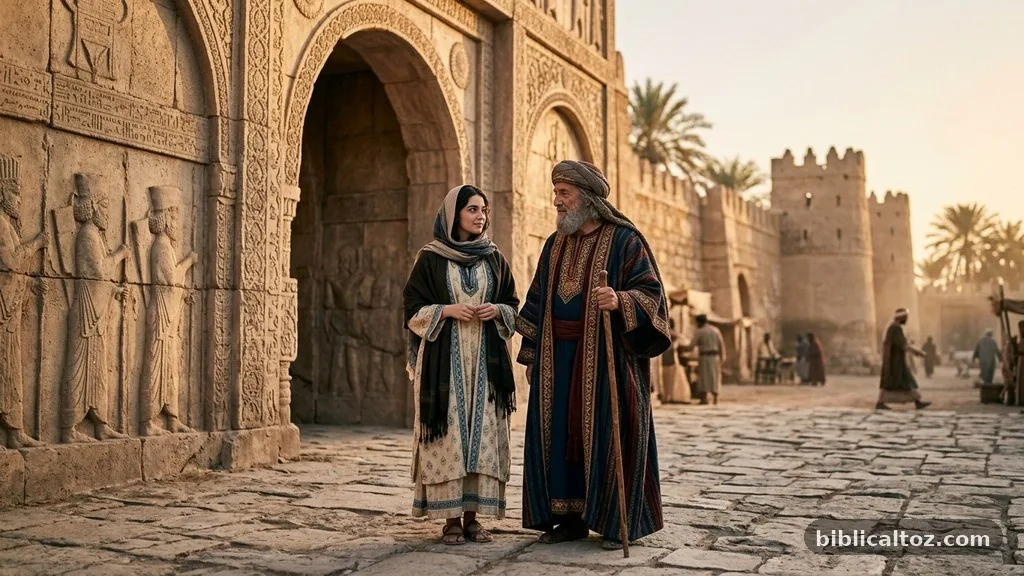
The narrative begins with a young Jewish orphan named Hadassah, known to the Persian court as Esther. She was a member of the tribe of Benjamin, living in Susa among the Jewish people who had not returned to Jerusalem after the Babylonian captivity.
Raised by her cousin Mordecai after the death of her parents, Esther grew up with a strong sense of her identity despite the pressures of living in a foreign, pagan culture. Mordecai served as a gatekeeper in the royal palace, a position that eventually placed him and his ward at the center of a national crisis.
Their relationship was built on mutual respect and obedience. Even after Esther was taken into the king’s harem as part of a nationwide search for a new queen, she continued to follow Mordecai’s instructions, keeping her Jewish heritage a secret at his request.
This period of preparation was not merely about beauty treatments or royal etiquette; it was a time of hidden growth. Esther’s ability to listen to wise counsel and maintain her integrity in a compromising environment laid the foundation for the bravery she would later demonstrate when her people faced total annihilation.
The Royal Court and the Rise of Haman
King Ahasuerus, ruler of a vast empire stretching from India to Ethiopia, found himself in need of a new queen following the deposition of Queen Vashti. After a lengthy selection process, he chose Esther for her grace and character, crowning her queen of Persia.
While Esther navigated the complex politics of the royal court, a man named Haman was promoted to a position of high authority by the king. Haman demanded that everyone bow to him, a custom that Mordecai steadfastly refused, citing his devotion to the Lord.
Haman’s pride was wounded by this act of defiance, and he quickly escalated his hatred from a personal vendetta against Mordecai to a genocidal plot against all the Jews in the kingdom. Using his influence, he convinced King Ahasuerus to sign a decree ordering the destruction of the Jewish people on a specific date, chosen by casting lots, or “pur.”
This decree was sealed with the king’s signet ring, making it irrevocable under the laws of the Medes and Persians. The threat was absolute, and the Jewish population was suddenly faced with the prospect of extinction.
The Turning Point and Divine Timing
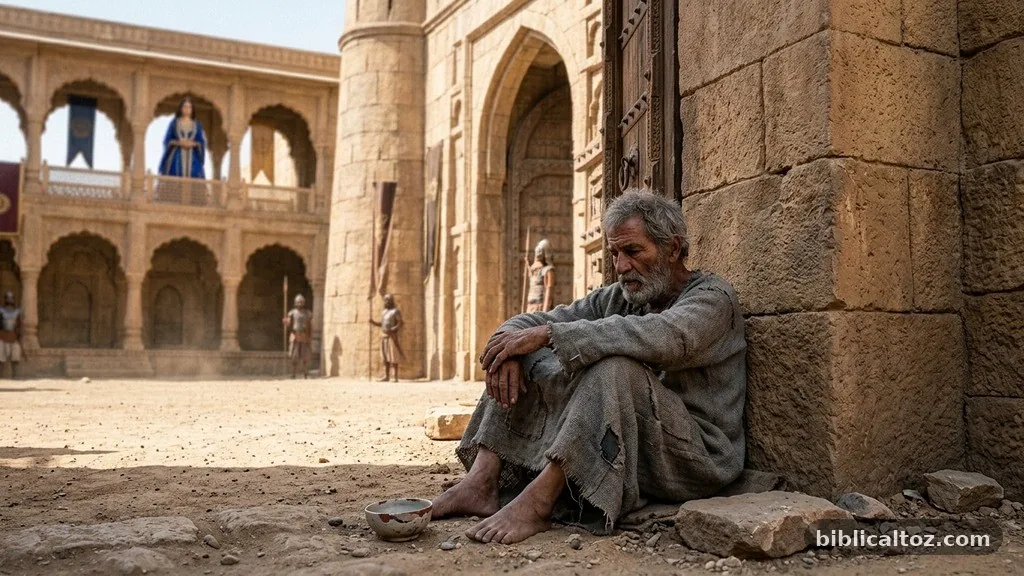
When Mordecai heard of the decree, he dressed in sackcloth and ashes, mourning at the palace gate. He sent word to Esther, imploring her to use her influence to save their people.
Esther was initially hesitant, knowing that approaching the king without an invitation was a capital offense unless he extended his golden scepter. This moment defines the central tension of the story of Esther in the Bible: the choice between personal survival and the welfare of her community.
Mordecai’s response to her hesitation serves as a timeless challenge. He reminded her that her position as queen was not an accident but a result of divine timing. He famously asked if she had perhaps come to the royal position for such a time as this.
This realization shifted Esther’s perspective. She recognized that her life was part of a larger plan and that remaining silent would not protect her from the coming disaster. She chose to fast and pray for three days, calling upon her people to do the same, before stepping into the king’s inner court to risk everything.
Resolution and the Origin of Purim
Esther’s strategy was marked by both caution and courage. Instead of making an immediate demand, she invited the king and Haman to a banquet, and then a second one, building anticipation and ensuring the king was receptive. During the second banquet, she revealed her Jewish identity and exposed Haman’s wicked plot.
The king, enraged by the deception, ordered Haman to be executed on the very gallows he had built for Mordecai. While the original decree could not be revoked, the king issued a new one, granting the Jewish people the right to defend themselves.
The victory was decisive, and the Jewish people were saved from their enemies. To commemorate this unexpected deliverance, Mordecai and Esther established the festival of Purim, which is still observed by Jewish people today. The name comes from the lots that Haman had cast, a detail that highlights the irony of the situation: what was meant to be their destruction became their day of celebration.
- The importance of maintaining one’s identity in a secular culture.
- The power of fasting and prayer in times of crisis.
- The necessity of taking calculated risks for the sake of justice.
- The reality that God is working even when He seems absent.
Timeline of Major Events
| Event | Key Figure(s) |
|---|---|
| Deposition of Queen Vashti | King Ahasuerus |
| Esther becomes Queen | Esther, King Ahasuerus |
| Haman’s decree against the Jews | Haman, King Ahasuerus |
| Esther’s decision to approach the King | Esther, Mordecai |
| Haman’s downfall and Jewish victory | Esther, Mordecai, Haman |
Frequently Asked Questions
What does the phrase for such a time as this mean?
This phrase suggests that our current circumstances, whether positive or challenging, are not accidental. It implies that we are placed in our specific roles and situations to fulfill a greater purpose, often requiring us to act with courage on behalf of others.
Why is God not mentioned in the book of Esther?
The absence of God’s name is often interpreted as a theological statement about His hidden providence. It illustrates that even when we cannot see or hear the Lord directly, He is actively orchestrating events behind the scenes to accomplish His will.
Was King Ahasuerus aware of Esther’s heritage?
No, Esther kept her background a secret at the advice of Mordecai. It was only during the second banquet, when she was forced to reveal her identity to save her people, that the king learned she was Jewish.
What is the primary moral of the story of Esther?
The narrative teaches that faith requires action. It emphasizes that we should trust in the providence of the Lord, act with wisdom, and be willing to take risks when we are called to stand up for righteousness and the protection of the vulnerable.
Conclusion
The story of Esther is more than an ancient record; it is a call to recognize our own roles in the unfolding narrative of history. Like Esther, we may face moments where our comfort is challenged by the needs of others or where we must choose between silence and speaking truth to power. By trusting in the providence of the Lord and acting with both wisdom and courage, we can become instruments of change in our own spheres of influence.
Take time to reflect on where you are currently placed and consider how you might use your own opportunities to serve others. Trusting in the timing of the Lord allows us to move forward with confidence, knowing that we are never truly alone.