The Story and Spiritual Lesson of the Tower of Babel
The narrative of the Tower of Babel is one of the most recognizable accounts in the early chapters of Genesis, yet its profound theological implications often remain overlooked. By examining the story and spiritual lesson of the Tower of Babel, we uncover a timeless warning against human self-sufficiency and a beautiful look at how God interacts with our collective ambitions. This account, found in Genesis 11:1–9, serves as a bridge between the post-flood world and the call of Abraham, helping us understand the origins of the world’s diverse cultures and the necessity of divine guidance in human achievement.
Defining the Tower of Babel
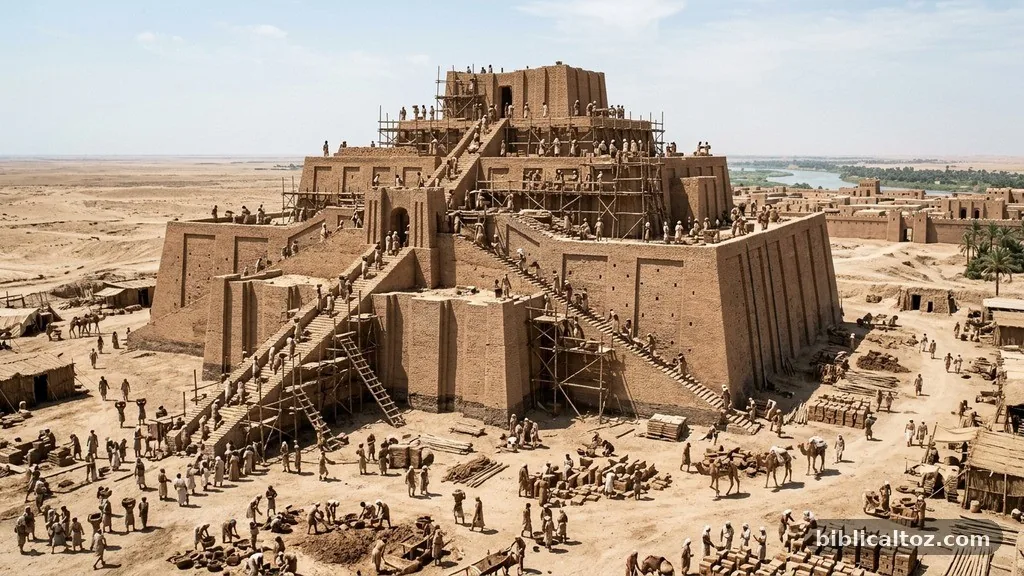
When we look at the biblical text, we find a story about a specific project initiated by the descendants of Noah. The Bible does not describe a structure that literally touched the stars or spanned the heavens; rather, it speaks of a city and a tower with its top in the sky. This phrasing is likely a polemic against the high-reaching, man-made structures of ancient Mesopotamia, known as ziggurats.
It is important to distinguish the scriptural account from later traditions that often embellish the height or the intent of the structure. The core focus of the text remains on the heart of the builders and the response of the Creator.
Walking Through Genesis 11:1–9
The account begins with a world that shares a single language and a common vocabulary. As these people migrated eastward, they discovered a plain in the land of Shinar and decided to settle there. The decision to build was rooted in a desire for permanence and self-glorification.
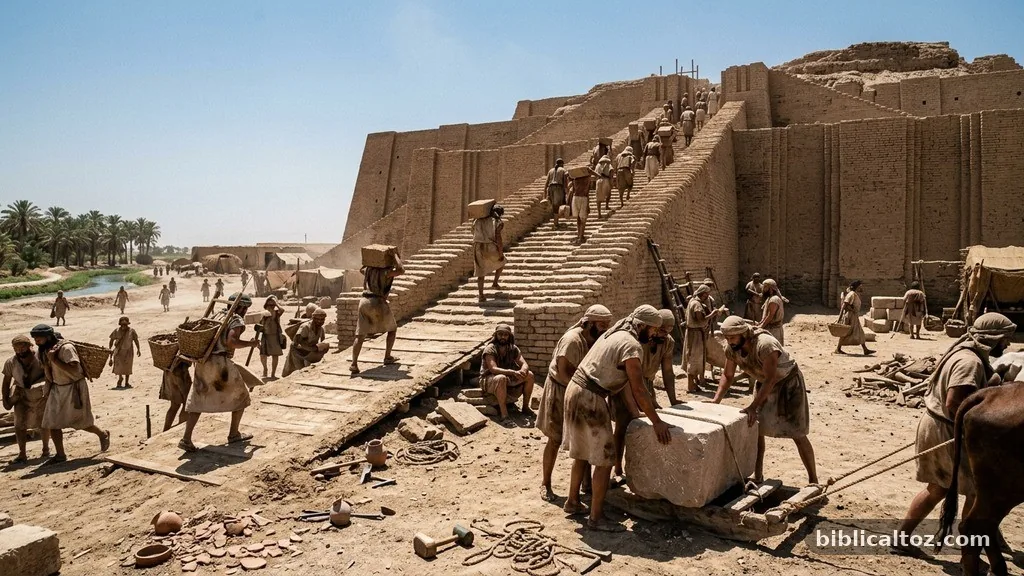
- The people gathered materials: bricks instead of stone and bitumen for mortar.
- The stated goal was to build a city and a tower to make a name for themselves.
- The primary motivation was to prevent being scattered across the face of the earth.
- God descended to observe the work of the children of man.
- The Lord confused their language, which resulted in the cessation of construction.
- The people were scattered abroad from there, and the city was named Babel.
The name “Babel” itself carries a double meaning. While the builders intended it to represent their own greatness, the Hebrew root word suggests “confusion,” marking the place as a monument to their failed attempt at unity apart from God.
Motivations: Making a Name vs. Avoiding Dispersion
The builders were driven by two primary fears and desires. First, they wanted to “make a name” for themselves. This is an expression of pride; they wanted to establish a legacy that did not depend on God’s blessing.
Second, they were motivated by a fear of being scattered. God had previously commanded humanity to fill the earth, but the people at Shinar chose to defy this command by huddling together for their own security. By building a centralized hub, they were essentially saying that they knew better than the Almighty how to ensure their own survival.
The Misconception of Reaching Heaven
A common error in interpreting this story is assuming the builders actually thought they could physically climb into the presence of God. The phrase “with its top in the heavens” is likely idiomatic, representing the height of human arrogance rather than a literal architectural feat.
They were not trying to invade heaven in a military sense; they were attempting to create a center of human worship and power that would rival the authority of the divine. The tower was a symbol of human ingenuity being used to replace the need for God’s guidance.
The Sin of Babel: Pride and Misplaced Unity
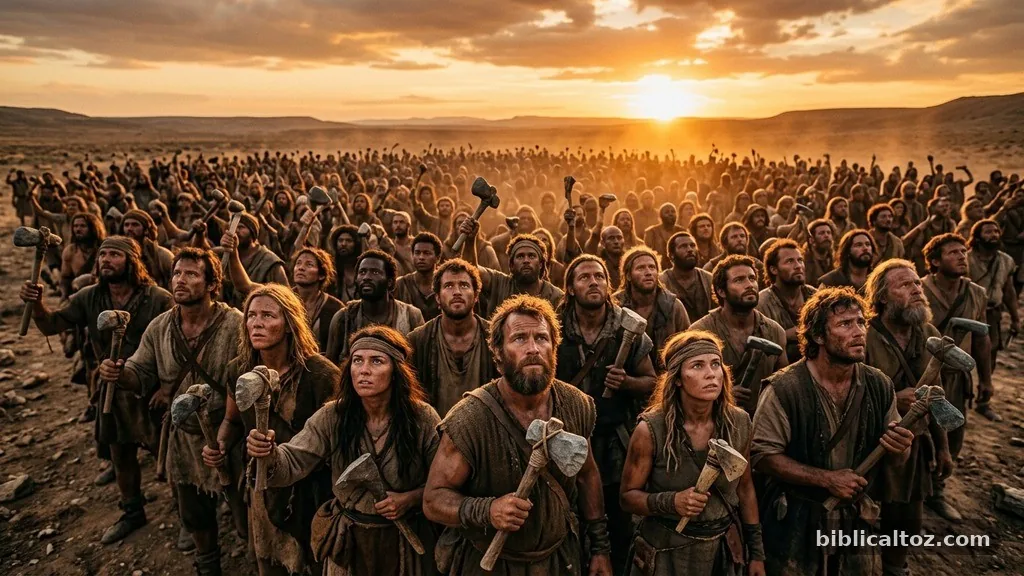
At its heart, the sin of Babel is the sin of self-reliance. The people believed that if they were united, they could accomplish anything they set their minds to, regardless of God’s will. This kind of unity is not inherently good.
When humanity unites for the purpose of self-exaltation rather than obedience, it becomes a dangerous force. Their desire to keep themselves together was a direct rebellion against the divine mandate to inhabit the whole earth, reflecting a desire to remain the masters of their own destiny.
Spiritual Lessons from the Narrative
The story serves as a mirror for our own lives. We often find ourselves building our own “towers”—careers, reputations, or social circles—that we hope will grant us security. The following table highlights the difference between human-centered success and God-centered obedience.
| Feature | Babel Approach | Biblical Perspective |
|---|---|---|
| Unity | For self-glorification | For the glory of God |
| Ambition | To make a name | To serve a purpose |
| Security | In human structures | In God’s sovereignty |
| Outcome | Confusion and scattering | Growth and global witness |
Success is not wrong, but success disconnected from the purposes of God leads to confusion. We learn that pride acts as an idol, tricking us into believing that our plans are superior to the plans of the Creator.
The Theme of Nations in Genesis
The scattering at Babel is not just a punishment; it is a providential act. By breaking up the unified, rebellious population, God ensured that humanity would fulfill the original mandate to spread across the earth. This sets the stage for the rest of Genesis.
Later, in the call of Abraham, we see that God intends to bless all the families of the earth. Babel is the context in which God demonstrates that His plan for the nations will not be thwarted by human consolidation.
Babel and Pentecost: A Theological Pattern
Many scholars note the fascinating contrast between the confusion of languages at Babel and the gift of tongues at Pentecost in Acts 2. At Babel, a prideful humanity was divided because they sought to exalt themselves.
At Pentecost, the Holy Spirit empowered the disciples to speak in different languages, allowing the message of the gospel to reach people of every nation. This demonstrates that God’s ultimate goal is not to keep humanity divided, but to bring them together in the unity of the Spirit, centered on Christ rather than on human achievement.
Symbolism and Modern Application
Today, we see “Babel-like” structures in our digital age. Social media, corporate ladders, and globalized industries can often become platforms for “making a name” for ourselves. While these are not inherently sinful, they become problematic when they replace our reliance on God.
We must ask ourselves: are we building for the sake of our own legacy, or are we working to advance the kingdom of God? The story reminds us that any structure built without God as the foundation is ultimately fragile.
Practical Principles for Ambition
How can we work hard without falling into the trap of Babel?
- Seek God’s direction before finalizing your plans.
- Ensure your work serves others rather than just building your personal brand.
- Accept seasons of scattering or change as potential opportunities for growth.
- Regularly check your heart for the motive of pride in your achievements.
Frequently Asked Questions
Was God threatened by the tower?
No, the text uses anthropomorphic language to describe God’s interaction with the people. God is never threatened by human activity, but He does intervene when human pride seeks to usurp His divine order.
Is it wrong to build cities or use technology?
The Bible does not condemn cities or technology. The issue at Babel was the motive of the builders, not the technology of bricks and mortar. God created humans to be creative and productive.
Why did God confuse the languages?
The confusion of languages served to halt the unified rebellion of the people and compelled them to disperse across the earth, as God had originally intended for them to do.
What is the moral of the story?
The story teaches that human efforts to achieve security, greatness, or unity apart from God are ultimately futile. True stability is found only in submission to the Creator.
Correcting Misunderstandings
Some readers mistakenly believe that the Bible is anti-city or anti-progress. However, Scripture often speaks of cities as places where humanity can thrive when they are under God’s lordship.
The story of Babel is specifically about the prideful heart of the builders, not a prohibition against building, engineering, or living in communities. God is not an insecure deity trying to keep humans “in their place,” but a loving Father guiding his children toward a purpose that is far greater than what they could imagine for themselves.
Reflection Questions
- In what areas of your life are you most tempted to rely on your own strength rather than God’s?
- How does your current work or ambition contribute to the glory of God?
- Have you ever experienced a time where your plans were “confused” by circumstances, only to realize later that God was redirecting your path?
A Prayer for Wisdom
Lord, thank You for the story of the Tower of Babel, which reminds us that You are sovereign over all human plans. Help us to keep our hearts humble and our ambitions aligned with Your will. May we build our lives on the foundation of Your truth rather than our own reputation. Give us the wisdom to see where we are seeking our own glory and the grace to turn back to You. We trust that Your plans for us are better than any tower we could ever build ourselves. Amen.
Conclusion
The story and spiritual lesson of the Tower of Babel offer a profound reminder that our greatest achievements are empty if they are built on the foundation of pride. When we stop trying to “make a name” for ourselves, we are finally free to receive the name that is above all others. By aligning our work with God’s purpose, we find a unity that transcends human language and a security that no tower can provide. We invite you to continue your study of the early chapters of Genesis to see how God’s redemptive plan unfolds throughout the rest of Scripture.