Mount Sinai Symbolism in the Bible: Meaning & History
When considering the narrative arc of Scripture, few locations carry the weight and theological density of the mountain where God met His people. Mount Sinai symbolism in the Bible serves as a bridge between the liberation of Israel from Egypt and the establishment of a formal covenant relationship.
By examining the jagged peaks and the fire-filled encounters recorded in the book of Exodus, we gain insight into the holiness of God and the human response to His majesty. This article explores how these ancient events continue to shape our understanding of divine law, human frailty, and the path to redemption for believers today.
What is Mount Sinai symbolism in the Bible?
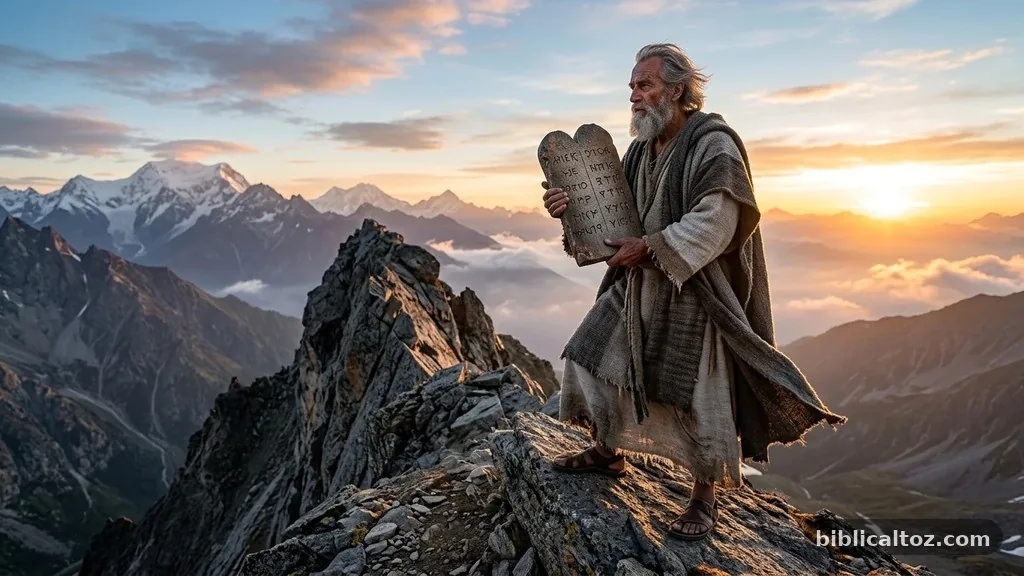
Mount Sinai is the definitive site of theophany—a visible manifestation of God—in the Old Testament. It is where the Creator descended in fire, smoke, and thunder to deliver the Ten Commandments to Moses.
Symbolically, the mountain represents the intersection of the heavenly and earthly realms, functioning as a holy space where the unapproachable holiness of God meets the chosen but flawed people of Israel. It represents the transition from a people in bondage to a nation under divine law.
Where is Mount Sinai symbolism in the Bible?
The geographical identity of the mountain remains a subject of significant historical debate. While tradition has long pointed to the Jebel Musa range in the southern Sinai Peninsula, other scholars look toward sites in modern-day Saudi Arabia or the Negev.
Despite the lack of absolute archaeological certainty, the text describes it as a place in the wilderness, far removed from the centers of worldly power in Egypt. This isolation underscores the idea that the encounter was entirely initiated by God, away from the influence of human civilization.
Mount Sinai symbolism in the Bible in the Old Testament
The Old Testament records several pivotal moments at this site, each adding layers to its symbolic meaning.
| Event | Bible Reference | Significance |
|---|---|---|
| The Burning Bush | Exodus 3 | The initial call of Moses and the revelation of the Divine Name. |
| The Giving of the Law | Exodus 19-20 | The formal establishment of the covenant and moral standards. |
| The Golden Calf | Exodus 32 | The failure of the people and the necessity of intercession. |
Mount Sinai symbolism in the Bible in the New Testament
The New Testament references the mountain as a symbol of the Old Covenant, often contrasting it with the grace found in Christ. In Galatians 4, the Apostle Paul uses the location as an allegory for legalism, comparing the “mountain of slavery” to the Jerusalem that is above. The imagery shifts from a place of trembling fear to a reminder of the limitations of the Law, pointing toward the freedom provided by the Gospel.
Major Biblical Meanings of Mount Sinai symbolism in the Bible
God’s Absolute Holiness
The mountain was fenced off by God’s command, indicating that His presence is not to be approached casually. The boundary line established at the base of the mountain served as a permanent reminder that sin cannot exist in the presence of a perfectly holy God.
The Mediator
Moses acted as the bridge between the people and God. This foreshadows the role of Jesus as the ultimate mediator, who stands between humanity and the Father to reconcile the broken relationship caused by sin.
Major Biblical Events Connected to Mount Sinai symbolism in the Bible
* The revelation of God’s glory to Moses in the cleft of the rock.
* The renewal of the covenant after the incident with the golden calf.
* The construction of the Tabernacle, which was patterned after the heavenly vision received there.
Mount Sinai symbolism in the Bible as a Biblical Symbol
As a symbol, the location functions primarily as a place of divine instruction. It represents the “vertical” movement of revelation—God coming down to speak to humanity. It also serves as a mirror for the human heart, revealing our inability to keep the Law on our own and our subsequent need for a Savior.
How the Meaning of Mount Sinai symbolism in the Bible Develops Through the Bible
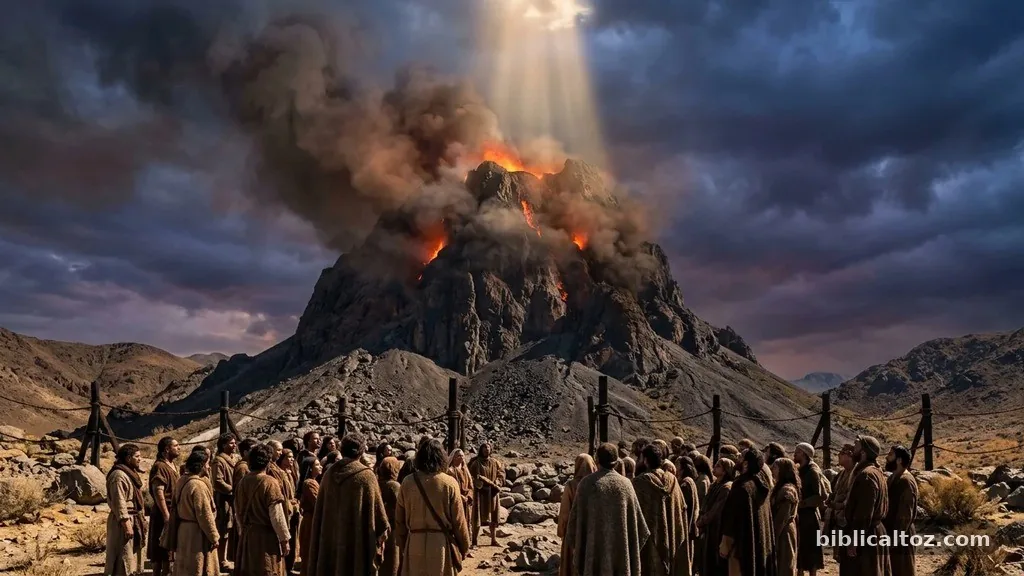
Initially, the site is a place of terror and strict boundaries. By the time we reach the Prophets, the mountain becomes a symbol of God’s faithfulness to His covenant despite the people’s rebellion. In the New Testament, the focus moves from the physical location to the spiritual reality of the “New Covenant,” showing that God’s presence is no longer confined to a mountain but is now accessible through the Holy Spirit.
Mount Sinai symbolism in the Bible and Jesus Christ
Jesus fulfills the requirements of the Law that were first delivered at the mountain. While the Old Covenant was written on tablets of stone, the New Covenant, inaugurated by Christ, is written on the hearts of believers. The mountain stands as the historical anchor for the Law, while Jesus stands as the fulfillment of that Law.
Mount Sinai symbolism in the Bible and Christian Faith Today
For modern believers, the location reminds us of the importance of listening to God’s voice and respecting His holiness. It teaches us that while we are no longer under the condemnation of the Law, we are still called to live in obedience to the One who saved us. It encourages a healthy fear of the Lord combined with the confidence of knowing we have access to Him through prayer.
Does Mount Sinai symbolism in the Bible Always Have the Same Symbolic Meaning?
No, the meaning is contextual. When the focus is on the Law, the mountain represents judgment and the need for holiness.
When the focus is on the covenant, it represents God’s commitment to His people. We must always check the context of the passage to determine whether the author is highlighting the severity of the Law or the grace of the promise.
Common Misunderstandings About Mount Sinai symbolism in the Bible
A frequent error is assuming that the mountain represents God’s rejection of humanity. In reality, God descended to the mountain to invite the people into a relationship. Another misunderstanding is the belief that the mountain is the final destination of the believer; the Bible points toward a heavenly city, not a physical mountain, as the ultimate hope for the faithful.
Important Bible Verses About Mount Sinai symbolism in the Bible
* Exodus 19:18: “And mount Sinai was altogether on a smoke, because the Lord descended upon it in fire.”
* Galatians 4:24-25: “For these are the two covenants; the one from the mount Sinai, which gendereth to bondage.”
* Hebrews 12:18: “For ye are not come unto the mount that might be touched, and that burned with fire.”
Related Biblical Places and Themes
* The Tabernacle: A mobile version of the mountain’s holiness.
* Mount Zion: Represents the fulfillment of God’s kingdom and grace.
* The Covenant: The legal foundation established at the mountain.
FAQs
Is it necessary to know the exact location of the mountain to understand the Bible?
No, the spiritual significance remains the same regardless of the physical coordinates. The Bible emphasizes the event of the encounter over the geography of the site.
Why did God choose a mountain for this event?
Mountains are frequently used in Scripture as places of elevation and separation from the world. They provide a space where the focus is entirely on the heavens.
How does the Law given at the mountain relate to the Gospel?
The Law reveals our need for a Savior, while the Gospel provides the solution in Jesus. One defines the standard, and the other meets it for us.
Are there other mountains mentioned in the Bible with similar significance?
Yes, Mount Zion and Mount Horeb share thematic similarities regarding God’s presence and revelation.
Conclusion
Mount Sinai symbolism in the Bible provides a rich tapestry of theological truth that deepens our appreciation for God’s character. By looking back at the fire and the thunder, we see a God who is both transcendent in His majesty and intensely personal in His desire to dwell with His people. This history serves as a constant reminder that our faith is rooted in real events that have changed the course of human history.
As you continue your study of Scripture, let the lessons from this ancient mountain guide your walk with the Lord today. Take time to read through the book of Exodus, and you’ll find that the God who met Moses is the same God who walks with you in your daily life.