Bells Symbolism in the Bible: Meaning, Usage & Context
When we look at the historical and spiritual significance of bells symbolism in the Bible, we find a fascinating intersection of priestly duty and divine presence. While the modern world often associates bells with church towers or timekeeping, the biblical narrative paints a more specific picture linked to the high priest’s attire and the atmosphere of sacred worship.
By examining these ancient texts, we can better understand how these objects functioned as reminders of God’s holiness and the necessity of approaching Him with reverence. Exploring these patterns helps us appreciate the intentionality behind the items used in Israel’s tabernacle life.
What Does Bells Symbolism in the Bible Mean?
In the context of the Old Testament, the primary meaning of bells is associated with the active ministry of the high priest. They were not merely decorative; their sound served a functional purpose during the performance of sacred duties.
The ringing served as a sensory reminder of the priest’s presence before the Lord, ensuring that he did not die while ministering. Primarily, this symbolism points to the importance of holiness, the mediation between God and His people, and the requirement of being properly prepared to enter the presence of the Almighty.
Bells Symbolism in the Bible in the Old Testament
The most prominent mention of bells occurs in the book of Exodus, specifically regarding the vestments of Aaron.
Bible Reference
Exodus 28:33–35.
Biblical Context

The Lord instructed Moses to create a blue robe for the high priest. Attached to the hem of this robe were alternating golden bells and pomegranates.
Meaning
The bells were to ring when the priest entered or left the holy place. This sound confirmed his activity and ensured he remained in accordance with God’s commands.
Why It Matters
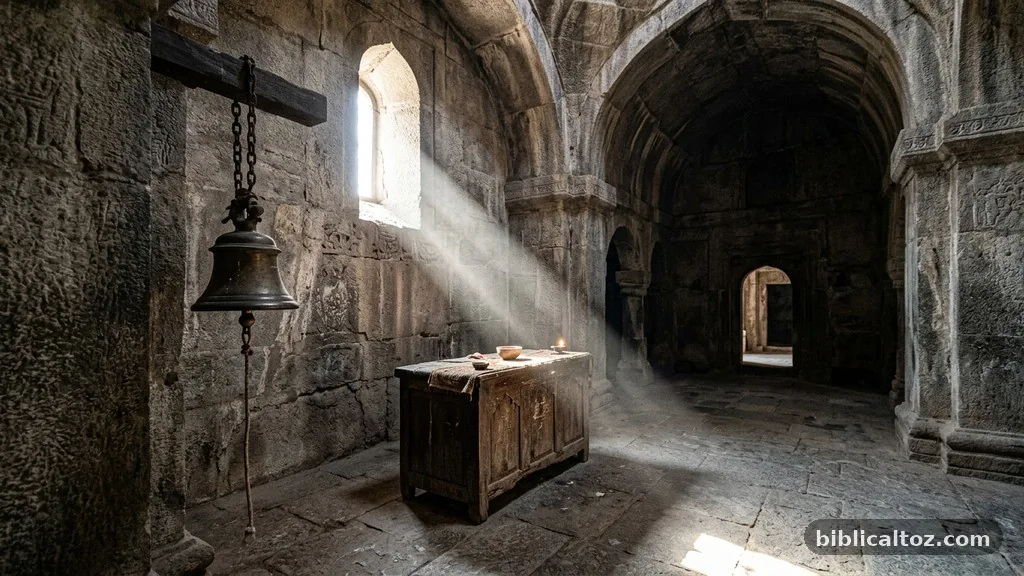
This passage emphasizes that even in the smallest details of worship, God requires obedience. The sound was a boundary marker between the common and the holy.
Bells Symbolism in the Bible in the New Testament
There is virtually no development of bells symbolism in the New Testament. While the New Testament authors frequently discuss the priesthood of Christ and the nature of worship, they do not carry forward the specific imagery of golden bells.
The focus shifts from the physical, sensory indicators of the Old Covenant to the internal reality of the Holy Spirit and the new priesthood of all believers. Consequently, any modern interpretation that assigns heavy prophetic or mystical weight to bells in a New Testament context is likely reading outside the scope of the original apostolic teaching.
Major Biblical Meanings of Bells Symbolism in the Bible
Holiness and Reverence
The sound of the bells served as a constant auditory reminder that the priest was operating within the holy sphere of God’s tabernacle. It underscored that one cannot approach the Lord casually or without the specific garments and preparations He commanded.
Mediation and Representation
Because the priest represented the people before God, the bells acted as a signal of that ongoing mediation. The sound served as a witness to the congregation that the intercession for their sins was being carried out according to the prescribed law.
| Item | Location | Primary Purpose |
|---|---|---|
| Golden Bells | Hem of the Robe | Auditory sign of priestly presence |
| Pomegranates | Hem of the Robe | Symbol of fruitfulness and life |
Important Bible Passages About Bells Symbolism in the Bible
- Exodus 28:33-35: The primary command for the high priest to wear bells on his robe.
- Exodus 39:25-26: A record of the Israelites fulfilling the command to attach the bells and pomegranates to the hem.
- Zechariah 14:20: Mentions bells on the “harness of the horses,” using the object to signify a future time when everything—even the mundane—will be “Holy to the Lord.”
How Bells Symbolism in the Bible Is Used Symbolically in Scripture
Beyond the priestly robe, the mention in Zechariah 14:20 is significant. It suggests that in the coming kingdom, the distinction between “sacred” items and “common” items will be bridged.
The bells on the horses’ harness symbolize that all things will be dedicated to God’s service. This is a departure from the restricted, ritualistic use of bells in the tabernacle, pointing toward a universal holiness that encompasses all aspects of life under the Lord’s reign.
Does Bells Symbolism in the Bible Always Have the Same Meaning?
No, the meaning is entirely dependent on the context. In the book of Exodus, the bells are strictly liturgical, tied to the legal requirements of the Levitical priesthood.
In the prophetic vision of Zechariah, the bells serve as a metaphor for the transformation of the ordinary into the holy. We must be careful not to conflate these contexts; the bells on a priest’s robe served a specific, temporary legal function, while the bells in prophecy illustrate a future state of total consecration.
Bells Symbolism in the Bible and Christian Faith Today
For modern believers, the main takeaway is the importance of approaching God with the reverence He deserves. While we no longer wear golden bells or serve in an earthly tabernacle, the New Testament reminds us that we are a royal priesthood.
The “bells” of our lives—our words, actions, and conduct—should serve as a testament to our position before God. We are called to live in a way that reflects His holiness in every area of our existence, carrying the reality of His presence into the world.
Common Misunderstandings About Bells Symbolism in the Bible
A frequent misconception is that the bells were intended to “frighten away” evil spirits or demons. Scripture never supports this; the bells were for the benefit of the priest and the congregation to ensure the requirements of the Law were met, not as a tool for spiritual warfare or warding off entities.
Another error is the belief that hearing bells in a dream or in daily life holds secret prophetic significance. The Bible restricts the use of bells to specific historical and prophetic contexts; it does not assign them a mystical power to influence our personal lives today.
FAQs
What does bells symbolism in the Bible represent?
In the Bible, bells represent priestly duty, the maintenance of holiness, and the formal process of mediation between God and His people.
Where is bells symbolism in the Bible mentioned?
The most notable references are in Exodus 28 and 39 regarding the high priest’s robe, and in Zechariah 14 regarding the future holiness of all things.
Did the bells on the high priest’s robe have a spiritual power?
No, the bells were an act of obedience to God’s command. Their power lay in the priest’s adherence to the Lord’s instructions, not in the metal itself.
Are bells mentioned in the New Testament?
Bells are not mentioned as a symbol or a tool of worship in the New Testament. The focus shifts to the work of Christ and the life of the believer.
Conclusion
The historical record of bells symbolism in the Bible provides a glimpse into the meticulous nature of God’s requirements for those who served Him in the tabernacle. By focusing on the specific context of the high priest’s robe and the prophetic vision of Zechariah, we avoid the trap of assigning mystical or superstitious meanings to these objects. Instead, we see a clear pattern of holiness and the eventual dedication of all things to the Lord.
As you study the Scriptures, let these details remind you of the reverence due to God and the call to live a life that is fully consecrated to His purposes. Engaging with the text in its original context allows us to appreciate the beauty of God’s design without adding meanings that were never intended.