City Symbolism in the Bible: Meaning, Significance & Usage
When you read through the pages of Scripture, you quickly notice that the settings are often just as significant as the people involved. Exploring city symbolism in the Bible reveals how these hubs of human activity serve as metaphors for the relationship between the Creator and His creation.
From the earliest mention of a city built by Cain to the glorious vision of the New Jerusalem, these places represent the gathering of human ambition, divine judgment, or ultimate refuge. By looking closely at the biblical context of these locations, you can better appreciate how the Lord uses the concept of the city to communicate deep truths about holiness, community, and the destiny of His people.
What Does City Symbolism in the Bible Mean?
In the biblical narrative, a city represents more than a collection of walls and houses. It is primarily a symbol of human organization, collective identity, and the struggle between man-made security and reliance on God. Depending on the context, a city can signify:
- Human independence and the desire to build a name apart from the Lord.
- The place where covenant community is established and worship is centered.
- A site of judgment where wickedness has reached its limit.
- The ultimate hope of believers as they look toward the eternal dwelling place of God.
City Symbolism in the Bible in the Old Testament
The Old Testament uses urban environments to contrast the pride of man with the sovereignty of God.
Bible Reference: Genesis 4:17
Biblical Context
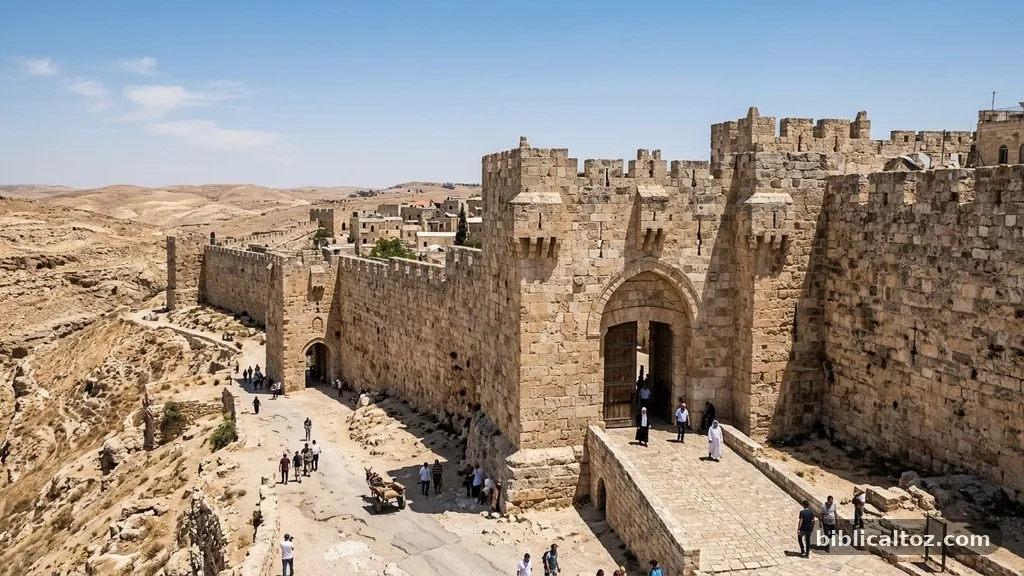
After Cain fled from the presence of the Lord, he settled in the land of Nod and built a city, naming it after his son, Enoch.
Meaning
This is the first city mentioned in Scripture, and it acts as an immediate symbol of human effort to find security and permanence away from the direct presence of God.
Why It Matters
It sets the stage for the recurring theme that human structures are often attempts to create a “house” that functions independently of divine authority.
Bible Reference: Genesis 11:4-9
Biblical Context
The people of Shinar gathered to build a city and a tower with its top in the heavens, seeking to make a name for themselves.
Meaning
Babel represents the height of human pride and the folly of thinking that man can reach the divine through his own architectural or organizational achievements.
Why It Matters
It illustrates how the Lord views the concentration of human power when it is motivated by self-glory rather than humble obedience.
City Symbolism in the Bible in the New Testament
The New Testament shifts the focus from the failures of earthly cities to the promise of a future, heavenly reality. While cities like Jerusalem remain central to the earthly ministry of Jesus, the emphasis moves toward the spiritual significance of the “City of God.”
| City | Primary Association | Spiritual Significance |
|---|---|---|
| Jerusalem | Covenant | The center of God’s presence and the site of the ultimate sacrifice. |
| Babylon | Worldliness | A symbol of corruption and the system that opposes the kingdom of God. |
| New Jerusalem | Redemption | The final, perfected gathering of God’s people in His eternal presence. |
Major Biblical Meanings of City Symbolism in the Bible
The City as a Place of Refuge
Throughout the Old Testament, the Lord designated cities of refuge where one could flee for safety. This symbolizes the grace of God, providing a sanctuary for those in need of protection and justice.
The City as a Center for Holiness
Jerusalem, often called the city of David, serves as the focal point for the temple and the worship of the Lord. It represents the dwelling place of God among His people, emphasizing that holiness is a communal reality.
Important Bible Passages About City Symbolism in the Bible
Psalm 48:1-2 is essential for understanding the positive view of the city as a symbol of God’s dwelling. The psalmist describes the city of our God as beautiful and a joy to the whole earth.
This passage redirects the mind from the prideful cities of men to the city that is established by the King of kings. It anchors the idea that true significance comes from the presence of the Lord within the walls, not the strength of the walls themselves.
How City Symbolism in the Bible Is Used Symbolically in Scripture
The Bible often uses cities to represent the spiritual state of their inhabitants. A city that follows the Lord is described as a faithful bride, while a city that turns to idols is described as a harlot.
These metaphors are not mystical; they are direct, emotional appeals that speak to the heart of the people. When the Bible contrasts the “city of man” with the “city of God,” it is distinguishing between two different loyalties: one based on human goods and pride, and the other based on the promise of redemption.
Does City Symbolism in the Bible Always Have the Same Meaning?
No, the meaning shifts based on the event and the speaker. Jerusalem, for instance, can be a symbol of divine blessing when the people are faithful, but it becomes a symbol of impending judgment when the people turn away from the Lord. It is vital to look at the surrounding verses to determine if a city is being presented as a place of refuge, a target for correction, or a sign of hope.
City Symbolism in the Bible and Christian Faith Today
For modern believers, city symbolism in the Bible serves as a reminder that our true citizenship is not found in the structures we build on earth. We are called to live as residents of the heavenly city, reflecting the character of God wherever we are. This means we should prioritize the building of community and the pursuit of holiness rather than focusing on the accumulation of earthly goods or status.
Common Misunderstandings About City Symbolism in the Bible
A frequent error is to treat every mention of a city in the Bible as a hidden code for end-times events. While the book of Revelation uses city imagery to describe the future, it is a mistake to force contemporary political cities into those ancient symbols. The Bible uses these images to teach about the heart, faithfulness, and the kingdom of God, not to provide a map for current geopolitical affairs.
Related Bible Verses
- Psalm 122:1 – I was glad when they said to me, Let us go into the house of the Lord.
- Hebrews 11:10 – For he looked for a city which has foundations, whose builder and maker is God.
- Revelation 21:2 – And I John saw the holy city, new Jerusalem, coming down from God out of heaven.
- Isaiah 60:14 – They shall call you, The city of the Lord, The Zion of the Holy One of Israel.
FAQs
What does a city symbolize in the Bible?
A city typically symbolizes the collective identity of a people, representing either their prideful attempts to live without God or their blessed state of dwelling in His presence.
Where is the first city mentioned in Scripture?
The first city is mentioned in Genesis 4:17, where it is recorded that Cain built a city and named it after his son, Enoch.
Why is Jerusalem so important in the Bible?
Jerusalem is the primary symbol of God’s covenant with His people, serving as the location of the temple and the site where the Lord chose to place His name.
Does Babylon always represent evil in the Bible?
Babylon is consistently used as a symbol of human rebellion against God and a system that opposes His purposes, representing a worldly power that stands in contrast to the city of God.
Conclusion
Understanding the varied ways Scripture uses urban imagery allows you to see the broader narrative of the Bible more clearly. These symbols consistently point toward the tension between human ambition and the eternal plan of the Lord. By focusing on the biblical context, you avoid the trap of reading personal agendas into these ancient texts and instead find the intended message of grace and sovereignty.
As you continue your study, let the vision of the New Jerusalem shape your perspective on what truly lasts. You are invited to keep digging into the Word, allowing the Spirit to guide your mind as you discover how the Lord builds His kingdom in the hearts of His people.