Shadrach, Meshach and Abednego: Story, Faith & the Fiery Furnace
The account of Shadrach, Meshach and Abednego stands as one of the most compelling narratives in the book of Daniel. These three individuals faced an impossible choice between bowing to a golden statue or suffering a gruesome death in a furnace. Their story provides a profound look at what it means to hold onto personal integrity when faced with absolute power and intense pressure.
By examining the biblical record in Daniel 3, we can learn how they navigated a life-or-death crisis through unwavering trust. Understanding the experience of Shadrach, Meshach and Abednego offers a timeless perspective on remaining faithful to God, even when the outcome of such devotion remains uncertain.
Who Were Shadrach, Meshach, and Abednego?
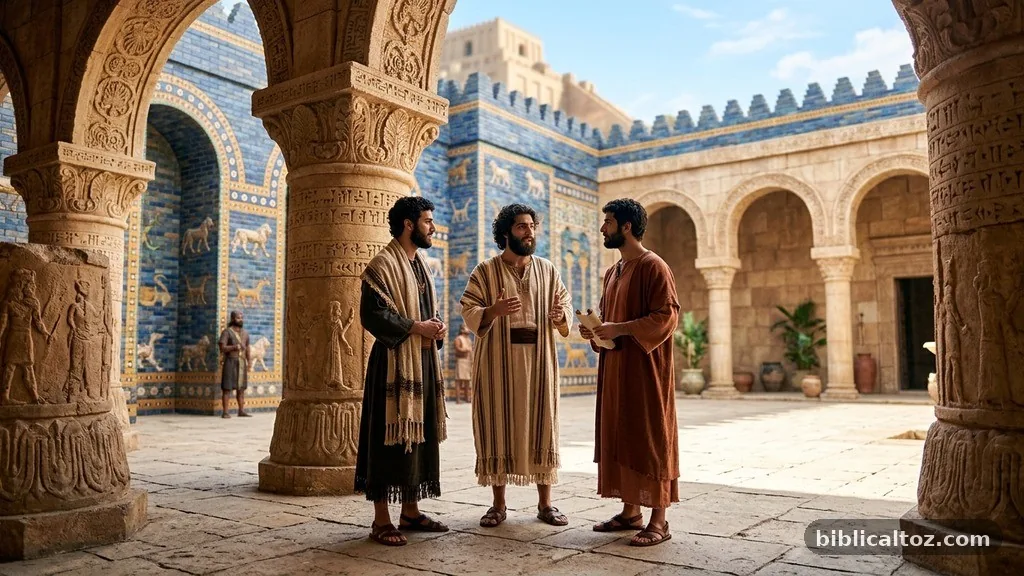
These men were young Hebrew nobles taken captive during the Babylonian siege of Jerusalem. Alongside Daniel, they were selected for special training in the royal court because of their wisdom, intelligence, and physical appearance. Despite the intense effort by the Babylonian administration to assimilate them into their culture, they maintained their commitment to their heritage.
Their Hebrew Names and Babylonian Names
The Babylonian authorities assigned new names to the captives as part of a systematic effort to erase their Hebrew identity and dedicate them to pagan deities.
| Hebrew Name | Babylonian Name |
|---|---|
| Hananiah | Shadrach |
| Mishael | Meshach |
| Azariah | Abednego |
King Nebuchadnezzar’s Golden Image
King Nebuchadnezzar erected a massive gold statue on the plain of Dura, measuring sixty cubits high and six cubits wide. He issued a royal decree requiring all officials and citizens to bow down and worship this image whenever they heard specific musical instruments. Failure to comply with this order would result in immediate execution by being thrown into a burning fiery furnace.
Why Did They Refuse to Worship the Image?
Their refusal was rooted in the foundational laws of their faith, which strictly forbade the worship of idols. Bowing to the statue would have been a direct violation of their allegiance to the one true God. Shadrach, Meshach and Abednego understood that their primary loyalty belonged to their Creator, regardless of the consequences mandated by the king.
Nebuchadnezzar’s Threat
When certain astrologers reported that these three men had ignored the king’s command, Nebuchadnezzar became furious. He summoned them and offered a second chance to comply, though he taunted them by asking which god could possibly rescue them from his power. The king made it clear that their death was imminent if they remained defiant.
Their Powerful Response of Faith
The response from the three men remains one of the most famous declarations in the Bible. They told the king that they did not need to defend themselves. They famously stated that their God was capable of saving them from the fire, but they added a crucial caveat: even if He did not intervene, they would still refuse to serve the king’s gods.
The Fiery Furnace
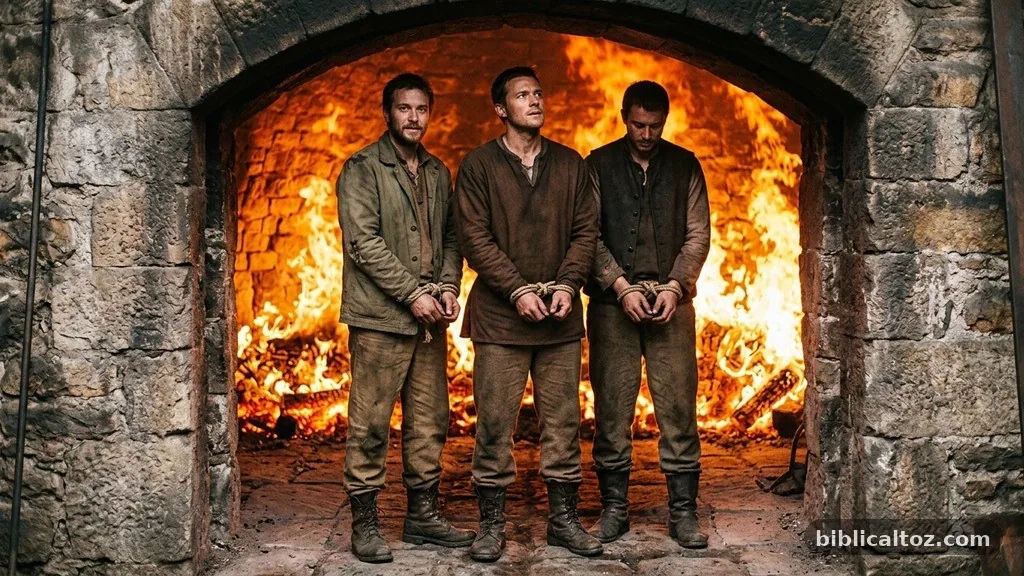
Enraged by their defiance, the king ordered the furnace to be heated seven times hotter than usual. The soldiers who threw them into the flames were themselves killed by the intense heat. The three men were bound and cast into the center of the blaze, fully exposed to the lethal temperatures.
The Fourth Figure in the Furnace
Nebuchadnezzar was stunned when he looked into the furnace and saw four men walking around unharmed. He noted that the fourth figure appeared like a son of the gods. The biblical text simply describes this mysterious presence as a manifestation that accompanied them during their trial, shielding them from the heat.
Their Deliverance
After being called out of the furnace by the king, it was evident that the fire had no power over them. Several observations were made regarding their miraculous survival:
- Not a hair on their heads was singed.
- Their clothing remained intact.
- They did not even smell of smoke.
Nebuchadnezzar’s Response
The king acknowledged the power of the God of Shadrach, Meshach and Abednego. He issued a new decree that forbade anyone from speaking against their God, noting that no other deity could deliver in such a way. Consequently, the king promoted the three men to higher positions within the province of Babylon.
What Does Their Story Teach About Faith?
This narrative emphasizes that true faith is not a transaction where obedience guarantees a life free of hardship. Instead, it highlights the importance of maintaining integrity under pressure. Their courage shows that one’s commitment to God should not be contingent upon receiving a specific miracle.
Faith Even When Deliverance Is Uncertain
The most significant aspect of their testimony is the phrase “even if.” They were prepared to die for their beliefs. This perspective removes the pressure of expecting a specific outcome and instead focuses entirely on the act of obedience itself.
Key Bible Verses From Daniel 3
The following verses capture the essence of their resolve:
– Shadrach, Meshach, and Abednego answered and said to the king, O Nebuchadnezzar, we are not careful to answer thee in this matter. (Daniel 3:16)
– If it be so, our God whom we serve is able to deliver us from the burning fiery furnace, and he will deliver us out of thine hand, O king. (Daniel 3:17)
– But if not, be it known unto thee, O king, that we will not serve thy gods, nor worship the golden image which thou hast set up. (Daniel 3:18)
Common Questions
Did Daniel participate in the fire?
The biblical account of Daniel 3 does not mention Daniel being present at the plain of Dura. He was likely occupied with other administrative duties within the king’s government at the time.
Why was the furnace heated seven times hotter?
The text indicates this was an expression of the king’s extreme rage. He intended to ensure there would be no chance of survival for the three men.
What happened to the men who threw them in?
The fire was so intense that the heat killed the soldiers who were tasked with throwing the three men into the furnace.
What does the name Abednego mean?
Abednego is a Babylonian name, likely meaning servant of Nabu, who was a Babylonian god of wisdom and writing.
Conclusion
The account of Shadrach, Meshach and Abednego serves as a powerful illustration of conviction and endurance. By facing the fire without compromising their principles, they demonstrated that the most significant victory is found in remaining true to one’s values, regardless of external circumstances. Their experience encourages readers to examine their own commitments and consider how they might stand firm when faced with difficult choices.
As you reflect on the story of these men, consider the areas of your own life where integrity might be tested. Choosing to act with honesty and faithfulness often requires courage, but it also provides a foundation that remains unshaken by trial. Engaging with this narrative reminds us that while we cannot always control our external circumstances, we can always choose to remain faithful to our convictions.