Sword Symbolism in the Bible: Meanings and Significance
Sword symbolism in the Bible spans a vast array of contexts, ranging from literal instruments of warfare to potent metaphors for divine authority and internal transformation. Throughout the Old and New Testaments, this weapon serves as a multifaceted emblem representing justice, the penetration of truth, and the active power of the divine will. By examining how these blades are used across scripture, one can uncover a deeper understanding of how the ancient writers viewed authority, protection, and spiritual readiness.
The Sword as a Representation of Divine Judgment
In many biblical passages, the sword is directly associated with the justice of the Lord. It serves as a physical manifestation of divine retribution against wickedness and a tool used to carry out the decrees of the Almighty. When the Hebrew prophets spoke of the sword, they often framed it as a consequence of turning away from spiritual teachings, emphasizing that the weapon was an instrument of correction rather than just arbitrary violence.
Conflict and Consequence
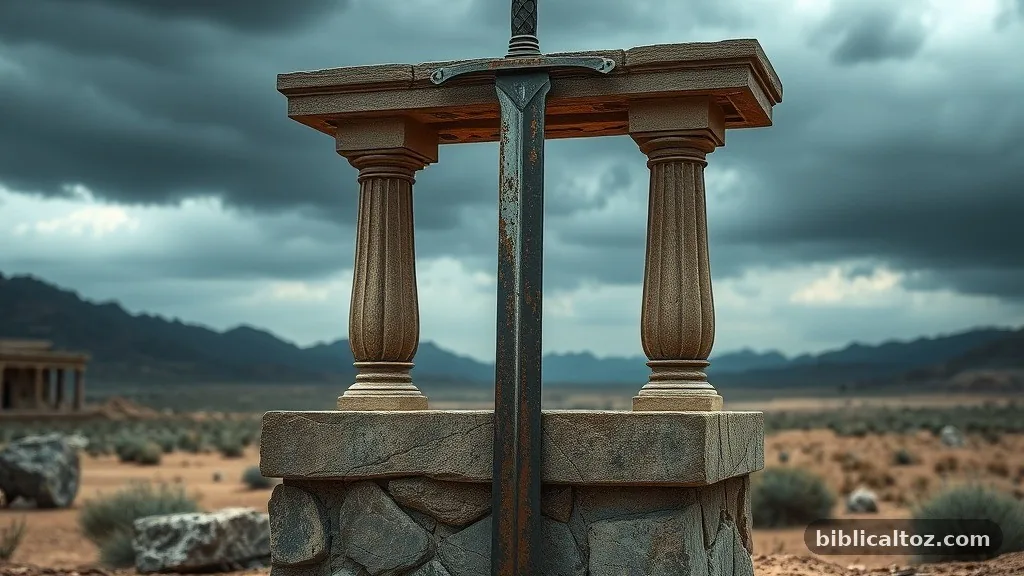
The imagery of the blade often appears in narratives of national conflict, where it represents the tangible reality of consequences. Whether used in defense or as an instrument of divine judgment, the sword highlights the gravity of the choices made by the people. It is rarely described as a neutral object; instead, it is almost always linked to the moral state of those who wield it or those against whom it is drawn.
The Sword of the Spirit and Intellectual Penetration
Perhaps the most famous reference to this imagery is found in the writings of Paul. In his letter to the Ephesians, he identifies the “sword of the Spirit” as the word of God.
This shifts the focus from physical combat to the internal, spiritual life of the believer. By describing the scriptures as a weapon, the text suggests that truth has an active, cutting power that can pierce through deception and expose the hidden intentions of the heart.
Why It Is Called a Weapon
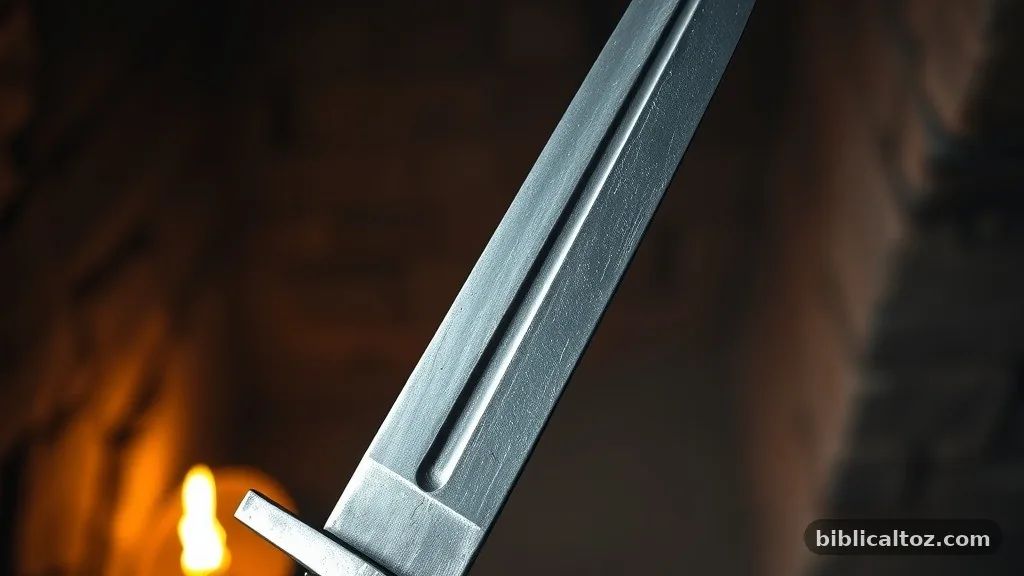
The Greek term used for this specific type of sword often refers to a short, stabbing blade used in close-quarters combat. This is significant because it implies that the word of God is not a distant or abstract concept, but a tool for personal, immediate engagement. It is meant to be used up close to confront one’s own biases, doubts, and struggles, serving as a vital component in the spiritual armor of the individual.
Jesus and the Recontextualization of Force
The teachings of Jesus provide a complex perspective on the use of physical weapons. While he famously told his followers to put away their swords during his arrest, he also used the imagery of division to describe the impact of his message. This suggests that the influence of his teachings can cause a “division” that acts like a blade, separating truth from falsehood and shifting the loyalties of those who hear him.
The Metaphorical Blade
When Jesus spoke of bringing a sword rather than peace, he was not advocating for physical violence. Instead, he was describing the inevitable friction that occurs when his radical message clashes with the status quo. The sword, in this context, represents the piercing nature of the truth, which can disrupt relationships and societal structures as people decide whether or not to follow his path.
Interpreting Biblical Imagery in Modern Contexts
Many people today look to these ancient texts to understand the spiritual meaning of a sword in their own lives, sometimes even seeking to capture that symbolism through personal expressions like tattoos or art. The recurring theme is one of readiness and discernment. Whether one views the sword as a symbol of protection, a reminder of the power of the word, or a call to stand firm against adversity, the biblical narrative consistently points toward an active, engaged faith.
By focusing on the sword as a symbol of the word of God, believers are encouraged to cultivate a sharp, discerning mind. It serves as a reminder that the greatest battles are often won through clarity, integrity, and a firm commitment to the teachings that define one’s moral compass. The sword remains a powerful, enduring metaphor for the strength required to navigate a complex world with conviction.