Anchor Symbolism in the Bible and Its Spiritual Significance
Anchor symbolism in the Bible serves as a powerful metaphor for stability and confidence amidst the turbulent storms of life. While the maritime object was a common necessity for ancient travelers, biblical writers transformed it into a profound emblem of the soul’s connection to the divine. By examining how this image is used in scripture, believers can better understand how to maintain their spiritual equilibrium.
The Primary Biblical Reference to the Anchor
The most significant mention of the anchor appears in the Book of Hebrews. In the New Testament, the author uses this imagery to describe the nature of God’s promises and the believer’s internal state.
Hebrews 6:19 and the Concept of Hope
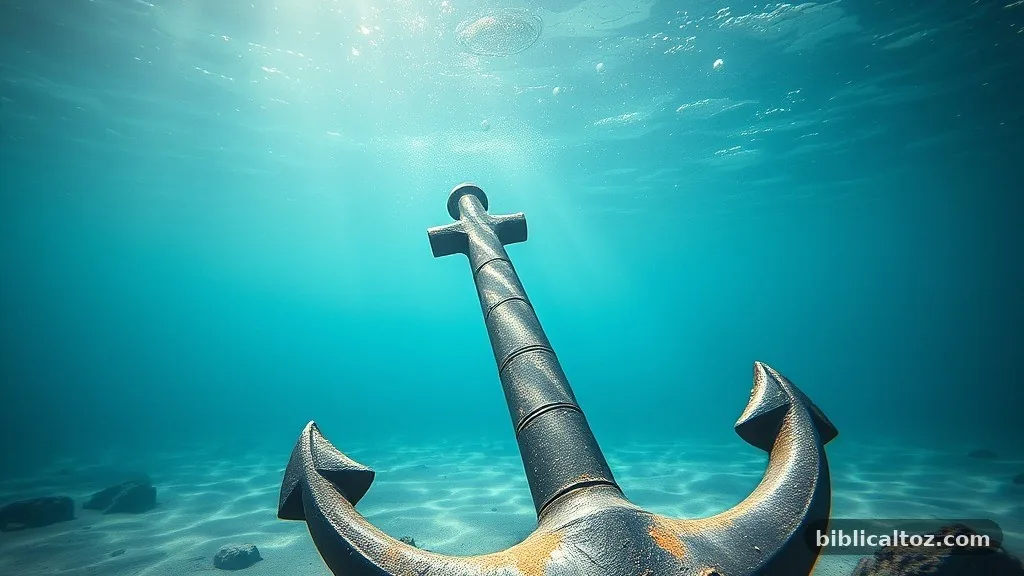
In Hebrews 6:19, the writer declares that this hope is an “anchor for the soul, firm and secure.” This passage explains that just as a ship relies on an anchor to stay positioned against shifting tides, a Christian relies on the character of God to remain steady. The text emphasizes that this hope enters the inner sanctuary behind the curtain, connecting the believer directly to the presence of God.
Linguistic Context and Translation
When comparing versions like the NIV and the NASB, the core message remains consistent. The Greek word used for anchor implies a weight or a support that holds fast. Unlike a physical anchor that drops into the seabed, the biblical anchor is cast upward into the heavens, attaching itself to Jesus. This shift in perspective transforms a mundane tool into a spiritual reality that governs a person’s life.
Spiritual Meaning of the Anchor for Modern Believers
The symbol of the anchor is often associated with the early church, where it was frequently engraved on catacombs and rings. It served as a secret sign to identify other followers of the faith during times of persecution.
Stability Amidst Life’s Storms
Life often feels like an unpredictable sea. The anchor represents the unwavering nature of faith, providing a sense of peace when external circumstances are chaotic. It serves as a reminder that while the surface of life may be turbulent, the soul remains tethered to a source that cannot be moved.
The Role of Faith in Overcoming Doubt
When a person begins to question their path, the metaphor of the anchor invites them to look at what is holding them in place. It is not their own strength that keeps them from drifting, but the reliability of God’s promises. This distinction is vital for those who feel weary, as it shifts the focus from human performance to divine faithfulness.
Addressing Common Misconceptions
A frequent question that arises involves the “four anchors” mentioned in the Bible. It is important to clarify that this term is not a formal biblical doctrine but rather a reference to the account of the apostle Paul’s shipwreck in Acts 27:29.
The Shipwreck in Acts 27
In this narrative, the sailors cast four anchors from the stern of the ship to prevent it from hitting rocks during a violent storm. While this is a factual account of a maritime emergency, some theological traditions use these four anchors to represent different aspects of Christian stability, such as the Word of God, prayer, community, and the Holy Spirit. While not explicitly defined as such in the text, these elements are essential for sustaining a healthy spiritual life.
The Difference Between Symbol and Literal Object
It is helpful to distinguish between the literal anchors used in the book of Acts and the metaphorical anchor discussed in Hebrews. One saved a physical vessel from destruction, while the other secures the eternal spirit. Both, however, communicate the same truth: in the face of disaster, one must rely on what is secure, firm, and proven to hold under pressure.
Integrating the Anchor Symbol into Daily Life
Adopting the anchor as a personal emblem can serve as a daily touchstone for the spirit. It encourages a life lived with intentionality and trust, rather than one tossed about by fleeting emotions or changing societal trends.
Living with Spiritual Certainty
To live with an anchored soul is to accept that while the world may change, the foundation of a relationship with God does not. This mindset allows for greater resilience in the face of hardship. When the winds of life pick up, the believer can rest in the knowledge that their hope is not cast into the shifting sands of human opinion, but into the immutable nature of the Creator.