The Symbolism of Keys in the Bible
In biblical literature, the imagery of keys serves as a profound metaphor for access, stewardship, and divine authority. Rather than representing mere physical tools, keys in the Bible symbolism often denote the capacity to unlock spiritual truths, regulate entry into sacred spaces, or exercise delegated power from the divine.
The Concept of Authority and Stewardship
Throughout scripture, a key is frequently linked to the administration of a household or a kingdom. In ancient times, the master of a house would entrust a steward with the keys, signifying that the individual held the right to decide who could enter and who was excluded. This function of the key highlights the responsibility involved in managing sacred trusts.
Delegated Power in the New Testament
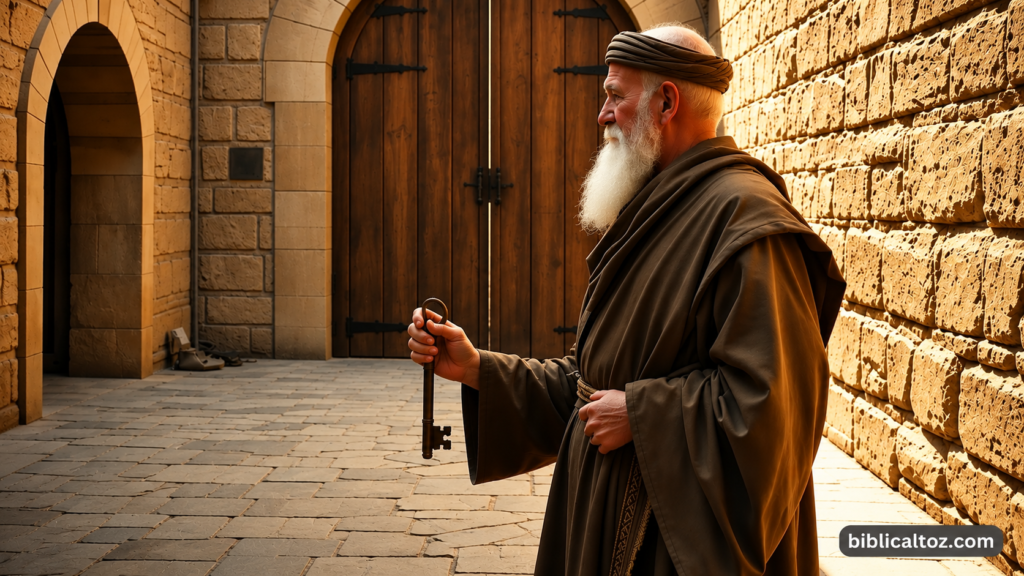
The most prominent usage of this symbolism appears in the Gospel of Matthew. When Jesus speaks to Peter, he promises to give him the keys of the kingdom of heaven. This passage is widely interpreted as the bestowal of apostolic authority, granting the church the power to bind and loose—terms that refer to the ability to make authoritative decisions regarding doctrine and communal discipline based on divine revelation.
Unlocking Spiritual Knowledge
Beyond administrative power, keys are often used to illustrate the acquisition of truth. In the context of the ministry of Jesus, the religious leaders were criticized for taking away the “key of knowledge.” By failing to enter the kingdom themselves and obstructing those who wished to enter, they became gatekeepers of error rather than facilitators of divine understanding.
Revelation and Spiritual Access
The imagery of the key also appears in the Book of Revelation, where the resurrected Christ is described as holding the keys of death and Hades. This signifies that the power of the grave is no longer absolute; the spirit of the living God has overcome the finality of physical death. It serves as a reminder that the ultimate authority over human destiny rests with the divine, not with earthly locks or human limitations.
The Metaphor of Open and Closed Doors
The Bible frequently pairs keys with the concept of doors, representing opportunities for ministry or transitions in one’s spiritual journey. A door that is opened by the divine is one that no human effort can shut, emphasizing that spiritual advancement is often a matter of grace rather than personal striving.
The Role of the Church
In the context of the early church, the concept of keys was central to the expansion of the community. As the followers of Jesus moved from local settings to broader horizons, the use of these spiritual keys allowed them to welcome diverse groups into the faith. This act of opening doors was not merely about inclusion; it was an exercise of the authority granted by the word of God to expand the reach of the kingdom.
Reflections on Divine Stewardship
When considering these symbols, it is clear that they are never intended to be used for personal gain. Instead, they are tools of service. Whether referring to the keys given to the disciples or the keys held by Christ himself, the underlying theme is one of faithful management of a higher calling.
Living Under Divine Authority
For the modern reader, the symbolism serves as a reminder of the responsibility that comes with spiritual insight. To hold a “key” in a biblical sense is to be a guardian of the truth. It implies a life lived in alignment with the spirit, where one’s actions and teachings act as a bridge for others to access the kingdom, rather than a barrier that locks them out.