Trees in the Bible and Their Meanings: A Spiritual Reflection
Trees in the Bible and their meanings offer a profound look into how nature serves as a living metaphor for the relationship between God and humanity. From the opening chapters of Genesis to the final vision of Revelation, arboreal imagery is woven into the narrative, representing everything from human frailty and divine wisdom to eternal life.
The Significance of Trees in Genesis
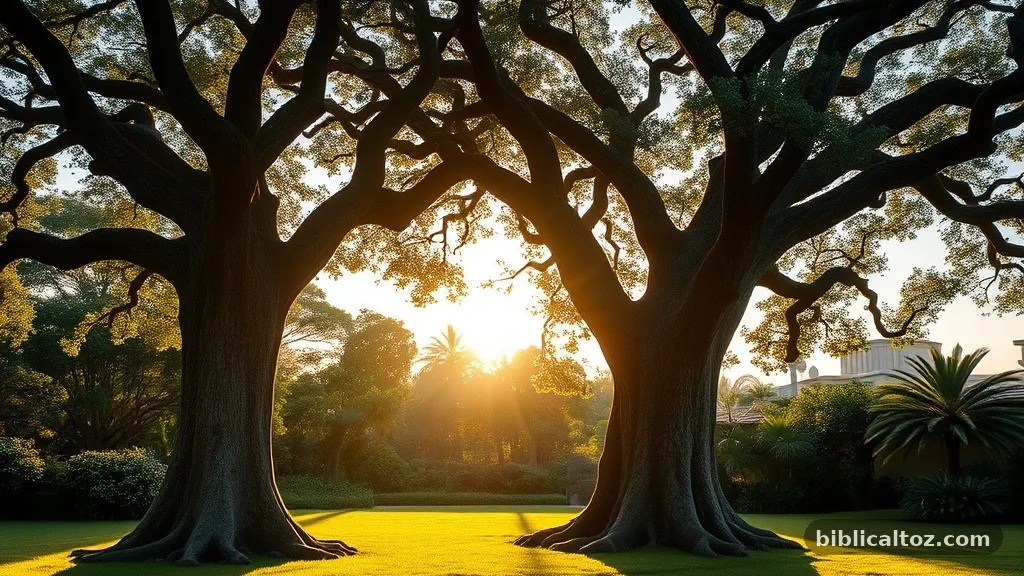
The biblical narrative begins in a garden, establishing the tree as a focal point for human choice. In the account of creation, the Tree of Life and the Tree of the Knowledge of Good and Evil stand as central figures. These are not merely botanical specimens; they represent the duality of human experience—the gift of life provided by the Creator and the consequences of exercising autonomy against divine instruction.
As the story of humanity unfolds, these images recur to remind readers of the original state of harmony. By the time the biblical canon closes, the Tree of Life reappears in the New Jerusalem, symbolizing the restoration of the connection between the divine and the created world.
The Seven Species and Agricultural Symbolism
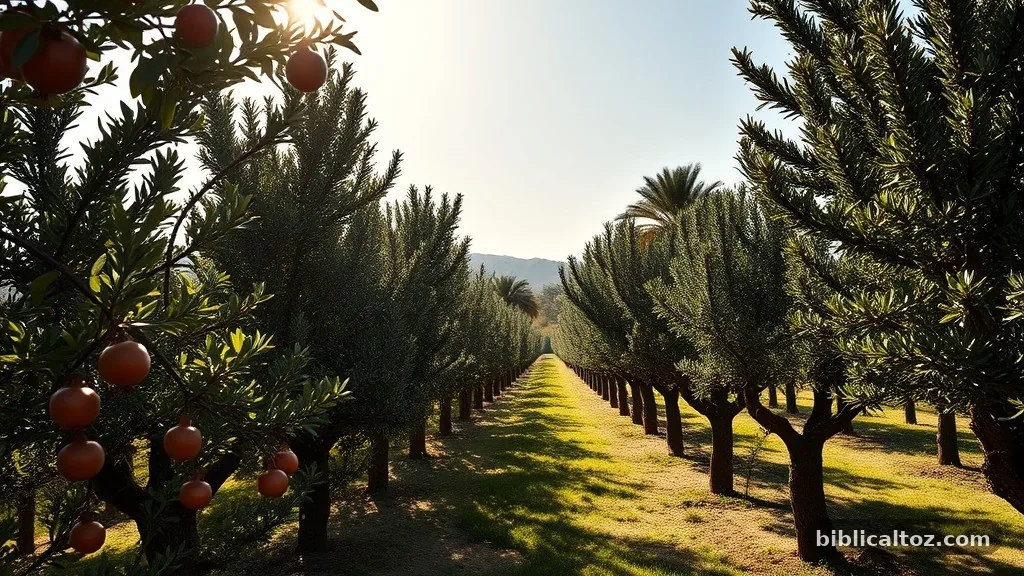
The land promised to the Israelites is frequently described in terms of its agricultural bounty, often highlighting seven specific species. These include wheat, barley, vines, fig trees, pomegranates, olives, and date palms. Each held a distinct place in the daily life of the ancient Near East, functioning as both physical sustenance and spiritual markers.
The Fig Tree and Its Lessons
The fig tree appears frequently throughout the scriptures, often serving as a symbol of peace, security, and spiritual readiness. When the Bible describes people sitting under their own vine and fig tree, it paints a picture of societal stability and divine blessing. Conversely, Jesus uses the fig tree in his teachings to illustrate the importance of bearing spiritual fruit and maintaining a state of constant readiness.
The Olive Tree and Divine Favor
The olive tree is perhaps one of the most resilient and enduring symbols in the text. Its oil was used for anointing kings and in the sacred lamps of the temple, representing the presence of the Holy Spirit. In the writings of the prophets, the olive tree serves as a metaphor for the people of God—rooted, productive, and capable of surviving even the harshest conditions.
Arboreal Imagery in Psalms and Wisdom Literature
Poetic books like Psalms and Song of Songs frequently employ botanical metaphors to describe the character of a person who follows the path of wisdom. The very first Psalm compares the righteous individual to a tree planted by streams of water, which yields its fruit in due season. This image emphasizes the necessity of being deeply rooted in truth to withstand the trials of the day.
Song of Songs uses the lush imagery of gardens and fruit trees to explore the depth of human love and affection. Here, the garden becomes a sanctuary where the beloved can flourish, mirroring the tender care that the Creator has for those who seek him.
Prophetic Visions and the Cedar of Lebanon

The cedar of Lebanon is frequently mentioned by prophets like Isaiah to represent majesty, strength, and pride. Because these trees were tall, sturdy, and aromatic, they were highly valued for building temples and palaces. However, the prophets often used the cedar as a cautionary tale; while the tree is impressive, its height makes it vulnerable, serving as a reminder that human strength is nothing compared to the power of the divine.
Common Themes and Lessons
Throughout the scriptures, trees provide a framework for understanding spiritual growth. They are seasonal, requiring patience and the right environment to thrive. Just as leaves change and trees go through cycles of dormancy and rebirth, the human journey is marked by different phases of development.
* Rootedness: Success is often framed as being deeply planted in divine wisdom.
* Fruitfulness: The value of a life is measured by the tangible good it produces for others.
* Resilience: Even when a tree is cut down, the biblical text often suggests that a stump can sprout again, offering a powerful message of hope and renewal.
By studying these botanical references, readers find a deeper appreciation for the natural world as a reflection of spiritual truths. Whether it is the shade provided during the heat of the day or the endurance of a centuries-old grove, these living symbols continue to provide comfort and instruction to those who look to them.