The Biblical Significance and Meaning of the Number 6
The number 6 holds a distinct place in scriptural study, often serving as a symbol of human imperfection and the limitations of the physical world. While many readers immediately associate the figure with the “number of the beast,” its biblical footprint is far more nuanced, appearing in various contexts that highlight the nature of humanity in relation to the divine.
The Sixth Day of Creation

The primary appearance of the number occurs in the Genesis account of creation. It was on the sixth day that God fashioned man in His own image, marking the culmination of the physical creation process. Because this day preceded the seventh day of rest, the number 6 is eternally linked to the era of human labor and existence.
This association establishes a foundational theme: the number represents that which is unfinished or falling short of divine perfection. Unlike the number 7, which signifies spiritual completion or the rest of the Lord, 6 represents the state of humanity before it enters into the sanctified rest of the Creator.
Humanity and Imperfection
In biblical numerology, numbers often carry symbolic weight beyond their literal value. Since man was created on the sixth day, the number serves as a recurring reminder of human fallibility. It highlights the contrast between the infinite nature of God and the finite, often flawed, character of people.
The Symbolism of Labor
Scripture frequently links the number 6 to the concept of work. Under the Law, the people of Israel were instructed to labor for six days before observing the Sabbath. This rhythm reinforces the idea that the number 6 is the limit of human capacity. It is the number of the “natural man” who has not yet reached the spiritual maturity or completion found in the divine order.
The Number 6 in Prophetic Contexts
Beyond the creation narrative, the number 6 appears in various prophetic and historical accounts that underscore its association with human government and opposition to God. In the book of Revelation, the repetition of the digit—specifically in the form of 666—is famously described as the number of a man. This symbolic usage serves as a warning against placing human systems or leaders above the authority of the Lord.
Historical and Scriptural Occurrences
The number appears in several other significant ways throughout the text:
- The height of Goliath’s stature was six cubits, representing the strength of man separated from God.
- The golden image set up by Nebuchadnezzar was six cubits wide, reflecting the pride of human kingdoms.
- The sixth hour is frequently mentioned in the Gospels, including the time when Jesus hung upon the cross, signifying the moment of deepest human suffering and the burden of sin.
The Contrast Between 6 and 7
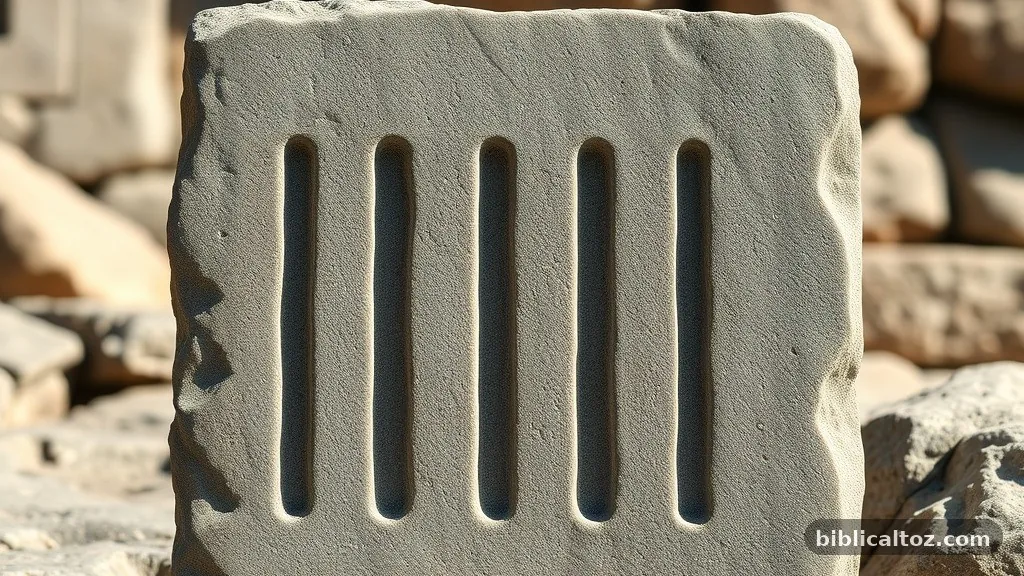
To fully grasp the biblical meaning of 6, one must view it in light of the number 7. If 7 represents the divine standard and spiritual perfection, 6 is the digit that falls just short of that mark.
This deficit is not necessarily “evil” in a vacuum, but it is incomplete. It represents a state of striving, reaching, and often failing to attain the holiness that only the Lord can provide.
The Hebrew Perspective
In the Hebrew alphabet, the number 6 is represented by the letter “Vav,” which often functions as a connector or a hook. In a spiritual sense, this suggests that while 6 represents the human condition, it also serves as a bridge or a link between heaven and earth. It is the point where the physical world meets the divine influence.
While the number is not inherently “bad,” it is a marker of transition. It reminds the reader that humanity, in its current state, remains in a process of becoming. Whether through the lens of the six days of labor or the limitations of human history, the number 6 serves as a constant invitation to look beyond the physical realm toward the spiritual completion found in the divine.